
A solar PV inverter is one of the most important components of a photovoltaic system. It converts the electricity generated by PV modules into electricity used by electrical loads or supplied to the grid. Modern inverters may also perform functions such as Maximum Power Point Tracking (MPPT), grid synchronization, monitoring, fault detection, and anti-islanding protection.
Despite these protective functions, inverters can present serious hazards during installation, commissioning, operation, inspection, maintenance, and troubleshooting. An inverter may be connected to multiple energy sources and can contain stored electrical energy even after shutdown. Therefore, proper safety procedures are essential for protecting personnel and equipment.
What Are Inverter Hazards?
Inverter hazards are potentially dangerous conditions associated with the electrical, thermal, mechanical, and environmental characteristics of inverter equipment.
Common inverter hazards include:
- Electric shock
- DC and AC voltage
- Stored electrical energy
- Short circuits
- Electrical arcs and arc-flash
- Overheating
- Fire
- Loose connections
- Incorrect polarity
- Unexpected startup
- Environmental exposure
- Battery-related hazards in hybrid systems
Understanding these risks is an important part of maintaining a safe and reliable solar PV system.
Major Inverter Hazards
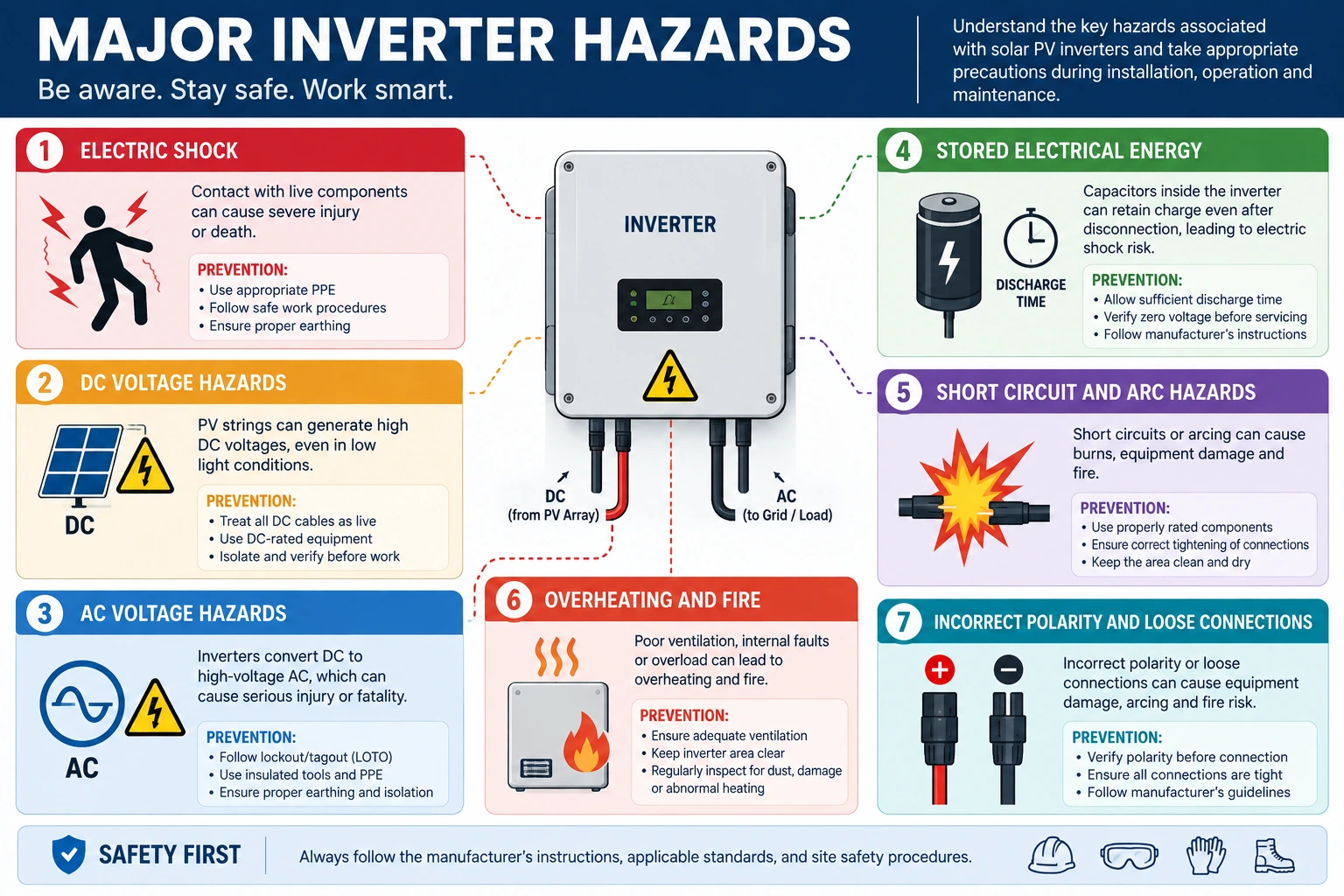
1. Electric Shock
Electric shock is one of the most serious inverter hazards. An inverter may remain connected to the PV array, grid, battery bank, or backup circuits.
Switching off the inverter does not necessarily eliminate all electrical hazards.
Workers should:
- Identify all energy sources before starting work.
- Follow approved isolation procedures.
- Verify the required circuits are de-energized.
- Use appropriately rated test equipment.
- Wear task-specific PPE.
2. DC Voltage Hazards
PV modules can continue generating electricity whenever sufficient sunlight is available. Therefore, the DC input of an inverter may remain energized even when the inverter itself is switched off.
Before working on the DC side, technicians should follow the manufacturer’s shutdown procedure, isolate the appropriate circuits, allow the required discharge time, and verify the safe condition before beginning work.
3. AC Voltage Hazards
Grid-connected and hybrid inverters can also be connected to AC sources. Disconnecting the PV array alone does not necessarily make the AC terminals safe.
The grid, generator, or other electrical sources must be considered during isolation. Proper switching and lockout/tagout procedures should be followed wherever applicable.
4. Stored Electrical Energy
Inverters can contain capacitors and other components capable of storing electrical energy. These components may remain energized after the inverter is switched off.
Workers should never assume that an inverter is safe simply because its display is blank. The manufacturer’s specified waiting period and verification procedure should always be followed.
5. Short Circuit and Arc Hazards
Short circuits can generate extremely high currents, resulting in sparks, electrical arcs, burns, equipment damage, or fire.
Possible causes include:
- Damaged insulation
- Loose connections
- Incorrect wiring
- Faulty components
- Accidental contact between conductors
Appropriate fuses, circuit breakers, disconnects, and other protective devices should be installed and maintained according to the system design.
6. Overheating and Fire
Inverters generate heat during normal operation. Poor ventilation, blocked cooling pathways, excessive ambient temperatures, failed cooling fans, or loose electrical connections can cause overheating.
Warning signs include:
- Burning smell
- Discoloration
- Melted insulation
- Excessive temperature
- Repeated shutdowns
- Unusual noise
Ventilation openings should remain unobstructed, and cooling systems should be inspected regularly.
7. Incorrect Polarity and Loose Connections
Incorrect DC polarity can damage the inverter and connected equipment. Before connecting PV strings, technicians should verify the positive and negative terminals and confirm polarity using suitable test equipment.
Loose connections can also increase electrical resistance and create localized heating. Connections should therefore be installed and maintained according to the manufacturer’s specified procedures and torque requirements.
Inverter Hazards in Hybrid Solar Systems
Hybrid inverters may be connected to:
- PV modules
- Battery storage
- Grid supply
- Backup loads
This creates multiple potential energy sources.
Battery systems can introduce additional hazards such as high short-circuit currents, chemical exposure, overheating, and fire. Therefore, battery isolation should be incorporated into the overall shutdown procedure where applicable.
Environmental Hazards
The installation environment can affect inverter safety and performance.
Potential environmental hazards include:
- Dust
- Moisture
- Rain
- High humidity
- Extreme temperatures
- Flooding
- Corrosive environments
- Direct sunlight
The inverter should be installed in a location that meets its specified environmental and protection requirements.
Safe Inverter Shutdown Procedure
A general shutdown sequence should include:
- Review the manufacturer’s instructions.
- Identify all connected energy sources.
- Shut down the inverter according to the prescribed procedure.
- Isolate the relevant DC, AC, and battery sources where applicable.
- Apply lockout/tagout procedures where required.
- Wait for stored energy to dissipate.
- Verify the required circuits are in a safe condition.
- Begin maintenance only after the system has been properly isolated.
The exact procedure should always be based on the equipment and site requirements.
Inverter Inspection Checklist
Regular inspection should include:
Area | What to Check |
Enclosure | Cracks, corrosion and damage |
Cables | Cuts, overheating, and damage |
Terminals | Loose or overheated connections |
Ventilation | Dust and blockages |
Cooling fans | Proper operation |
Display | Fault codes and alarms |
Grounding | Secure connections |
Temperature | Abnormal heating |
Environment | Moisture and contamination |
Mounting | Stability and physical condition |
PPE and Tools for Inverter Maintenance
Depending on the task and hazard assessment, workers may require:
- Safety glasses
- Face protection
- Electrical gloves
- Safety footwear
- Arc-rated clothing where required
- Insulated tools
- Appropriately rated multimeters
- Clamp meters
- Thermal imaging equipment
Only properly rated and maintained instruments should be used.
Common Inverter Safety Mistakes
Avoid:
- Assuming a switched-off inverter is completely de-energized.
- Ignoring DC voltage from PV modules.
- Forgetting battery or grid connections.
- Working without verifying isolation.
- Bypassing protective devices.
- Blocking ventilation openings.
- Ignoring repeated fault codes.
- Using incorrectly rated test equipment.
- Opening the inverter unnecessarily.
- Attempting unauthorized circuit-board repairs.
Internal or board-level faults should be referred to an appropriately qualified or authorized inverter service technician.
Inverter Hazards and Solar System Performance
A faulty inverter can reduce energy generation, cause repeated shutdowns, increase downtime, and potentially damage connected equipment. Regular inspection and preventive maintenance can therefore support reliable solar electricity production.
Proper maintenance can also help control the overall solar installation cost, solar energy installation cost, and lifecycle cost of solar per kWh installed by reducing premature failures and unexpected repairs.
Conclusion
Inverters are essential for converting and managing the electricity generated by solar PV systems, but they also introduce significant electrical, thermal, mechanical, and environmental hazards. Workers must recognize that an inverter can remain hazardous even after shutdown because of PV-generated DC voltage, grid connections, batteries, and stored electrical energy.
Safe inverter operation depends on proper isolation, verification, appropriate PPE, suitable tools, regular inspection, adequate ventilation, correct grounding, and adherence to manufacturer instructions. Abnormal heating, burning smells, damaged cables, repeated fault codes, or other unusual conditions should never be ignored.
FAQs
Q1. What are the main inverter hazards in solar PV systems?
Ans: The main hazards include electric shock, DC and AC voltage, stored electrical energy, short circuits, electrical arcs, overheating, fire, loose connections, incorrect polarity, and unexpected startup.
Q2. Can an inverter remain dangerous after being switched off?
Ans: Yes. PV modules can continue producing DC voltage, while internal capacitors may retain stored electrical energy.
Q3. Why is inverter ventilation important?
Ans: Proper ventilation prevents excessive heat accumulation and helps maintain reliable inverter operation.
Q4. What should I do if an inverter repeatedly shows a fault?
Ans: Follow the manufacturer’s troubleshooting procedure. Do not repeatedly reset the inverter without investigating the underlying problem.
Q5. Can I repair an inverter circuit board myself?
Ans: Circuit-board-level repairs should only be performed by appropriately trained and authorized personnel.
Grid-Connected Solar PV System Startup Guide
A complete guide to starting up a grid-connected solar PV system, including commissioning, grid synchronization, electrical safety checks, and operational verification.
Sun Path Diagram for a Specific Location and Time: Solar Installer Guide
Earthing and lightning protection are critical safety components in solar PV installations. This guide explains their importance, types, components, and best practices for solar installers.
Solar Installation Corrosion Protection & Weatherproofing Guide
A complete guide to solar corrosion protection and weatherproofing, covering methods to prevent seepage and structural damage in solar installations.
India’s Solar Capacity Growth Slows Down in Q1 2023
India’s solar capacity growth slowed in Q1 2023. Explore the factors behind the slowdown and its impact on the country’s renewable energy progress.
Solar PV Cable Selection Guide: Type, Color & Gauge
A complete guide to selecting solar PV cable type, color, and gauge for safe, efficient, and reliable solar system installation.
Delhi Jal Board Solar Project: A Step Towards Sustainable Energy
Delhi Jal Board has embraced solar power, becoming a leader in renewable energy adoption. This initiative highlights the benefits of solar energy, including cost savings, sustainability, and promoting clean energy practices in institutional operations.
Utility Disconnect Installation in Solar PV Systems Guide
A step-by-step guide to utility disconnect installation in solar PV systems, including wiring, safety measures, and installation best practices.
Solar PV Module Damage Inspection & Quality Checks in Solar EPC
A practical solar panel unpacking guide covering safe handling, on-site precautions, and key do’s and don’ts to avoid module damage.