India and Japan Strengthen Renewable Energy Cooperation
India and Japan have initiated a renewable energy cooperation, a partnership under the Asia Energy Transition Initiative (AETI) to support India’s clean energy transition.
India has set an ambitious target of achieving net-zero by 2070, while Japan aims to achieve the same by 2050. The partnership would work on the agenda covered in the India-Japan Energy Dialogue 2007 and will subsequently expand into areas of mutual benefit. The two countries are utilizing new technologies and economic models that would help reduce emissions.
The Indian subcontinent’s massive renewable energy potential can boost green hydrogen (GH2) production and immense potential for a GH2 economy. Nepal and Bhutan have surplus hydropower potential and green hydrogen electrolysers can tap this in countries like India and Bangladesh. With increasing electricity prices, finding a sustainable energy mix has become necessary for Japan, which currently faces twin challenges of energy security and transition. The country ranks fifth globally for its renewable energy capacity in 2021, according to Fitch Solutions.
Japan has also raised its renewable energy targets with an aim for 36-38% of renewables in its energy mix by 2030 based on the Strategic Energy Plan released in October 2021. Renewable energy resources account for 10% of the total energy, which has increased from 5.4% in 2012 to more than 10.4% of the TPES in 2020.
The Feed-in Premium (FiP) scheme by the government of Japan was implemented in April 2022 and is expected to improve the country’s energy transition and complement the existing FiT scheme, which has been in the market since 2012. FiTs were awarded to 250 kilowatt (KW) and 1 megawatt (MW) solar projects in the 12th Solar Auction Tender in June 2022. The FiPs were awarded to solar projects which were above 1 MW.
Another point of interest for Japan in renewable energy is offshore wind technology with the designation of three areas off the coast of Nagasaki, Niigata, and Akita areas for developing wind farms. The ministry selected five more areas as promising zones and eleven more suitable zones for developing offshore farms. This presents a good opportunity for potential investors in such renewable projects.
India and Japan can play an important role in clean energy transitions in south Asia. The first India-Japan environment week was held in New Delhi from January 12-13, 2023, to discuss various issues such as COP27 and G20/G7 leadership, among others. The increased reliance on fossil fuels remains a big hurdle.
Acknowledging the challenges, the government has initiated reforms such as the Green Growth Strategy in 2020 to achieve carbon neutrality. The grid interconnection problems have been a challenge for India, but events like the India-Japan Environment week would help create a roadmap to integrate variable renewable energy into the system through technological, institutional, and personnel cooperation.
Suggested Articles

How to Improve Energy Efficiency and Save Electricity Costs
Learn how energy conservation and efficiency can help you save electricity, cut costs, and make your home or business more sustainable
Fire Hazard in a Solar Setup at Rice Mill, Kaithal – Case Study and Safety Insights
A recent fire incident at a rice mill in Kaithal highlights the critical importance of safety in solar installations. This case study analyzes the root causes, system faults, and preventive actions that can help industries avoid similar hazards in their solar setups.

How to Test Current Output of Solar PV Strings
A complete guide to solar PV string current testing, including current measurement, comparison of string outputs, fault identification, and troubleshooting techniques for optimal system performance.
GHI vs DNI Explained: Understanding Solar Radiation for Better Solar System Design
GHI and DNI are two critical solar radiation parameters used in designing efficient solar power systems. This guide explains the difference between GHI vs DNI, how each is measured, and why understanding them is essential for accurate solar system design and performance estimation.
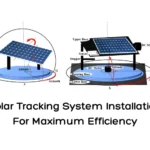
Solar Tracking System Installation for Maximum Efficiency
A step-by-step guide to solar tracking system installation, covering setup, alignment, and best practices for maximum efficiency and performance.
Single Line Diagram (SLD) in Solar PV Systems: Complete Guide to Design, Symbols & Reading
Learn how to fetch a Bill of Material (BOM) for a solar PV system directly from design documents like SLD, layout, and GA drawings. This step-by-step guide helps installers and EPCs ensure accurate material estimation and efficient project execution.

How to Check Materials Received on Site for Solar PV Projects: Complete Inspection Checklist
Ensuring the quality of materials received at site is critical for successful solar PV installation. This guide provides a detailed inspection checklist to verify solar components before installation.
Haryana’s GEOA 2025: A Boost for Captive Solar Plants and Wind Energy Developers
Haryana’s GEOA 2025 paves the way for growth in captive wind and solar energy projects with investor-friendly reforms.