The global formula to estimate the electricity generated in output of a photovoltaic system used in solar power plant for generating solar energy for home/industrial/commercial roof top or ground mounted is:
E = A * r * H * PR
Where E = Energy (kWh),
A = Total solar panel Area (m)
r = solar panel yield (%)
H = Annual average solar radiation on tilted panels (shadings not included)
PR = Performance ratio, coefficient for losses (range between 0.5 and 0.9, default value = 0.75)
r is the yield of the solar panel given by the ratio : electrical power (in kWp) of one solar panel divided by the area of one panel.
Example : The solar panel yield of a PV module of 250 Wp with an area of 1.6 m is 15.6%.
Be aware that this nominal ratio is given for standard test conditions (STC) :
radiation=1000 W/m
cell temperature=25 C
Wind speed=1 m/s
AM=1.5
The unit of the nominal power of the photovoltaic panel in these conditions is called “Watt-peak” (Wp or kWp=1000 Wp or MWp=1000000 Wp).
H =solar radiation data
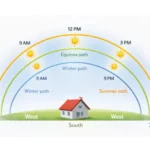
You have to find the global annual irradiation incident on your PV panels with your specific inclination (slope, tilt) and orientation (azimut).
PR : PR (Performance Ratio) is a very important value to evaluate the quality of a photovoltaic installation because it gives the performance of the installation independently of the orientation, inclination of the panel. It includes all losses.
Example of losses details that gives the PR value (depending on the site, the technology, and sizing of the system) :
– Inverter losses (4% to 15 %)
– Temperature losses (5% to 18%)
– DC cables losses (1 to 3 %)
– AC cables losses (1 to 3 %)
– Shadings 0 % to 80% !!! (specific to each site)
– Losses weak radiation 3% to 7%
– Losses due to dust, snow… (2%)
– Other Losses (?)
Pre-Module Losses | Tolerance of rated power | Consider that the module does not deliver the power as stated in the data sheet. Manufacturers provide a tolerance, often up to 5%. |
Shadows | Shadows may be caused by trees, chimneys etc. Depending on the stringing of the cells, even partial shading may have a significant effect. |
Dirt | Losses due to dirt up to 4% in temperate regions with some frequent rain. Up to 25% in arid regions with only seasonal rain and dust. |
Snow | Dependent on location and maintenance effort. |
Reflection | Reflection losses increase with the angle of incidence. Also, this effect is less pronounced in locations with a large proportion of diffuse light, i.e. clouds. |
Module Losses | Conversion | The nominal efficiency is given by the manufacturer for standard conditions. |
Thermal losses | With increasing temperatures, conversion losses increase. These losses depend on irradiance (i.e. location), mounting method (glass, thermal properties of materials), and wind speeds. A very rough estimate is ~8% |
System Losses ~ 14% | Wiring | Any cables have some resistance and therefore more losses. |
MPP | Ability of the MPP tracker in inverters to consistently find the maximum power point. |
Inverter | Inverter efficiency |
Mis-sized inverter | If the inverter is undersized, power is clipped for high intensity light. If it is oversized, the inverter’s efficiency will be too low for low intensity light. |
Transformer | Transformer losses, in case where electricity has to be connected to a high-voltage grid( 11 KV and above ). |
Operation & Maintenance | Downtime | Downtime for maintenance is usually very low for photovoltaic systems. |