When planning a solar power plant or rooftop solar system, one technical term plays a major role in deciding performance: Global Tilted Irradiation (GTI). While it may sound complex, GTI in solar is actually one of the most important factors that decides how much solar electricity your system can generate.
Understanding GTI helps homeowners, businesses, and industrial users estimate output accurately and plan the solar energy installation cost wisely.
What Is Global Tilted Irradiation (GTI)?
Global Tilted Irradiation (GTI) refers to the total amount of solar radiation received on a tilted solar panel surface over a specific period, usually measured in kWh/m²/year.
Unlike horizontal sunlight measurements, GTI in solar considers:
- The tilt angle of the solar panel
- The direction (orientation) of installation
- Direct sunlight, diffused light, and reflected light
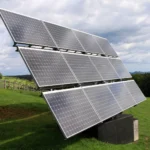
Since solar panels are always installed at a tilt, GTI gives a more realistic picture of actual energy generation.
Why Global Tilted Irradiation (GTI) in Solar is Important for Solar Systems
GTI directly affects:
- Solar panel output
- Annual energy generation
- System efficiency
- Cost of solar per kWh installed
- Return on investment (ROI)
Higher GTI in solar means more sunlight on panels, resulting in better performance and faster payback, making renewable solar more economical.
Difference Between GHI and GTI
Many people confuse GTI with Global Horizontal Irradiation (GHI).
Parameter | GHI in solar | GTI in solar |
Surface | Horizontal | Tilted |
Used for | Climate data | Solar design |
Accuracy | General | Project-specific |
For actual installations like solar panel in rooftop systems or ground-mounted plants, GTI is always more relevant.
How Global Tilted Irradiation (GTI) in Solar is Calculated
GTI is calculated using:
- Location latitude
- Panel tilt angle
- Panel orientation (azimuth)
- Climatic data (clouds, dust, temperature)
Specialized software tools like PVsyst and government datasets help estimate GTI during system design, ensuring accurate planning of solar panel system cost and performance.
Ideal Tilt Angle and Its Impact on Global Tilted Irradiation (GTI)
The tilt angle plays a major role in GTI values.
In India:
- Ideal tilt ≈ Latitude ± 5°
- Seasonal adjustment improves output
Proper tilt maximizes sunlight capture, reduces shading losses, and improves generation — helping reduce the total cost of solar installation in the long run.
Global Tilted Irradiation (GTI) Variation Across India
GTI in solar varies by region:
- Rajasthan, Gujarat, MP → High GTI
- Haryana, UP → Moderate to high GTI
- Coastal regions → Slightly lower GTI
Regions with higher GTI require fewer panels to generate the same power, reducing solar installation charges and improving efficiency for solar energy for home use and commercial plants.
How Global Tilted Irradiation (GTI) Affects Solar Plant Output
Higher GTI in solar results in:
- Higher daily and annual generation
- Better utilization of panel wattage
- Improved inverter performance
This directly impacts:
- Average cost of solar panels on a house
- Commercial plant ROI
- Payback period
GTI is a key reason why two identical systems perform differently in different locations.
Global Tilted Irradiation (GTI) and Solar System Sizing
GTI in solar helps decide:
- Required system capacity (kW)
- Number of panels
- Solar panel area per kW
- Inverter sizing
Accurate GTI assessment prevents over- or undersizing, ensuring making solar energy is economical.
GTI vs Solar Panel Wattage
Panel wattage defines capacity, but GTI in solar defines actual energy generation.
A high-watt panel in a low-GTI area may generate less energy than a lower-watt panel in a high-GTI region. Hence, both must be evaluated together to optimize solar module price per watt.
How GTI in Solar Helps Reduce Solar Electricity Cost
By maximizing energy output, GTI:
- Reduces grid dependency
- Lowers electricity bills
- Improves system efficiency
This makes renewable energy and solar energy a reliable long-term solution for homes and industries alike.
Conclusion: GTI Defines Real Solar Performance
Global Tilted Irradiation is one of the most critical factors in solar system design. It determines how effectively your panels convert sunlight into usable power. Understanding GTI in solar ensures better planning, accurate output estimates, and smarter investment decisions.
At Smart Roof Solar, we carefully analyze GTI while designing every project, ensuring optimized performance, reduced costs, and reliable solar solutions built for long-term savings through renewable energy technology.
FAQs
Q1. Does GTI impact solar battery sizing?
Ans: Indirectly, higher GTI leads to more energy generation, which may require larger or better-optimized battery storage.
Q2. Can two rooftops in the same city have different GTI values?
Ans: Yes, shading from nearby buildings, roof orientation, and tilt can cause GTI differences even within the same area.
Q3. Does GTI affect solar panel degradation rates?
Ans: Higher GTI increases energy output but does not significantly impact panel degradation when quality modules are used.
Q4. Does roof color influence GTI?
Ans: Light-colored or reflective roofs can slightly enhance effective GTI by increasing reflected irradiation.
Q5. How often should GTI data be updated for a solar plant?
Ans: GTI datasets are usually long-term averages and do not require frequent updates unless climate patterns shift.