
In solar photovoltaic (PV) projects, preparing a Bill of Material (BOM) is essential for accurate planning and execution. However, in professional workflows, especially for installers and EPC (Engineering, Procurement, and Construction) companies, the BOM is often derived directly from design documents rather than created from scratch.
Design documents such as layout drawings, electrical schematics, and system design reports contain all the technical details required to extract a precise BOM. Understanding how to interpret design documents is a key skill for solar professionals to ensure efficient system implementation and optimized solar panel system cost.
This blog provides a step-by-step guide on how to fetch the BOM from solar PV design documents, ensuring accuracy, cost efficiency, and smooth project execution.
What are Design Documents in Solar PV Systems?
Design documents are technical drawings and reports that define the layout, configuration, and specifications of a solar PV system.
Common design documents include:
- Solar panel layout drawings
- Electrical single-line diagrams (SLD)
- Cable routing diagrams
- Structural drawings
- System design reports
These documents provide all the necessary information to extract a complete BOM for the solar plant.
Importance of Fetching BOM from Design Documents
Extracting the BOM from design documents offers several advantages:
- Ensures accuracy in component quantities
- Reduces material wastage
- Improves project planning
- Optimizes solar panel system cost
- Minimizes installation errors
This approach is widely used in professional renewable solar projects.
Key Design Documents Used for BOM Extraction
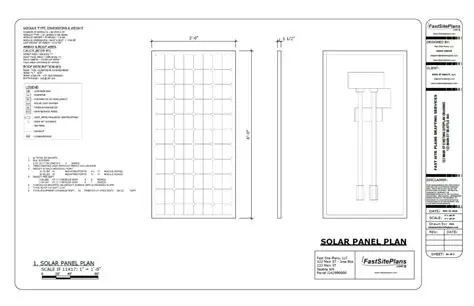
1. Solar Panel Layout Drawing
This drawing shows the arrangement of solar panels on the rooftop or ground.
It helps determine:
- Number of panels
- Panel orientation and tilt
- Total installation area
Essential for solar panel in rooftop installations.
2. Single-Line Diagram (SLD)
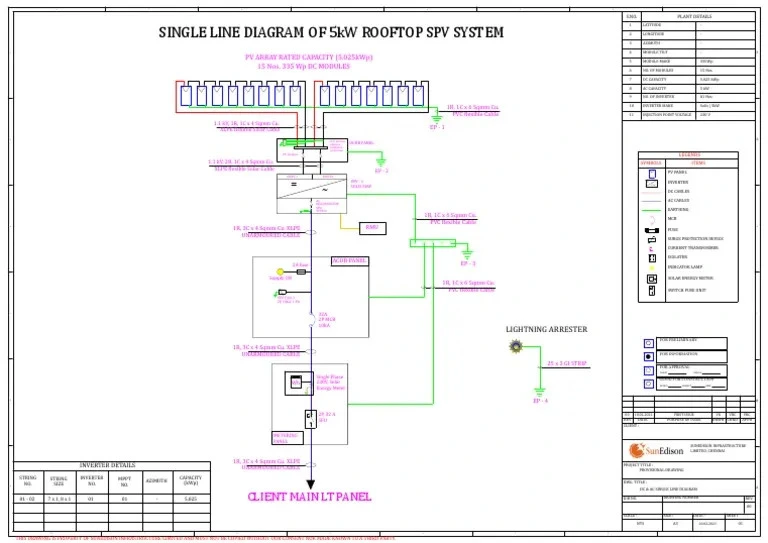
The SLD represents the electrical connections of the system.
It includes:
- Inverter connections
- Grid connection
- Protection devices
This document is crucial for identifying electrical components.
3. Cable Routing Diagram
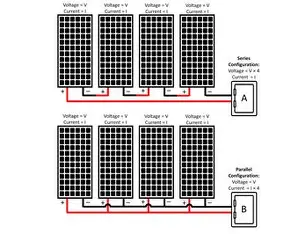
This diagram shows how cables are routed throughout the system.
It helps calculate:
- Cable length
- Cable type (DC/AC)
- Installation pathways
4. Structural Drawings
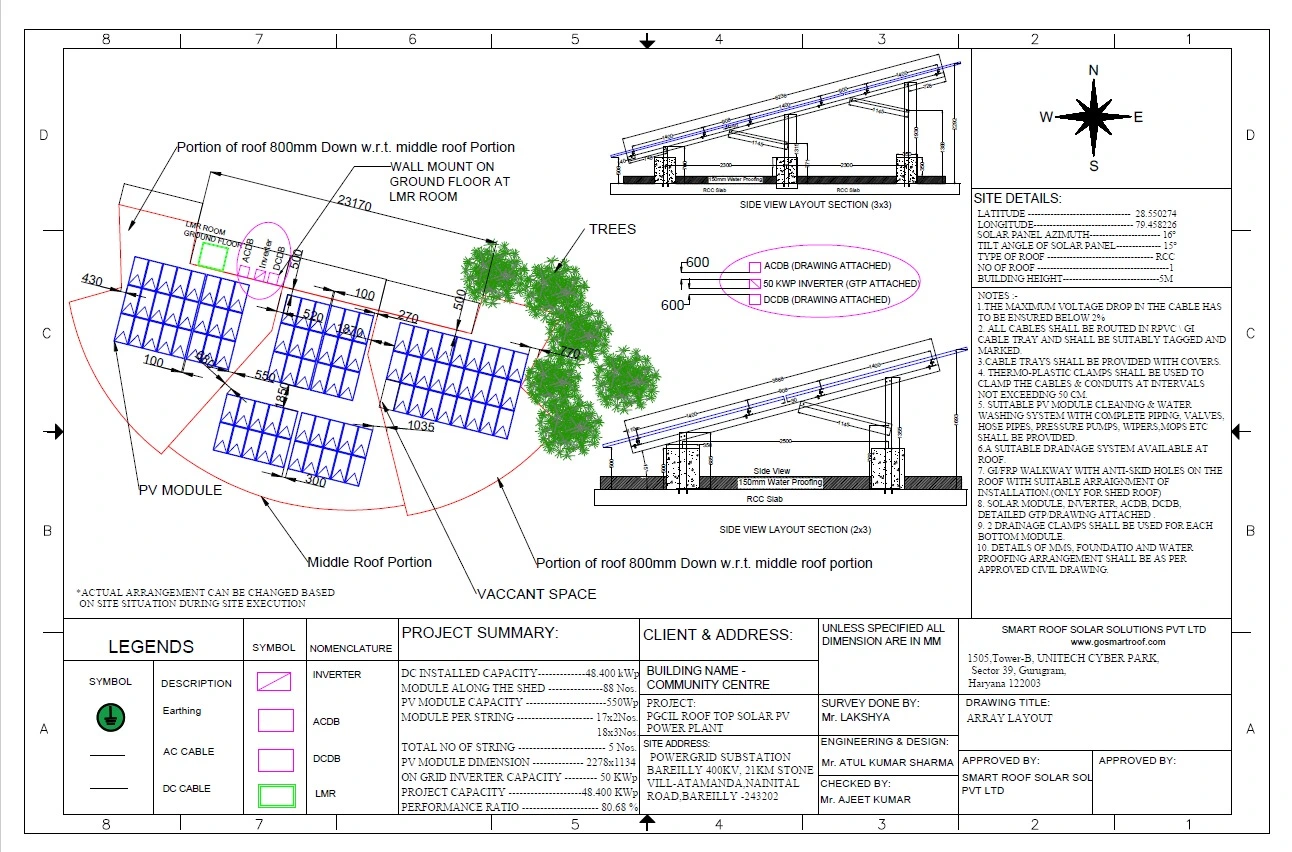
Structural drawings define the mounting structure design.
They help determine:
- Type of mounting structure
- Quantity of structural materials
- Installation configuration
5. System Design Report
This report includes:
- System capacity
- Component specifications
- Expected solar electricity generation
It provides an overview of the entire solar plant.
Step-by-Step Guide to Fetch BOM from Design Documents
Step 1 – Review System Design Report
Start by analyzing the system design report.
Key details include:
- Total system capacity (kW)
- Type of solar PV system
- Panel specifications
- Inverter capacity
This forms the foundation for BOM preparation.
Step 2 – Extract Solar Panel Quantity from Layout
From the layout drawing:
- Count the total number of panels
- Verify panel wattage
Example:
- If layout shows 12 panels of 500 W:
- Total capacity = 6 kW
This step directly impacts solar panel system cost.
Step 3 – Identify Inverter Details from SLD
From the single-line diagram:
- Identify inverter type and capacity
- Note number of inverters used
Ensure inverter capacity matches system design requirements.
Step 4 – Calculate Cable Requirements
Using cable routing diagrams:
- Measure distances between components
- Calculate total cable length
- Identify cable sizes
Proper cable estimation improves renewable solar system efficiency.
Step 5 – Extract Mounting Structure Details
From structural drawings:
- Identify type of structure (fixed/tilted)
- Count number of mounting units
- Determine material specifications
This ensures proper installation and durability.
Step 6 – Identify Protection Devices
From the SLD and design documents:
- List circuit breakers
- Identify isolators
- Note surge protection devices
These components are essential for system safety.
Step 7 – Include Earthing and Lightning Protection
From electrical drawings:
- Identify earthing points
- Determine earthing materials required
- Include lightning protection systems
This ensures safe operation of renewable energy technology systems.
Step 8 – Add Monitoring and Metering Devices
From system design documents:
- Include monitoring systems
- Identify net meter requirements
Net metering policies are governed by the Ministry of New and Renewable Energy.
Step 9 – Include Balance of System (BoS) Components
Balance of System components include:
- Junction boxes
- Connectors
- Conduits
- Cable trays
These components are necessary for complete system installation.
Step 10 – Prepare the Final BOM Document
Compile all extracted data into a structured BOM.
Include:
- Item name
- Specification
- Quantity
- Unit cost
- Total cost
This ensures accurate estimation of solar energy installation cost.
Sample BOM Extraction Table
Component | Source Document | Quantity |
Solar Panels | Layout Drawing | _____ |
Inverter | SLD | _____ |
DC Cable | Cable Routing Diagram | _____ |
Mounting Structure | Structural Drawing | _____ |
Impact on Solar Panel System Cost
Fetching BOM from design documents helps:
- Avoid overestimation or underestimation
- Reduce material wastage
- Optimize solar installation charges
- Improve cost of solar per kWh installed
This ensures better financial planning and project efficiency.
Best Practices for BOM Extraction
- Cross-check data from multiple design documents
- Verify quantities with system capacity
- Use standard specifications
- Document all assumptions clearly
- Review BOM before procurement
These practices improve the accuracy of renewable solar installations.
Conclusion
Fetching the BOM from solar PV design documents is an essential process for ensuring accurate planning and efficient installation. By carefully analyzing layout drawings, electrical diagrams, and system reports, installers and EPC professionals can prepare a comprehensive BOM that reflects actual project requirements.
Proper interpretation of design documents is key to successful solar installations. Additionally, guidelines from the Ministry of New and Renewable Energy support standardized and efficient solar system implementation.
With accurate BOM extraction, solar professionals can optimize solar panel system cost, reduce solar energy installation cost, and ensure reliable renewable solar system performance, ultimately supporting the growth of sustainable solar energy for home use and commercial renewable solar solutions.
FAQs
Q1. What is the purpose of fetching BOM from design documents?
Ans: It ensures accurate identification of all required components based on system design.
Q2. Which documents are used for BOM extraction?
Ans: Layout drawings, SLDs, cable routing diagrams, structural drawings, and system design reports.
Q3. How does BOM extraction affect solar installation cost?
Ans: Accurate BOM reduces material wastage and prevents unnecessary expenses.
Q4. What is included in Balance of System (BoS)?
Ans: BoS includes cables, connectors, junction boxes, and mounting accessories.
Q5. Why is SLD important for BOM preparation?
Ans: SLD provides details about electrical connections and protection devices required in the system.

Sanctioned Load & Rooftop Solar: Everything You Need to Know
Learn why sanctioned load is crucial before rooftop solar installation. Understand its role, process, and impact on solar panel efficiency and subsidy eligibility.
Rooftop Solar: Reduce Your Electricity Bill and Increase Savings
Discover how installing a rooftop solar system can help you save on electricity bills, reduce peak demand charges, and take advantage of government incentives.

Solar PPA for Commercial Buildings: Cost, Benefits & Savings
Looking to cut electricity bills without investing in solar assets? Commercial Solar PPA providers offer zero-investment solar solutions where businesses pay only for the power generated—simple, risk-free, and cost-effective.
Why Go Solar: A Complete Guide to Solar Power for Homes and Industries
Switching to solar energy offers significant savings and environmental benefits. This guide explains why going solar is a smart choice, covering financial incentives, reduced electricity bills, and positive impacts on the planet.
Solar Panel Installation on Tiled Roofs: Complete Homeowner Guide
When you’re ready to install solar panels on your home, there are many factors that will determine the unique design and cost of your solar system. Various roof types require different processes for installation. For example, lightweight tile roofs can present unique challenges and considerations for a solar installer. Here are a few things you need to know before adding solar energy to your tile roof.
Civil Structural General Arrangement (GA) Drawing in Solar Projects: Complete Design & Layout Guide
A Civil Structural General Arrangement (GA) drawing in solar projects is a detailed layout that defines the placement of solar modules, mounting structures, inverters, and civil foundations. It plays a crucial role in ensuring accurate design, optimal space utilization, and smooth execution of both rooftop and ground-mounted solar installations. This guide explains the key components, design considerations, and best practices for creating effective GA drawings in solar EPC projects.
Poor vs Good Solar Installation: Key Differences Explained
A solar system’s performance depends heavily on installation quality. This blog explains the clear differences between a poor and good solar installation — from wiring practices and panel alignment to mounting structures and system safety — helping you make an informed choice and ensure long-term efficiency.

Benefits of Solar Energy: Why Switching to Solar Makes Sense
Switching to solar energy offers numerous benefits, from lowering electricity bills to reducing your carbon footprint. This guide explores how solar power supports sustainable living, provides cost savings, and creates a cleaner environment for homes, businesses, and industries. Learn why adopting solar energy is not just smart, but essential for a greener future.