
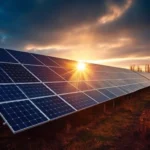
Go Off-Grid with Solar Energy: A Complete Guide
Go off-grid, more commonly defined as not having a dependence on public utilities such as electricity, sounds appealing for a lot of reasons. The idea of being self-sufficient, powering your own home with solar energy, and maybe even building that home with your own two hands can sound like a dream and a challenge for people who wish to live life on their terms.
Maybe you’ve thought about it many times before, could you make it out there alone in the wild? Exactly how feasible is it to live without the electrical grid using solar energy as your only power source? Whether you dream of that cabin in the woods or just want to exert your energy independence over your local utility, going off-grid is possible but that doesn’t mean that it’s beneficial.
For starters, being off the grid takes a lot of planning, not to mention that it’s incredibly expensive to get started. Plus, you’ll need to have backup energy sources on hand, particularly if you’re not ready to let go of your power-hungry devices.
There are plenty of reasons to consider going off-grid with solar energy:
Savings –
Cutting ties with the local power company means that you will never have to pay a monthly power bill again because all of your energy will come from a renewable source.
Environmental benefits –
Using entirely renewable energy for your power needs means a lower carbon footprint.
No blackouts –
All of your energy is stored in the battery or batteries attached to your system, so you can draw on it whenever you need it—during a major winter storm, on hot summer days when the power grid is overloaded, or anytime in between. You won’t be at the mercy of the local power company.
Building locations –
off-grid solar systems are ideal for homes in areas where there is no current connection to a local power grid, such as a cabin up in the mountains or a home that is off the beaten path. Going off-grid allows you to build without the need to pay for power lines out to the house.
Solar power has the amazing benefit of helping reduce strain on the electrical grid when demand rises during peak seasons or extreme weather hits. By generating your clean power and even sending excess energy back to the utility in some cases, you are creating a more reliable electrical grid.
Virtual power plants (VPP) are another example of homeowners using their solar systems for the greater good of their community. VPPs come into play when energy demand is higher than the available amount. When this occurs, home batteries that are connected to the VPP trade their stored electricity to the electrical grid to help meet the demand.
The reliability of the electrical grid has become an increasing concern for many homeowners as power outages become more commonplace. That’s why the popularity of home solar systems and VPPs has been on the rise. In the 2021 Energy Sense Index conducted last year, it was discovered that two out of every five homeowners worry about power outages every month of the year.
It is important to note that installing solar panels doesn’t necessarily mean that you’ve gone off-grid. Typical solar energy systems aren’t always designed to generate enough electricity to power an entire home, but rather maintain a connection to the utility company’s main grid as backup.
This is referred to as a hybrid system, a less expensive and more flexible option, especially for homeowners that live closer to their area’s power grid.
Suggested Articles

Minimum Land Requirement for Solar Power Plants in India
Understanding the land requirement for solar plant projects in India is essential for accurate planning and approvals. This article explains minimum land needed per kW and MW, key influencing factors, and differences between rooftop and ground-mounted solar plants.
Latest 100 kW Solar Plant Price in Delhi | Subsidy, ROI & Payback
Thinking about installing a 100 kW solar system in Delhi? This 2025 guide breaks down the 100 kW Solar Plant Cost in Delhi, explaining price per watt, total investment, energy generation, and key benefits for industries and businesses.
India and IMT-GT JBC Sign MoU to Boost Energy Efficiency in Southeast Asia
The first meeting of the G20 Energy Transitions Working Group was held in Bengaluru, India, and was a success, with participants sharing a consensus on the priority areas of energy security and diversified supply chains.
Delhi Government Pledges to Boost Renewable Energy Generation
Delhi, the capital city of India, is moving towards a greener future with an ambitious plan to generate an additional 6,000 MW of electricity using renewable energy sources.
How Total Solar PV Power Affects Solar System Efficiency
Total solar PV power represents the combined power output of a solar photovoltaic system. This guide explains its meaning, calculation, and how it directly impacts solar performance, efficiency, and long-term energy generation.
Blame it on Sun! Average Solar PLFs not satisfactory
Explore the reasons behind low average Solar PLFs, from environmental factors to system design, and learn strategies to boost solar plant performance
Solar PV AC or DC: How Solar Electricity Is Generated
Total solar PV power represents the combined power output of a solar photovoltaic system. This guide explains its meaning, calculation, and how it directly impacts solar performance, efficiency, and long-term energy generation.

Solar Energy for Petrol Pumps: Benefits, Savings, and Implementation
Petrol pumps can significantly reduce energy costs and carbon footprint by adopting solar power. This guide explains the benefits, types of solar installations, and how fuel stations can leverage renewable energy for sustainable and efficient operations.