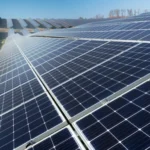
Solar String Sizing Check: Did Your Installer Get It Right?
A Solar PV Rooftop system will give its optimum performance only when the string sizing has been done correctly. In this blog, we will be talking on correct methods of string sizing.
Now let us first understand what a String is. When we connect Solar PV panels, used in solar power plant for generating solar energy for home/industrial/commercial roof top or ground mounted, in series, then it is called a String. String sizing means, what should be the minimum and maximum number of Solar PV panels to be connected in a string, so that system operates at its highest efficiency.
Output parameters of Solar PV panel , used in solar power plant for generating solar energy for home/industrial/commercial roof top or ground mounted ,should match the input parameters of the Inverter, so that the system works at its highest efficiency. If the parameters do not match, or falls out of the range, the system will shut down or will work with very less efficiency. Hence, String sizing must be done correctly.
Parameters of Solar PV vary with change in temperature. With increase in temperature the voltage of Solar PV panel decreases and this need to be consider while sizing the string. One needs to check the Technical Data Sheet of Solar PV panel (as given by manufacturer) for calculating the effect of temperature on a particular Solar PV Panel and then match that with the Inverter input parameters. Until and unless this is done, we can’t say that the system is designed perfectly and will perform best.
For example, if the strings are not sized considering the temperature factor and inverter input parameters, then there may be situations when the Solar PV Panel parameters will not match the inverter input parameters and the system will shut down or will under perform.
Our string sizing goals should be ::That we make sure never to supply the inverter excess voltage which may kill it—Max string length. Voc adjusted for temp will decide Max string length.
And also to ensure that we always supply enough voltage to inverter to turn it on—minimum string length. Vmp adjusted for temp will decide Min string length.
So you need to ask your installer, did he consider these parameters while string sizing ? Has he actually done string sizing or made a string by just counting the even numbers of PV panels in series?
Keep visiting our website for more such blogs.
Suggested Articles

Solar for Industrial Use in India: Costs, Benefits & Energy Savings Explained
Solar for industrial use in India is rapidly transforming how factories manage energy costs and efficiency. This guide covers system sizes, costs, benefits, ROI, and how solar energy helps manufacturing units, warehouses, and industrial plants reduce power bills and ensure long-term sustainability.
Solar ROI for Commercial & Industrial Projects in India: Cost, Payback & Profits
Learn how commercial and industrial solar projects deliver strong ROI for businesses in India through lower energy costs, faster payback, and long-term profit generation.
Solar Rooftop Projects: Benefits of Intentional Islanding for Power Backup
Discover the role of intentional islanding in solar rooftop projects. Ensure continuous power supply, system safety, and reliable energy even during grid failures.

Steps for Conducting a Load Assessment Before Solar Installation and Its Requirements
Load assessment is an essential step before installing a solar PV system. It helps determine electricity consumption and ensures accurate system sizing for optimal solar performance.

Solar Savings Made Simple: Know Your Cost Cuts in 2025
Maximize your solar savings in 2025. Learn how solar energy reduces electricity costs for homes and businesses.
Identify All Major Components of a Solar PV System: Complete Guide for Installers
Understand all major components of a solar PV system, from panels and inverters to mounting structures and BOS. This complete guide helps installers design efficient and reliable solar power systems.
Solar Industry Faces Growing Losses from Underperforming Equipment
According to the Raptor Maps’ Global Solar Report, the amount of power loss due to equipment anomalies has nearly doubled from 1.61% in 2019 to 3.13% in 2022. This trend is expected to continue, with anomaly-driven power loss potentially growing to almost 6% by 2025.

Breakthrough in Solar Technology: 33.2% Efficient Perovskite-Silicon Cell
Scientists achieve a breakthrough in solar technology with a perovskite-silicon tandem cell reaching a record 33.2% efficiency for higher energy output.