Stop Losing Power: The Ultimate Guide to Solar DC & AC Cable Sizing for Max Efficiency
When we are talking about 25 years of life for a Solar PV Rooftop System, Module Mounting Structure plays a crucial role. In this bog we will be discussing on Module Mounting Structures Quality and Design.
As per standards, Module mounting structure for a Solar PV Rooftop System should be designed to withstand storm condition with wind speed up to maximum 150 Kmph. But in the competitive market of Solar PV Rooftop Power plants, many installers are compromising with the quality and strength of Module mounting structures.
To ensure that the structure is designed with relevant max wind speed the STAAD PRO test (simulating the conditions of wind speed to see the stress on each joint) needs to be done. It costs the installer about 5000 but to save these 5000, he takes risk with the life of the structure. For a 10 KW power plant this is significant as it amounts to Rs 0.5/w of savings for the installer.
Many installers use pregalvanized sheets and forming sections out of it rather than making sections with MS Plates and then going for hot dipped galvanizing (80 microns coating) the same to make the structure; But the process being adopted with pregalvanized sheets gives a better look and feel to the structure, saves cost and time.
When somebody cuts the galvanized sheets the cut edge of the sheet does not remain galvanized and therefore when exposed to moisture and atmospheric conditions gets rusted with time reducing the strength of the structure. The difference in cost may be around Rs. 1-2/Watt, but this saving comes with the risk of damaging the power plant.
So if the Solar PV Rooftop system uses best Solar PV Module and best Inverter, but margins are created out of Structure compromising quality, then there is a possibility of Solar PV Module blowing off or structure uplifting and may more in the event of a storm or with time.
So, while comparing various installers for Solar PV Rooftop System installations at your premises, you should consider the importance of module mounting structure. You need to question your installer about the size, quality and strength of the material he would be using for your Solar PV Rooftop power plant. For best results, Module mounting structure should be a Hot Dipped Galvanized structure, designed to withstand a wind speed of maximum 150 Kmph and STAAD PRO analysis should be done for that structure.
So, when you are looking for quality installation of Solar PV Rooftop power plant that will work for 25 years and more, then you surely need to consider the importance of Structure Quality and the knowledge of the installing company. Do not go for price alone, as looking for cheaper supplier may result in costly repairs at a later stage.
Mounting of structure
While designing the structure the tilt angle of the panels is an important aspect which needs to be carefully considered because if the direction of the panels on mounted structure is not on true south at an elevation equal to latitude of the site then there is bound to be loss of power.
Assuming altitude to be 30 degrees then 180 degree south will give the best results.
Modules after mounting on structure are facing west then loss shall be 17% but if it is facing east then loss could be as high as 22%. For optimum results of power generation structure design should be such that after mounting of modules, modules remain in true south at appropriate altitude angle.
Register at our website for reading more of such blogs.
Suggested Articles

PWM vs MPPT Charge Controllers: Specifications and Key Differences
Choosing the right charge controller is essential for battery performance and system efficiency. This guide compares PWM and MPPT charge controllers, explaining their specifications, working principles, and key differences to help you select the best option.
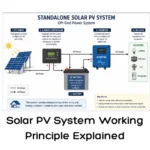
Solar PV System Working Principle Explained
A complete guide explaining how solar PV systems work, covering the photovoltaic effect, solar modules, DC power generation, inverters, energy distribution, and grid integration.
Fire Hazard in a Solar Setup at Rice Mill, Kaithal – Case Study and Safety Insights
A recent fire incident at a rice mill in Kaithal highlights the critical importance of safety in solar installations. This case study analyzes the root causes, system faults, and preventive actions that can help industries avoid similar hazards in their solar setups.
6 Innovative Applications of Solar Energy You Should Know About
Explore how solar energy is revolutionizing daily life and industries. From solar-powered transport to smart cities, discover six groundbreaking solar applications shaping a cleaner, smarter future.
Monitoring Services for Solar Plants by Smart Roof Solar to Maximize Performance and Efficiency
Smart Roof Solar provides advanced monitoring services for solar plants to ensure maximum performance and efficiency. With real-time data tracking and intelligent analytics, our monitoring solutions help detect issues early, reduce downtime, and enhance the overall energy yield of your solar system.
What Is Renewable Energy? What Is the Best Source of Renewable Energy and Why? – Complete Guide
Renewable energy comes from natural sources like sunlight, wind, water, and biomass that are constantly replenished. As India accelerates its transition toward clean energy, understanding different renewable energy sources and identifying the most efficient and cost-effective option is crucial. This complete guide explains renewable energy types, their advantages, and compares them to determine the best source based on sustainability, scalability, and long-term benefits.
How to Calculate Savings from Rooftop Solar Solutions: A Complete Guide
Calculating savings from rooftop solar solutions is essential for planning your investment. This guide explains how to estimate cost reduction, return on investment, and long-term financial benefits for residential, commercial, and industrial solar projects.
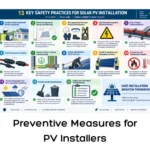
Preventive Measures for PV Installers
A complete solar PV safety guide covering essential preventive measures for installers, from PPE and electrical safety to fall protection and emergency preparedness.