
China’s Solar Industry Poised for Continued Growth in 2023 and Beyond
China’s solar industry exports surged by 64% to $52 billion in 2022, despite global trade tensions. The country’s low-cost supply and technological expertise were key factors in this growth.
Europe was the top export market for Chinese solar modules, accounting for 56% of total exports. Southeast Asia was the second-largest export market, with a 31% share.
The U.S. tariffs on Chinese-made modules have driven module production to Southeast Asia, where manufacturers rely on imported cells from China.
Wood Mackenzie, a global research and consultancy group, found that Chinese photovoltaic (PV) modules were up to 57% cheaper than the modules produced in the U.S. and EU. The primary reason for this price gap is the cost of materials. China has low energy costs, scaling advantages, and government support, which give local manufacturing an edge over the U.S. and EU counterparts.
The U.S. goal to produce 100% U.S.-made modules by 2026 will be difficult to achieve due to the significant lack of wafer and cell production. Even the incentives rolled out by the government will not be able to fully bridge the manufacturing cost gap with the Chinese-manufactured modules.
The China-targeted PV trade policies by the U.S. have benefited the Southeast Asia region, which has developed a mature supply chain and large production capacity for export. Chinese manufacturers account for 55% of the region’s PV manufacturing capacity, which builds on Chinese-produced components.
The EU and India have also set ambitious targets for domestic PV manufacturing, but they are facing challenges in meeting these targets. The EU is advocating trade restrictions to secure its domestic PV manufacturing, but specific policies to drive capacity building and displace imports are missing. India has suspended the Approved List of Models and Manufacturers regulations for a year, citing the lack of larger capacity solar modules in the country as the reason.
China’s domestic solar PV industry continues to invest in upstream sectors, which are more profitable than modules. The available export module capacity in the country is expected to grow to 149 GW by 2026. Wood Mackenzie suggests that companies outside of China, even with multiple opportunities, will find it challenging to compete with China’s low-cost supply chain and pool of expertise, which it has developed over a decade.
The European Commission has published the Green Deal Industrial Plan, which will utilize €250 billion (~$269.51 billion) of existing EU funds to safeguard and enhance the competitiveness of its clean energy industry.
India exported solar cells and modules worth $479 million (~₹39.5 billion) in the first quarter of the calendar year 2023, a staggering increase of 6,293% year-over-year.
Suggested Articles

Solar PV Array Troubleshooting Guide: Diagnose & Fix Issues
Discover how to troubleshoot solar PV arrays with a step-by-step guide to diagnosing common faults, performing electrical tests, identifying damaged modules, and restoring optimal solar system performance.
Tools and Tackles Required for Installation of Solar PV Panels: Complete Installer Checklist
Proper tools and tackles are essential for efficient and safe solar PV installation. This guide provides a complete checklist of mechanical, electrical, and safety tools required for installers and EPC teams.
Industrial Solar Power: 7 Reasons to Make the Switch
Top 7 benefits of solar energy for industries, including cost savings, environmental impact, and improved energy reliability.
Industrial Solar Plants with Diesel Generator Backup: What You Need to Know
Discover how industries can efficiently run rooftop solar plants alongside diesel generators (DG). Learn the benefits, setup tips, and hybrid system strategies to ensure uninterrupted power and maximize energy savings.
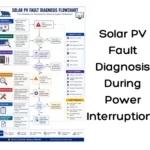
Solar PV Fault Diagnosis During Power Interruptions
A complete guide to identifying faults in solar PV systems during power generation interruptions, including troubleshooting techniques, root cause analysis, and corrective maintenance.
Developers fear unfair state-specific levies will make solar more expensive
Developers in India are concerned that state-specific levies on solar projects could increase costs, slow adoption, and impact the growth of renewable energy across residential, commercial, and industrial sectors.

SECI Sets Record in Renewable Energy Trading, Surpasses ₹100 Billion
SECI achieves record renewable power trading revenue surpassing ₹100 billion, marking a milestone in India’s clean energy growth and solar market expansion.
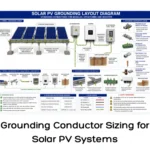
Grounding Conductor Sizing for Solar PV Systems
A complete guide to determining grounding conductor size for solar PV systems, ensuring safe, compliant, and reliable installations.