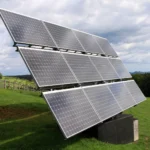
Solar Power Park Scheme: Central Government Expands Clean Energy Initiative
NEW DELHI Solar Power Park Scheme
The Union government plans to launch the second phase (solar power park scheme) of a dedicated program to develop solar parks across the country that will aim to plug loopholes and overcome slow progress.
Two officials with knowledge of the matter said the expanded scheme would seek to address the issue of solar park developers failing to make initial investments and delaying the development of projects till they receive money from power producers who place bids to develop power in such projects. The government is also looking to address the issue of inflated detailed project reports (DPR), they said.
According to one of the officials, “The people who come for developing solar parks, they don’t put in any money. They first do the bids for power developers. The money which comes from bids, they develop the solar parks.”
The scheme, which is known as ‘Development of Solar Parks and Ultra Mega Solar Power Projects’, was launched in December 2014 to help solar project developers set up projects in a plug-and-play model. The scheme is valid till the end of this fiscal. The government now plans to launch the second phase of this scheme with a focus on floating solar projects.
“We are thinking of expanding the scheme and coming up with a second part, particularly to take care of floating solar parks. The cost is higher in floating solar parks. Subsidy rates will be better,” the second official said. The focus on floating solar parks will reduce the need for vast stretches of land to set up similar parks.
However, the technology for floating solar module projects, wherein photovoltaic solar panels are mounted on floating structures on water bodies, is expensive. Under the current scheme, the MNRE provides central financial assistance (CFA) of up to ₹20 lakh per MW or 30% of the project cost, including grid-connectivity cost, whichever is lower. The solar parks are developed in partnerships with state governments and their agencies, CPSUs, and private entrepreneurs.
The implementing agency is termed as a solar power park developer (SPPD). Post the selection of the SPPD, bids are sought for power developers, which are largely independent power producers (IPP) to produce power at the site in a plug-and-play model.
On the instances of SPPDs lagging in infrastructure development, Amit Kumar, partner, and leader for Power, Utilities and Mining, PwC India said: “The scheme is aimed at providing a plug-and-play model of infrastructure for the power developers, but the opposite happens in some instances where the SPPD starts development of the project only after the money comes in from the IPPs. This delays the project.”
Further, according to sector experts, project development is delayed even if the SPPDs receive a grant from the Centre for the project.
Suggested Articles

Solar System for FMCG Industry: Cost, Benefits, Installation & ROI in India
A complete guide on solar systems for the FMCG industry in India covering installation cost, benefits, ROI, system sizing, and the installation process.
Why Solar Energy Makes Sense for the Healthcare Industry
Explore how the healthcare industry can leverage solar energy to reduce electricity bills, enhance reliability, and support green initiatives.
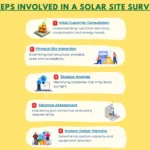
Benefits of Site Survey in Solar PV Installation
Shadow analysis is a critical step in solar site assessment. It helps solar installers identify shading obstacles and optimize panel placement for maximum energy generation.
Affordable Solar Systems and Plants for Small and Medium Enterprises
Learn how SMEs can harness solar energy through tailored solar systems and plants to reduce electricity bills, improve sustainability, and boost efficiency.
Series & Parallel Wiring in Solar Modules: Installer Guide
A practical guide to solar module interconnection using series and parallel wiring, covering setup, calculations, and best practices for installers.
Solar Power System Efficiency: How to Calculate for Residential, Industrial & Commercial Use
Understand and measure your solar system’s performance. Maximize energy output at home, industrial units, and commercial buildings
Solar PV Conduit & Cable Routing Plan Guide
A complete guide to preparing solar PV conduit and cable routing plans, including layout design, routing methods, and installation best practices.
What Is Global Tilted Irradiation (GTI) in Solar Energy? Explained Simply
Solar panel wattage and ratings decide how much electricity you generate. This guide explains panel output, efficiency, and how to choose the right solar panel for your needs.