How to Safely Install Solar Panels on Metal and Asbestos Rooftops
Factories in Delhi and NCR regions have a variety of roofs ranging from flat concrete roofs, metal sheds which are mostly inclined and even the asbestos sheets laid over the top.
Solar on Metal & Asbestos Roofs
The Solar Plant can be installed on any roof that has sufficient strength.
Solar on Concrete Roofs
On flat concrete roofs, it is quite easy to lay the solar panels. The civil foundations need to be laid in a way that the water should not seep into the roof. Over the foundations, the structure made up of hot dipped galvanized steel needs to be built of sufficient strength. The structure should preferably give a tilt of 20 degree around in Delhi and NCR to get the best solar irradiation. The panels should face to the South side to the extent possible.
Solar on Metal Sheds
The Metal sheds can be facing east-west or north-south. If the metal structure has sufficient strength, the solar panels can be easily laid. The solar panel structure should be such that it is light and strong enough to hold panels. In typical sheds, the purlins and associated structures are designed to take weights of more than 100 kg per square meter. Solar plant will weight around 20-25 kgs per square meter, hence the weight of plant is never a problem unless the purlins are not strong enough.
However, the factory owners should be careful while allowing the puncture in the roof. Water leakages would tend to happen from the punctured holes in the roof. Over time, the screws put on these punctured roofs will have movement due to the pressure from strong winds and the puncture size will increase. So, while installing panels or building pathways or side rails, these punctures need to be reduced to the maximum.
Solar on Asbestos Sheets
Similarly, panels can be installed on asbestos sheets. The old sheets need to be replaced in such installations. Typical asbestos sheet has a life of 10 years. Again, it is not the sheet but the purlin structure that has to take the weight of the solar panels and structures. Asbestos sheets should have enough strength that the man power for plant installation can freely walk and do their work.
Suggested Articles

Solar PV Mounting Techniques: Rooftop & Ground Systems
A complete guide to solar PV module mounting techniques for rooftop and ground systems, including methods, structures, and best practices.
Battery Bank Installation Guide for Solar PV Systems
A step-by-step guide to battery bank installation for solar PV systems, covering location planning, battery setup, and safety requirements.
Solar PV Array Troubleshooting Guide: Diagnose & Fix Issues
Discover how to troubleshoot solar PV arrays with a step-by-step guide to diagnosing common faults, performing electrical tests, identifying damaged modules, and restoring optimal solar system performance.
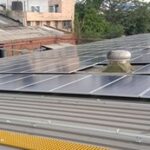
How Azimuth Angle Impacts Solar Panel Efficiency for Homes, Industries, and Commercial Buildings
Discover how solar panel azimuth impacts energy generation in homes, industries, and commercial buildings. Maximize efficiency with correct orientation.
Workplace Safety Incident Reporting Guide for Solar PV
A complete guide to establishing and following safe work procedures in solar PV systems, ensuring worker safety during installation, testing, commissioning, operation, and maintenance.
Inspection Reporting and Corrective Actions
A complete guide to preparing solar PV inspection reports and implementing corrective actions to ensure quality, compliance, and project performance.
How to Assess Customer Requirements Before Solar Installation
Understanding customer requirements is essential before installing a solar plant. This guide explains key assessment methods such as energy analysis, site survey, and feasibility evaluation.
Installation of DC Energy Meters in Solar PV Systems: Step-by-Step Guide
DC energy meters are used in solar PV systems to measure generated DC power and energy. This guide explains installation, wiring, testing, and safety procedures for solar installers.