The growing global population, coupled with the shortage of land, could mean that we are heading for a food crisis in the future. Unfortunately, this is not the only issue that our society is currently facing. Another problem lies in our high dependence on fossil fuels. Both these issues could have catastrophic implications on the environment and on people in general.
Researchers and specialists have been working on methods to overcome these difficulties over the past few years, but they have mainly concentrated on addressing the two problems independently. However, there is an innovative approach that relies on ‘Agrivoltaics,’ a concept of using the land for both photovoltaic power generation and agriculture at the same time. Solar panels and crops co-existing together not only lower the amount of area needed but also make the land usable for several purposes.
The strategy is straightforward and entails putting solar panels on farmland to generate sustainable energy and increase crop yields. Agrivoltaics could provide the groundwork for future farms as the cost of solar panel technology decreases.
What is Agrivoltaics?
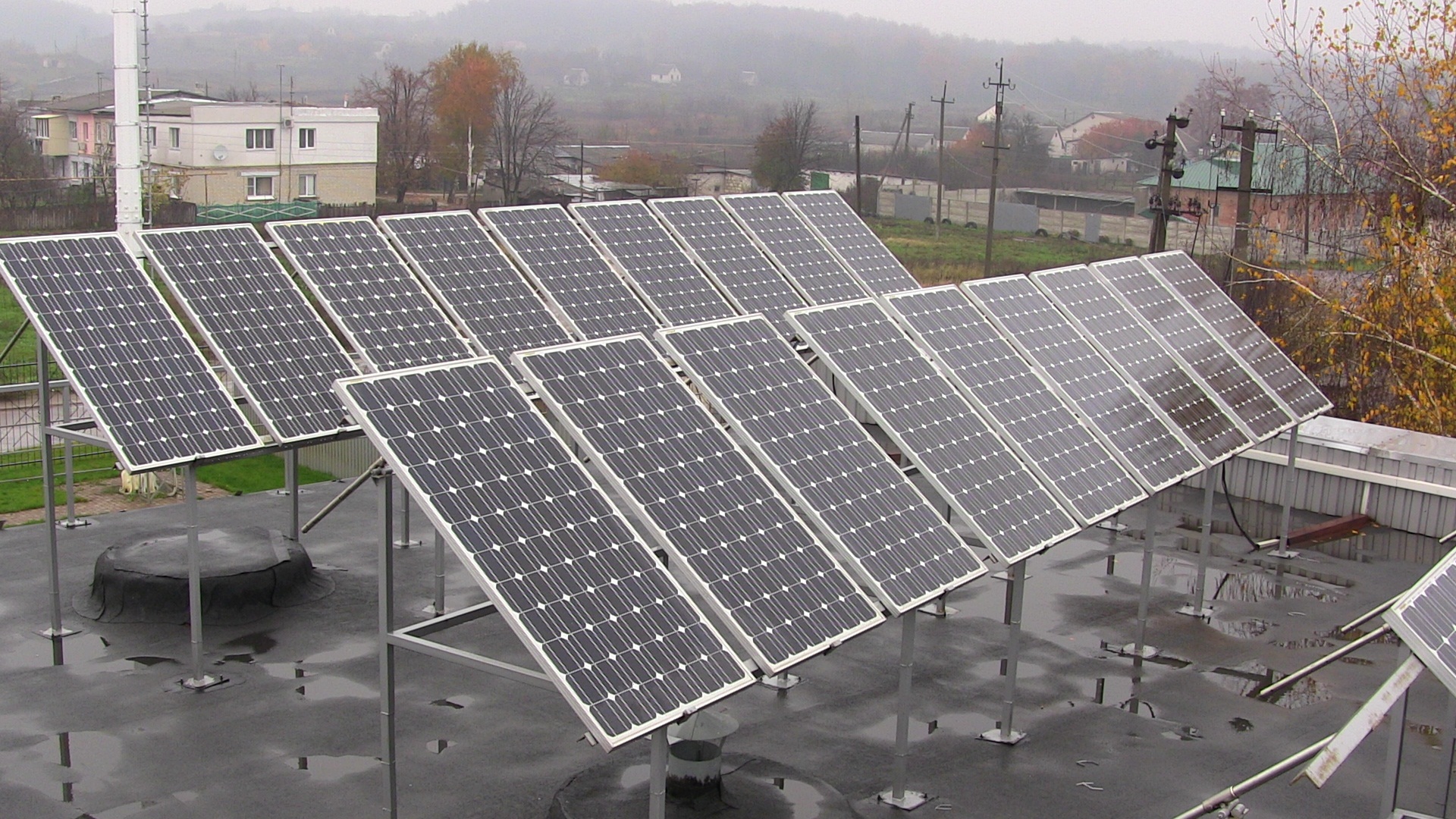
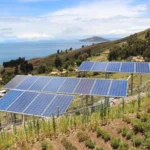
Using the same piece of land to support agriculture and produce solar electricity is known as agrivoltaics. Crops are typically grown beneath or in between the rows of solar panels in a conventional agrivoltaic solar system, which comprises ground-mounted solar arrays. The panels can be mounted on structures that are tall enough for farming machinery to pass underneath. It might not seem logical at first to grow plants beneath the panels require as plants require sunlight for photosynthesis. However, many crops do not require as much sunlight as you may assume. Agrivoltaic systems can be created to help crops receive the right quantity of light so the crops can grow without letting too much light stress the plants.
Benefits of Agrivoltaics
It maximizes the potential of solar energy:
Croplands, grasslands, and wetlands are the top three types of land that have the highest potential for solar PV electricity. It is also found that even if just 1% of cropland were converted to an agrivoltaic system, the world’s energy needs would be met by solar energy.
It improves crops’ quality:
Agrivoltaic solar modules can serve as a barrier for the crops against excessive solar radiation, heat, drought, or heavy rainfall. Additionally, the panels’ shade keeps the soil moist for a longer period, giving plants the best possible water supply.
Solar farms have higher yields:
Solar energy is generated by photovoltaic cells from light and not heat. Heat can adversely impact a solar farm’s operation and considerably lower its efficiency. By growing crops under the photovoltaic panels, the temperature of the panels is reduced, reducing the temperature of panels, preventing a decrease in their performance, and preserving their efficiency.
Linking two sectors:
Simply said, the amount of available land is limited. Additionally, it is critical to consider the requirement for energy without ignoring the need for food given the rising need for clean energy. Putting two plots of land to agrivoltaics might possibly produce twice as much as dividing the land use. The fact that the same site serves two different businesses could also result in a varied revenue stream for the sectors involved.
Positive impact on the environment:
Solar panel manufacturers and plant owners can also enjoy the environmental benefits of agrivoltaics. As interest in agrivoltaics grows, so has the amount of research on the interaction between PV systems and the surrounding agricultural ecosystem. Studies have shown how agrivoltaics provides potential benefits for soil health, water quality, stormwater control, and pollinator habitat creation.
Challenges in adopting Agrivoltaics
Although agrivoltaics appear to be the ideal option, there are several factors to consider. Currently, agrivoltaics only benefits plants that can grow in the shadow, therefore crops that need sunlight will not get benefitted from this method. Furthermore, the height of the plants must be taken into consideration as for the larger plants, raised solar panels will be needed. Also, currently, there is limited technology for agricultural photovoltaic projects. While considering photovoltaics, it is important to keep in mind the impact the animals will have on the panels. Additional care and maintenance will be required, which can become costly.
Future of Agrivoltaics
Though there are obstacles, it is possible that using the land for both food production and energy production would yield twice as many outcomes. The dual-use of land would benefit the rising demand for solar energy and ensure profits for farmers. With advancements in technology in the solar sector, there will be opportunities to integrate more agricultural practices with PV systems.