
In solar photovoltaic (PV) systems, electrical safety, efficient power distribution, and organized cable management are essential for ensuring reliable performance. One of the key components that supports these functions is the AC Combiner Box.
An AC Combiner Box is used to combine multiple AC outputs from solar inverters into a single distribution point before connecting to the main electrical panel or utility grid. It helps improve system safety, simplifies maintenance, and provides centralized protection for solar PV installations.
Improper installation of the AC Combiner Box can lead to electrical faults, power losses, safety hazards, and increased solar installation charges. Therefore, solar installers and EPC professionals must understand proper installation techniques, safety standards, and quality checks.
Proper AC distribution and protection are essential for renewable solar projects and solar electricity generation systems.
This blog provides a complete step-by-step guide to AC Combiner Box installation in solar PV systems, including components, installation methods, safety precautions, and best practices.
What is an AC Combiner Box?
An AC Combiner Box is an electrical enclosure used to:
- Combine AC outputs from multiple inverters
- Provide circuit protection
- Simplify AC power distribution
It is commonly used in:
- Commercial solar plants
- Industrial solar systems
- Large rooftop solar projects
Importance of AC Combiner Box in Solar PV Systems
1. Centralized AC Distribution
Combines multiple inverter outputs into a single AC feeder.
2. Improved Safety
Provides protection against:
- Overcurrent
- Short circuits
- Electrical faults
3. Easier Maintenance
Simplifies troubleshooting and inspection.
4. Organized Cable Management
Improves cable routing and system appearance.
5. Better System Reliability
Protects critical electrical equipment.
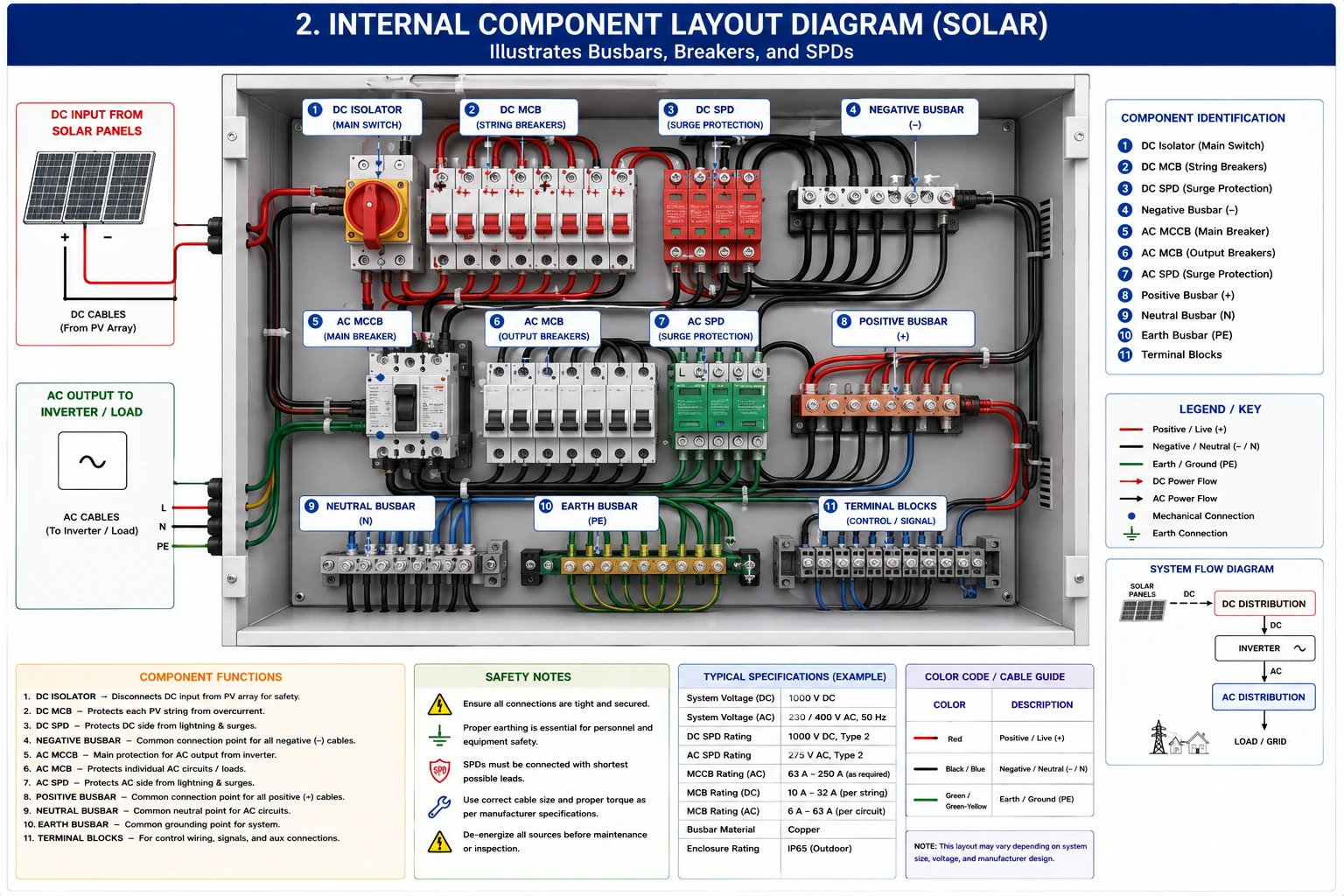
Components of an AC Combiner Box
1. MCCB/MCB (Circuit Breakers)
Provide overload and short-circuit protection.
2. Busbars
Used for combining AC power connections.
3. Surge Protection Devices (SPDs)
Protect equipment from voltage surges.
4. Terminal Blocks
Used for secure cable terminations.
5. Earthing Bar
Provides a grounding connection.
6. Monitoring Devices (Optional)
Used for current and voltage monitoring.
Types of AC Combiner Boxes
1. Single-Phase AC Combiner Box
Used in small residential solar systems.
2. Three-Phase AC Combiner Box
Used in commercial and industrial solar plants.
3. Outdoor AC Combiner Box
Weatherproof design for outdoor installations.
Factors to Consider Before Installation
1. System Voltage and Current Rating
Ensure compatibility with inverter outputs.
2. Number of Inverters
Determine required input circuits.
3. Installation Environment
Check for:
- Dust
- Moisture
- Temperature exposure
4. Accessibility
The combiner box should allow:
- Easy maintenance
- Safe inspection
- Emergency access
Tools and Materials Required
Tools
- Insulated screwdrivers
- Torque wrench
- Wire stripper
- Crimping tool
- Multimeter
- Insulation tester
Materials
- AC cables
- Cable glands
- Conduits
- Lugs and ferrules
- Earthing cables
Step-by-Step Installation Procedure
Step 1 – Review Electrical Drawings
Understand:
- AC wiring layout
- Number of inverter inputs
- Protection device ratings
Step 2 – Select Installation Location
The location should be:
- Well ventilated
- Easily accessible
- Protected from water and direct sunlight
Step 3 – Mount the AC Combiner Box
- Secure the enclosure properly
- Ensure proper alignment and clearance
Step 4 – Isolate Electrical Sources
Before wiring:
- Shut down inverters
- Isolate the AC supply
- Verify absence of voltage
Step 5 – Install Cable Conduits and Glands
Protect cables from:
- Mechanical damage
- Water ingress
- Dust exposure
Step 6 – Route AC Input Cables
Connect the inverter AC outputs to the combiner box inputs.
Step 7 – Install Protection Devices
Install:
- MCBs/MCCBs
- SPDs
- Isolators
Step 8 – Connect Busbars and Terminals
Ensure:
- Proper phase sequence
- Tight electrical connections
Step 9 – Install Grounding Connection
Connect earthing cables securely.
Step 10 – Label the Combiner Box
Include:
- Circuit identification
- Safety labels
- ON/OFF indications
Step 11 – Perform Electrical Testing
Check:
- Continuity
- Voltage levels
- Insulation resistance
- Earthing continuity
Step 12 – Conduct Functional Testing
Verify proper AC power flow and protection device operation.
Conclusion
The installation of an AC Combiner Box is a critical part of ensuring safe and efficient AC power distribution in solar PV systems. By following proper installation procedures, maintaining electrical safety standards, and conducting thorough testing, installers can significantly improve system performance and reliability.
AC distribution and electrical protection are essential components of renewable solar projects and solar energy for home use. Additionally, adherence to standards established by the Ministry of New and Renewable Energy ensures safe and standardized installation practices.
With proper installation techniques, solar professionals can optimize solar panel system cost, improve solar electricity generation reliability, and support the growth of advanced renewable energy technology solutions.
FAQs
Q1. What is the purpose of an AC Combiner Box?
Ans: It combines AC outputs from multiple solar inverters into a single distribution point.
Q2. Why is grounding important in AC Combiner Boxes?
Ans: Grounding protects equipment and personnel from electrical faults.
Q3. What protection devices are used inside AC Combiner Boxes?
Ans: MCBs, MCCBs, SPDs, and isolators are commonly used.
Q4. Does proper installation affect solar panel system cost?
Ans: Yes, it reduces maintenance and improves reliability.
Q5. What safety precautions should installers follow?
Ans: Use PPE, insulated tools, and isolate circuits before installation.
UP Discoms Propose 9.21% Electricity Tariff Hike for 2015-16
Uttar Pradesh Discoms propose a 9.21% increase in electricity tariffs for 2015-16, impacting residential, commercial, and industrial consumers across the state.
How to Inspect and Maintain Solar Arrays
A complete guide to solar array inspection and maintenance, helping improve system reliability, energy output, and long-term performance through routine inspections and preventive care.

Solar for Industrial Use in India: Costs, Benefits & Energy Savings Explained
Solar for industrial use in India is rapidly transforming how factories manage energy costs and efficiency. This guide covers system sizes, costs, benefits, ROI, and how solar energy helps manufacturing units, warehouses, and industrial plants reduce power bills and ensure long-term sustainability.
Solar PV System Maintenance Guide for Customers
A complete guide to explaining solar PV system maintenance to customers, covering routine inspections, panel cleaning, inverter checks, performance monitoring, and professional servicing.
Solar PV AC or DC: How Solar Electricity Is Generated
Total solar PV power represents the combined power output of a solar photovoltaic system. This guide explains its meaning, calculation, and how it directly impacts solar performance, efficiency, and long-term energy generation.
Solar Inverter Installation: On-Grid, Off-Grid & Hybrid
A complete guide to on-grid, off-grid, and hybrid solar inverter installation, including setup, wiring, and best practices for safe operation.
How to Fetch the BOM of a Solar PV System from Design Documents: Step-by-Step Guide for Installers & EPCs
Learn how to prepare a detailed Bill of Material (BOM) for solar PV systems using design documents like SLDs and layouts. This step-by-step guide helps installers ensure accurate material planning, reduce errors, and improve project execution.
How Solar Energy Is Converted into Electricity Using Solar Panels – Complete Guide
Solar panels convert sunlight into usable electricity through the photovoltaic effect. From photon absorption to inverter conversion and grid connection, each component plays a critical role in solar power generation. This complete guide explains the step-by-step process of how solar energy becomes electricity for homes, businesses, and industries, helping you understand the technology behind India’s growing renewable energy movement.