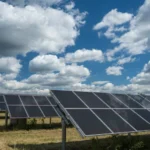
Solar power technology is advancing every day. All over the world people are using solar energy, be it in the form of floating panels or vertical solar on the sides of buildings. When most people think of solar power, they imagine pictures of sparkling solar farms in the desert or solar panels fastened to rooftops when they think about solar electricity.
However, innovations and advances are made in solar energy technologies on a daily basis. Engineers and even artists have developed visually beautiful and highly efficient ways of collecting abundant solar energy. In this article, we have listed some of our favorite creative applications of solar energy.
Solar Fabric
The fabric of clothing can now be sewn with tiny, flexible solar panels. The solar fabric is planted with photovoltaic cells that generate electricity when exposed to light. The solar filaments when embedded into your clothing can keep you warmer, power your phone, or provide energy for other portable electronic needs.
Other uses include powering heated automobile seats or lighting up awnings, drapes, and building facades. At the moment, solar cell textiles are still in the testing phase. But these wearable solar fabrics will definitely come to light as outstanding contenders for future integration into the next generation of practical wearable apparel.
Solar Skins
Solar skin technology, created by MIT engineers, makes use of a layer that sits on top of the solar panels. Because of the selective light filtration in this overlay, the solar skin has little impact on module efficiency. It is said that solar skins can preserve up to 99 percent of the array’s original efficiency.
The overlay’s design and how much of the system it covers will determine how much efficiency is lost. The majority of homeowners opt for solar skins that resemble the tiles on their roofs. This decision helps in the solar panel’s integration with the roofline. However, if you want to go crazy, you can put whatever graphic, design, or pattern they want on their solar array. This could possibly make your house a piece of art.
Solar-Powered Roads
Solar-powered roadways are capable of producing green energy, lighting up at night, and melting snow and ice in the winter. Panel efficiency, panel angle, tracking techniques, sunlight hours, and temperature are some factors that affect energy generation. Road material also makes a difference. For example, asphalt flexes under pressure would damage the solar cells, and concrete being less flexible would sustain solar cells better.
With the increasing popularity of electric cars, solar roads will also be vital in charging these vehicles. The practicality of these solar-powered road systems is currently being discussed by numerous businesses and transportation organizations.
Floating Solar Plant
Any type of solar array that floats on top of a body of water is referred to as floating solar, also known as floating photovoltaic (FPV) or floatovoltaics. To keep them above the water’s surface, solar panels must be attached to a buoyant structure. If you see a floating solar installation, it’s probably in a lake or basin where the water is calmer than the ocean.
Floating solar arrays are frequently installed on big artificial bodies of water, like reservoirs. One of the biggest advantages of these panels is that they do not require additional space and can be easily mounted over a dam or a river. Also, these solar panels are durable and efficient under high temperatures also.
PV Solar Noise Barriers
The World Health Organization has identified traffic noise as a significant contributor to environmental pollution. It not only makes people uncomfortable, but also adversely affects people who reside next to traffic infrastructure. Photovoltaic Noise Barriers (PVNB) are physical barriers made of photovoltaic panels that are intended to both provide renewable energy and reduce noise levels near sensitive places, like hospitals, schools, and residential areas. The maintenance of the system is also minimal and it guarantees durability of more than 30 years.
All the metallic elements that form the acoustic barrier are conveniently protected against oxidation. In addition to helping reduce greenhouse gas emissions into the atmosphere, the installation of PV solar noise barriers also has economic and social benefits.
Solar Paint
Solar paint is a liquid with photovoltaic properties that allows it to absorb sunlight and convert it into electricity. Just by painting it on a piece of glass or another surface that has electronics attached, you can have your own solar cells. In essence, solar paint draws water molecules and splits them into hydrogen and oxygen to produce power. It works just like a conventional photovoltaic cell, taking energy from the sun and creating electricity, but is made up of thin-film solar panels in a liquid form.
Tiny luminous molecules floating in a liquid that is flexible and sprayable and can absorb light and moisture make up the paint. The paint comprises tiny luminescent molecules suspended within a flexible and sprayable liquid, which absorbs light and moisture. One of the key benefits of using solar paint is the speed with which it can be produced and applied and the cost which will be a fraction of the solar panels.
Solar energy companies will continue to look for ways to advance solar cell technologies and lengthen battery life due to the desire for more affordable, environmentally friendly electricity. Technology advancements in solar power and storage will also increase design options for more potent, more compact solar cells that may be applied in more inventive ways to enhance the quality of life.