With rising electricity tariffs and growing sustainability expectations, industries across India are increasingly shifting towards large-scale solar solutions. A 1 MW solar plant for industry is one of the most practical capacities for medium to large manufacturing units, warehouses, cold storage facilities, IT parks, and commercial campuses. It significantly reduces operational costs while offering long-term energy security and environmental benefits.
This blog explains everything you need to know about installing a 1 megawatt solar power plant for industrial use, including capacity, land requirement, power output, cost, financial returns, and business advantages.
What Does a 1 MW Solar Plant Mean for Industry?
A 1 MW (1,000 kilowatt) solar power plant refers to a photovoltaic system capable of producing up to 1,000 kW of power under standard test conditions. For industries, this size is ideal for meeting a major portion of daytime electricity demand, reducing dependency on the grid, and controlling energy expenses.
A 1 MW industrial solar plant can be installed as:
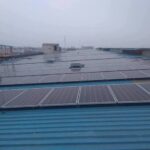
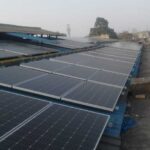
- Rooftop solar plant on factory sheds
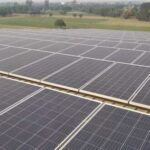
- Ground-mounted solar plant within industrial premises
- Captive solar plant near the factory
- Open access solar project supplying power remotely
Power Generation from a 1 MW Solar Plant in India
The actual output of a 1 MW solar plant in India depends on location, irradiation, design quality, tilt angle, and maintenance. On average:
- Daily generation: 3,800 – 4,500 units
- Monthly generation: 1.1 – 1.35 lakh units
- Annual generation: 14 – 16 lakh units
States like Rajasthan, Gujarat, Haryana, Madhya Pradesh, Maharashtra, and Telangana receive high solar radiation, enabling higher performance ratios and better industrial solar plant output.
This generation can offset a substantial share of industrial electricity consumption, especially for factories operating in day shifts.
Cost of 1 MW Solar Plant for Industrial Use in India
The cost of a 1 MW industrial solar power plant varies based on equipment quality, structure type, evacuation distance, monitoring systems, and project complexity.
Typical 2026 industrial benchmark:
- ₹3.2 crore to ₹4.8 crore per MW
This usually includes:
- Tier-1 solar panels
- High-efficiency inverters with MPPT
- Mounting structures
- SCADA and remote monitoring
- DC & AC electricals
- Installation, testing, and commissioning
Battery storage, transmission lines, and open-access approvals are additional costs depending on project scope.
Return on Investment (ROI) for 1 MW Industrial Solar Plant
A 1 MW solar plant for industry delivers strong long-term financial performance.
Typical financial outcomes:
- Annual electricity savings: ₹90 lakh – ₹1.4 crore
- Payback period: 3 – 5 years
- Plant life: 25+ years
- Post-payback power cost: almost zero
Industries using captive consumption models enjoy higher returns compared to commercial tariffs.
With rising grid prices, the internal rate of return (IRR) improves further, making solar a strategic capital investment rather than just a cost-saving measure.
Why Industries Are Choosing 1 MW Solar Plants
1. Major Reduction in Electricity Bills
A 1 MW solar plant can offset a large portion of grid consumption, drastically cutting monthly power expenses.
2. Long-Term Price Protection
Solar locks energy cost for decades, protecting industries from tariff hikes and fuel volatility.
3. Improved Sustainability Profile
Industrial solar plants reduce carbon emissions and support ESG goals, green certifications, and export compliance.
4. High Reliability and Low Maintenance
With proper design and monitoring, a 1 MW solar system operates reliably with minimal operational cost.
5. Asset Creation
Unlike recurring electricity payments, a solar plant becomes a long-term energy asset on the company’s balance sheet.
Installation Process of a 1 MW Industrial Solar Plant
A standard industrial solar project follows these stages:
- Site assessment and feasibility study
- Load analysis and system design
- Engineering and project planning
- Procurement of modules, inverters, and BOS
- Civil and structural development
- Electrical installation and synchronization
- Testing, commissioning, and monitoring activation
Professional execution ensures high performance ratio, regulatory compliance, and long plant life.
Performance Factors That Affect 1 MW Solar Output
- Solar irradiation and climate
- Panel efficiency and degradation rate
- Inverter quality and MPPT range
- Tilt, orientation, and row spacing
- Shading and soiling losses
- Operation and maintenance practices
Optimised engineering is critical for achieving maximum ROI from a 1 MW industrial solar power plant.
Is a 1 MW Solar Plant Right for Your Industry?
A 1 MW solar plant for industry is ideal if:
- Monthly electricity bills exceed ₹8–10 lakh
- You have large rooftops or available land
- Your plant operates mainly during the day
- Long-term cost stability is a priority
- Sustainability goals matter to your business
Even if full 1 MW capacity is not consumed on-site, surplus energy can be structured under captive or open-access models.
Smart Roof Solar – Industrial Solar Solutions
At Smart Roof Solar, we design and execute end-to-end industrial solar power plants including 1 MW captive and open-access projects. From feasibility to commissioning and performance monitoring, our team ensures optimized generation, regulatory support, and long-term asset performance for industrial clients.
Whether you are planning your first solar plant or scaling your renewable portfolio, a 1 MW solar plant for industry can transform your energy strategy into a profit-driving infrastructure investment.
FAQs
Q1. How much electricity does a 1 MW solar plant generate per hour?
Ans: 1 MW solar plant typically generates 700-900 units per hour during peak sunlight, depending on location and weather.
Q2. Can a 1 MW solar plant run a full industrial factory?
Ans: Yes, it can support a medium-scale factory’s daytime load or a significant portion of large industrial power demand.
Q3. How many solar panels are required for a 1 MW plant?
Ans: Approximately 1,800 to 2,500 panels are needed, depending on whether 540W, 550W, or 600W modules are used.
Q4. Is battery storage compulsory for a 1 MW industrial solar plant?
Ans: No, batteries are optional and mainly used where backup or off-grid operation is required.
Q5. How long does it take to install a 1 MW solar plant?
Ans: On average, 10-16 weeks are required, depending on site conditions, approvals, and material availability.