
When we think of solar systems, the first things that come to mind are shiny panels on rooftops and the money saved on electricity bills. But behind every safe and reliable solar plant lies something less visible but equally important
Earthing may not sound exciting, but it’s the foundation of safety in any solar installation. It protects your home, your equipment, and most importantly, your family from electrical faults or lightning strikes. Without proper earthing, even the best solar setup can turn risky.
In this blog, we’ll break down what earthing is, why it’s crucial in solar systems, the different types used, and the standards you need to follow. Whether you’re planning a home installation or a large commercial project, understanding earthing will help you make smarter and safer solar choices.
What is Earthing?
Earthing, also called grounding, is the process of connecting electrical equipment to the earth using a conductor. The main purpose is to provide a safe path for excess current in case of faults or lightning strikes. In solar installations, earthing ensures that both people and equipment remain protected from unexpected electrical hazards.
When a solar system is installed, multiple electrical components like inverters, modules, and mounting structures are used. Each of these has the potential to carry fault current if something goes wrong. By creating a proper earthing connection, this unwanted current is directed into the ground rather than flowing through equipment or humans.
Simply put, earthing is a safety backbone for every solar setup. Without it, even the most advanced solar panels or inverters can become unsafe over time.
Importance of Earthing in Solar Systems
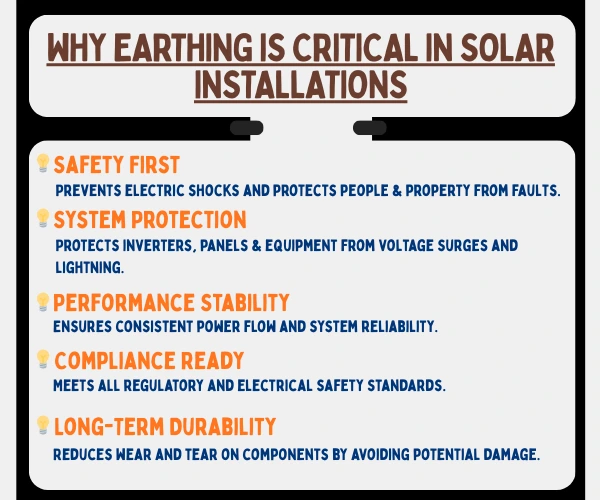
The role of earthing goes far beyond just meeting safety rules. It has direct benefits for system performance and longevity.
- Safety First: Prevents electric shocks and protects people & property from faults.
- System Protection: Protects inverters, panels & equipment from voltage surges and lightning.
- Performance Stability: Ensures consistent power flow and system reliability.
- Compliance Ready: Meets all regulatory and electrical safety standards.
- Long-term Durability: Reduces wear and tear on components by avoiding potential damage.
Types of Earthing Needed in Solar Installations
In solar projects, more than one type of earthing may be required. Each plays a unique role in ensuring safety and performance. The main type of earthing we focus on is chemical earthing.
Chemical Earthing
Chemical earthing is one of the most preferred methods for modern solar installations because it provides long-term stability and low maintenance. It uses salt and charcoal and use of specially developed compounds that retain moisture and ensure consistent conductivity.
In this method, an electrode is placed in the ground and surrounded by a chemical mixture. This compound prevents the soil around the electrode from drying out and reduces corrosion of the electrode, which means the earthing system lasts much longer.
For solar systems, chemical earthing is highly effective because:
- It maintains a low and stable resistance over many years.
- It requires less frequent watering or maintenance compared to traditional methods.
- It performs well even in areas with rocky or sandy soil where normal earthing may fail.
- It ensures better safety against lightning strikes and electrical surges that could damage your solar equipment.
While the initial cost may be slightly higher, the long-term performance and safety benefits make it a worthwhile investment.
Some other types of earthing include:
Equipment Earthing
- Protects metal parts like module frames, mounting structures, and inverter casings.
- Ensures no dangerous current remains on exposed surfaces.
- Connected via copper or GI (galvanized iron) conductors.
Lightning Protection Earthing
- Directs lightning strikes safely into the ground.
- Protects panels and rooftop structures from damage.
- Essential in areas prone to thunderstorms.
Functional Earthing
- Provides a reference point for electrical systems.
- Stabilizes system voltage and prevents over-voltage risks.
- Used mainly for inverters and sensitive electronics.
Neutral Earthing
- Protects against overloads by ensuring current safely returns to the ground.
- Often used in larger commercial or industrial setups.
Each of these earthing types is critical, and skipping any can lead to safety or efficiency issues in solar systems.
Earth Cables in Solar Systems
The effectiveness of earthing depends heavily on the cables used. These cables connect solar equipment to the earth pit.
- Material: Usually copper or aluminum, as they have high conductivity.
- Size: The thickness of the cable depends on the system size and the short-circuit.
- Color: Green or green-yellow insulation is commonly used to identify earth cables.
- Durability: Must withstand outdoor conditions, UV rays, and moisture.
- Routing: Should be kept as short and straight as possible to minimize resistance.
Using low-quality cables or incorrect sizes can defeat the purpose of earthing. Hence, choosing the right earth cables is as important as installing panels or inverters.
Earthing Standards to Be Followed
Earthing isn’t optional; it must follow set guidelines to ensure safety and compliance. In India and worldwide, several standards apply to solar system earthing.
- IEC Standards (International Electrotechnical Commission): Provide global guidelines on earthing and safety.
- BIS Standards (Bureau of Indian Standards): Local rules that govern earthing practices in India.
- CEA Guidelines (Central Electricity Authority): Cover earthing requirements for renewable energy projects.
- IS 3043: Indian code of practice for earthing.
Key requirements include:
- Earth resistance should generally be less than 1 ohm for safety.
- Use of corrosion-resistant electrodes like copper-bonded rods or GI strips.
- Lightning protection must be installed for larger rooftop plants.
Following these standards ensures your system passes inspections and avoids penalties.
Maintenance of Earthing in Solar Systems
Just like solar panels need cleaning, earthing needs regular maintenance. Over time, soil conditions, weather, and usage can affect earthing performance.
Key Maintenance Practices:
- Routine Testing: Earth resistance should be tested every 6-12 months.
- Soil Treatment: Adding charcoal and salt to the earth pit helps maintain low resistance.
- Check for Corrosion: Replace damaged or rusted electrodes and wires.
- Tight Connections: Ensure all connections are torqued and secure.
- Visual Inspections: Look for exposed or broken cables that may affect safety.
Proper maintenance ensures earthing works effectively during faults or lightning strikes. Neglecting it can put both people and the system at risk.
Conclusion
While panels and inverters grab most of the attention, earthing quietly ensures the safety and smooth functioning of the whole system. From preventing shocks to protecting costly equipment, its role is undeniable.
At Smart Roof Solar, we go beyond just installing solar panels; we ensure every part of the system, including earthing, meets strict safety standards. Our team uses the best materials and practices to give you a secure, long-lasting solar setup.
FAQs
Q1. How deep should an earthing pit be for a solar installation?
Ans: Typically, the earthing pit should be 3 to 4 meters deep, depending on soil resistivity.
Q2. What is the cost of earthing in a solar project?
Ans: Average cost of earthing is ₹6,000 per pit based on materials and the type of earthing used.
Q3. How often should solar earthing be checked?
Ans: Every 6 to 12 months, depending on environmental and system conditions.
Q4. Which electrode is best for earthing in solar setups?
Ans: Copper-bonded rods are preferred for their conductivity and corrosion resistance.
Q5. How is industrial solar earthing different from residential?
Ans: Industrial setups use heavier conductors, multiple pits, and advanced surge protection.
1 MW Solar Plant Cost in Uttar Pradesh | A Complete Guide
Planning to install a 1 MW solar power plant in Uttar Pradesh? This guide covers 2025 pricing, subsidy details, ROI, and savings for industries and businesses.
Rooftop Solar: Reduce Your Electricity Bill and Increase Savings
Discover how installing a rooftop solar system can help you save on electricity bills, reduce peak demand charges, and take advantage of government incentives.
Delhi Jal Board Solar Project: A Step Towards Sustainable Energy
Delhi Jal Board has embraced solar power, becoming a leader in renewable energy adoption. This initiative highlights the benefits of solar energy, including cost savings, sustainability, and promoting clean energy practices in institutional operations.
Rajasthan Rooftop Solar Subsidy: What Homeowners Need to Know
Rajasthan homeowners can save big with the 2025 rooftop solar subsidy. Learn about the updated rates, eligibility criteria, and benefits to make your switch to solar more affordable.

SECI Sets Record in Renewable Energy Trading, Surpasses ₹100 Billion
SECI achieves record renewable power trading revenue surpassing ₹100 billion, marking a milestone in India’s clean energy growth and solar market expansion.
How Azimuth Angle Impacts Solar Panel Efficiency for Homes, Industries, and Commercial Buildings
Discover how solar panel azimuth impacts energy generation in homes, industries, and commercial buildings. Maximize efficiency with correct orientation.

Sustainable Solar Panel Disposal: Recycling for a Greener Future
Sustainable solar panel disposal ensures old or damaged panels are recycled responsibly, reducing waste and environmental harm. By adopting eco-friendly recycling and reuse practices, we can recover valuable materials, lower carbon impact, and make solar energy truly sustainable from installation to end-of-life.
How the RESCO Model Works in Solar: A Complete Guide for Industries
The RESCO model allows businesses to adopt solar with zero upfront investment. Under this model, a developer installs, owns, and operates the solar plant while you simply pay for the power you consume—making clean energy both affordable and hassle-free.