
With electricity tariffs steadily increasing, companies across India are evaluating solar ROI for business as a strategic financial decision rather than just an environmental initiative. Installing a commercial solar power system allows organizations to reduce operational costs, stabilize energy pricing, and create a long-term revenue-like asset through electricity savings.
Understanding Return on Investment (ROI) in solar energy helps businesses make informed decisions about system size, financing models, and expected payback periods.
What Is Solar ROI for Business?
Solar ROI refers to the financial return a company receives after investing in a solar power plant installation. It measures how quickly the savings generated from reduced electricity bills recover the initial solar installation cost, and how profitable the system becomes over its operational life.
For commercial and industrial projects, ROI is influenced by electricity consumption, tariff rates, financing structure, and solar generation efficiency.
Why Solar ROI Matters for Businesses
For industries, solar is not just about sustainability, it is about financial performance. A well-planned industrial solar project can:
- Lower monthly electricity expenses
- Provide predictable long-term energy costs
- Improve company profit margins
- Increase asset valuation
- Support ESG and sustainability targets
This makes solar investment for businesses both an economic and strategic move.
How to Calculate Solar ROI
Solar ROI is commonly evaluated using simple financial metrics such as:
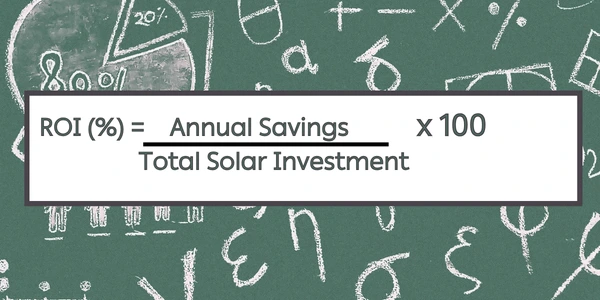
Another related metric is the Payback Period, which indicates how many years it takes to recover the initial cost through energy savings.
While exact numbers vary, most commercial solar systems in India achieve payback within a few years and continue to deliver savings for 20+ additional years.
Key Factors Affecting Solar ROI for Business
1. Electricity Tariff Rates
Higher grid tariffs lead to faster ROI since solar electricity offsets expensive utility power.
2. Solar System Size & Efficiency
Optimized capacity planning and high solar panel efficiency increase output and savings.
3. Financing Model
CAPEX, OPEX, or Solar PPA models influence upfront cost and long-term returns.
4. Location & Solar Irradiation
Regions with better Global Horizontal Irradiation (GHI) generate more electricity annually.
5. Operation & Maintenance
Regular cleaning and monitoring maintain a strong solar performance ratio.
6. Government Policies & Incentives
Tax benefits and depreciation schemes can improve effective ROI.
Typical ROI Timeline for Commercial & Industrial Solar
Although project economics differ by sector and state, a professionally executed C&I solar installation generally follows this trend:
- Short-Term: Immediate reduction in electricity bills
- Mid-Term: Investment recovery within a few years
- Long-Term: Decades of low-cost electricity and stable savings
After the payback period, the energy generated is essentially low-cost power, improving business profitability year after year.
Benefits of Strong Solar ROI for Businesses
Reduced Operational Costs
Electricity savings directly improve bottom-line margins.
Energy Price Stability
Solar protects against unpredictable grid tariff hikes.
Asset Creation
A solar plant becomes a long-term infrastructure asset.
Sustainability & Brand Value
Use of renewable energy solutions enhances corporate reputation.
Scalability
Solar systems can often be expanded as energy demand grows.
Industries That Achieve High Solar ROI
- Manufacturing and heavy engineering units
- Warehouses and logistics centers
- IT parks and corporate offices
- Pharma and chemical industries
- FMCG and food processing plants
- Cold storage facilities and malls
These sectors typically have high daytime energy usage, aligning perfectly with solar electricity generation patterns.
Technology’s Role in Improving Solar ROI
Modern solar EPC companies integrate advanced tools and equipment to maximize returns:
- High-efficiency mono or TOPCon solar panels
- MPPT-based solar inverters
- Smart SCADA monitoring systems
- Performance analytics dashboards
- Robotic or automated panel cleaning solutions
Such technologies increase generation accuracy and minimize operational losses.
Why Solar ROI Is Making Solar Energy Economical
Declining solar panel costs, better financing options, and efficient EPC execution are making solar energy economical for commercial and industrial businesses. As technology improves and electricity prices continue to rise, the financial attractiveness of solar investments continues to strengthen.
Conclusion
Solar ROI for business highlights why solar energy has evolved from an optional sustainability measure to a core financial strategy. With predictable savings, long asset life, and minimal operating costs, a well-designed commercial solar power system delivers strong returns for decades.
Businesses that partner with experienced solar EPC providers and choose the right financing structure can achieve faster payback, improved profitability, and long-term energy independence.
FAQs
Q1. What is solar ROI for businesses?
Ans: It is the financial return achieved through electricity savings after installing a solar system.
Q2. How is solar ROI calculated?
Ans: By dividing annual savings by total solar investment and converting it into a percentage.
Q3. What is the average payback period for commercial solar?
Ans: Generally a few years depending on tariffs and financing.
Q4. Does financing affect solar ROI?
Ans: Yes, CAPEX and PPA models impact upfront cost and long-term returns.
Q5. Can solar ROI improve over time?
Ans: Yes, as grid electricity prices increase, savings grow.

Electrical Hazards in Solar PV Systems: Identification, Prevention & Safety
A complete guide to identifying electrical hazards in solar PV systems and implementing effective prevention and safety measures for installation, testing, operation, and maintenance.

Safety Signs in Solar PV Systems
A complete guide to safety signs in solar PV systems, covering different types of signs, their importance, placement, visibility, and best practices for solar projects.

Solar Panel Orientation and Angles: Guide for Solar PV Installers
Earthing and lightning protection are critical safety components in solar PV installations. This guide explains their importance, types, components, and best practices for solar installers.

PM Surya Ghar Muft Bijli Yojana 2025: Online Registration Made Simple
PM Surya Ghar Muft Bijli Yojana 2025: Learn how to register online and get free electricity under this government scheme.

Essential Tools for PV System Testing Guide
A complete guide to battery bank enclosure and rack installation, including site verification, setup procedures, and safety practices for solar PV systems.
Solar Inverter Specifications Explained: How to Read Datasheets & Choose the Right Inverter
Choosing the right solar inverter is critical for system performance and safety. This guide explains how to read inverter datasheets, understand key specifications, and select the best inverter for your solar project.

How Solar Energy Is Converted into Electricity Using Solar Panels – Complete Guide
Solar panels convert sunlight into usable electricity through the photovoltaic effect. From photon absorption to inverter conversion and grid connection, each component plays a critical role in solar power generation. This complete guide explains the step-by-step process of how solar energy becomes electricity for homes, businesses, and industries, helping you understand the technology behind India’s growing renewable energy movement.
Solar Inverter Troubleshooting Guide for Solar PV Systems
A complete guide to troubleshooting charge controllers in solar PV systems, including fault diagnosis, electrical testing, error identification, and corrective maintenance for reliable system performance.