
Installing a solar photovoltaic (PV) system is an important investment in clean and sustainable energy. However, installing the system is only the beginning. Regular inspection, monitoring, cleaning, and maintenance are essential to keep the system operating safely and efficiently throughout its service life.
A customer who understands how to maintain their PV system can identify basic issues early, follow recommended maintenance practices, and know when professional assistance is required. Therefore, explaining system maintenance to the customer should be an important part of the handover and commissioning process.
For a PV installer, customer education should cover the major components of the system, routine maintenance requirements, safety precautions, monitoring procedures, warning signs, and situations that require a qualified technician. Proper communication helps protect the equipment, maintain solar electricity generation, and improve the long-term value of the installation.
Why Should Solar PV Maintenance Be Explained to the Customer?
Customers may not have technical knowledge of PV systems. Simply handing over an operating system without explaining its maintenance requirements can result in incorrect operation or delayed identification of faults.
A maintenance explanation helps customers understand:
- How the PV system operates
- What routine checks are required
- How to monitor energy generation
- When modules require cleaning
- What inverter warnings mean
- When professional maintenance is necessary
- Which activities should never be performed without authorization
A well-informed customer can contribute to the safe and reliable operation of the system.
1. Explain the Main Components of the PV System
The installer should first explain the basic components installed at the customer’s site.
These may include:
- Solar PV modules
- Mounting structures
- DC cables and connectors
- DC combiner box
- Inverter
- AC distribution equipment
- Energy meter
- Earthing system
- Battery or energy-storage system, where applicable
The customer should understand the basic purpose of each component rather than being expected to remember complex technical specifications.
2. Explain How the System Generates Electricity
The customer should understand the basic energy flow:
Sunlight → PV Modules → DC Electricity → Inverter → AC Electricity → Loads/Grid
Solar modules convert sunlight into DC electricity. The inverter converts this electricity into AC power that can be used by electrical appliances or supplied to the grid, depending on the system configuration.
For systems with batteries, excess energy may also be stored for later use.
Understanding this basic process helps customers recognize why factors such as sunlight, shading, dust, and system faults can affect generation.
3. Explain PV Module Cleaning
Dust and other deposits can accumulate on solar modules and reduce the amount of sunlight reaching the cells.
Customers should be informed about:
- Local environmental conditions
- Recommended cleaning frequency
- Safe cleaning practices
- The importance of avoiding module damage
Cleaning requirements depend on the location and level of soiling. Customers should follow the installer’s recommendations and avoid unsafe rooftop access.
If professional cleaning is required, it should be carried out by trained personnel.
4. Explain Routine Visual Inspection
Customers can often perform basic visual observations without opening electrical equipment.
They can look for obvious issues such as:
- Broken or visibly damaged modules
- Loose or displaced components
- Unusual sounds
- Burn marks
- Water ingress
- Damaged visible cables
- Unusual inverter indications
The customer should understand that visual inspection does not mean touching electrical components.
5. Explain Inverter Monitoring
The inverter is one of the most important components for monitoring PV system operation.
The installer should demonstrate:
- Normal operating indicators
- Display information
- Energy-generation readings
- Warning messages
- Fault indications
- Monitoring application, if available
Customers should be encouraged to notice significant changes in normal energy production or repeated error messages.
They should contact the appropriate service provider when an issue cannot be safely resolved through the manufacturer’s recommended user-level procedure.
6. Explain Energy Generation Monitoring
Monitoring generation allows customers to understand whether their system is performing as expected.
Depending on the installation, they may be able to monitor:
- Daily energy generation
- Monthly generation
- Historical production
- Current power output
- Inverter status
Generation naturally varies with sunlight, season, weather, shading, and temperature. Therefore, a single low-production day does not necessarily indicate a system fault.
Long-term changes or unexpected deviations should be investigated.
7. Explain Maintenance of Electrical Components
Customers should be clearly informed that electrical components such as inverters, combiner boxes, distribution boards, isolators, and batteries should not be opened or repaired without appropriate qualifications.
Professional maintenance may include:
- Electrical connection inspection
- Cable inspection
- Protection-device checks
- Inverter inspection
- Earthing verification
- Performance testing
- Battery inspection where applicable
The customer should know who to contact for technical service.
8. Explain Battery Maintenance Where Applicable
If the PV system includes energy storage, the installer should explain the specific maintenance requirements of the battery technology installed.
The customer should understand:
- Battery operating indicators
- Warning messages
- Ventilation requirements where applicable
- Restricted access
- Signs of abnormal operation
- Emergency procedures
Customers should never attempt to open or repair battery systems unless specifically authorized and appropriately qualified.
9. Explain What the Customer Should Not Do
This is one of the most important parts of customer education.
Customers should be advised not to:
- Open the inverter unnecessarily
- Disconnect PV cables
- Modify electrical connections
- Bypass circuit breakers or fuses
- Remove protective covers
- Attempt internal repairs
- Work on the rooftop without suitable protection
- Ignore repeated alarms
- Install unauthorized components
Unsafe intervention can create electrical hazards and may also damage the system.
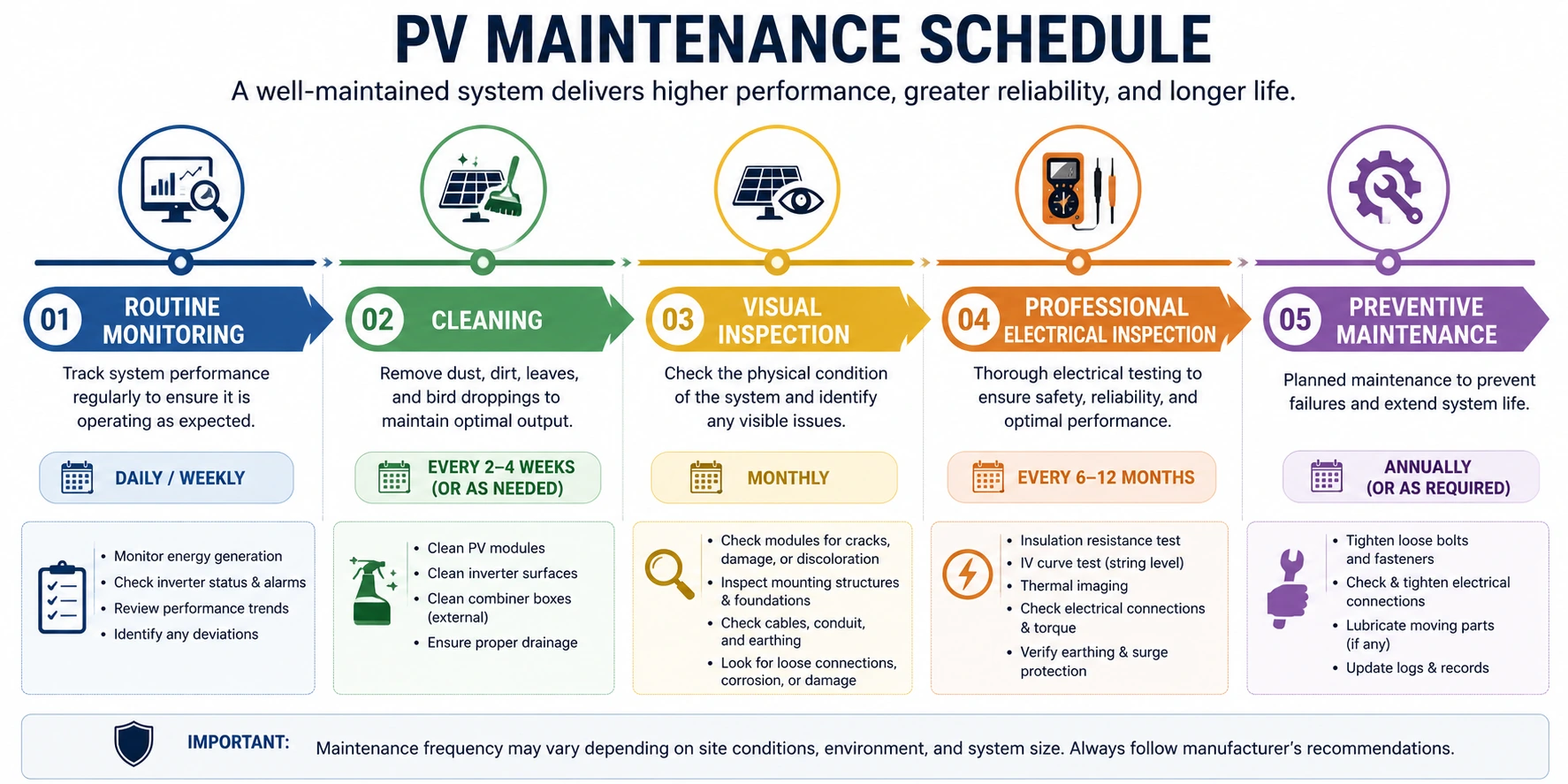
10. Provide a Maintenance Schedule
The customer should receive a simple maintenance schedule covering activities such as:
Activity | Recommended Approach |
Visual Inspection | Regularly |
Module cleaning | Based on soiling conditions |
Inverter monitoring | Regularly |
Cable inspection | During scheduled maintenance |
Electrical testing | By qualified personnel |
Earthing inspection | Periodically |
Battery inspection | According to manufacturer requirements |
Professional servicing | As recommended |
The exact frequency should be based on the equipment manufacturer’s recommendations, site conditions, system design, and applicable requirements.
11. Provide Maintenance Documentation
At handover, the customer should receive relevant documentation, which may include:
- System specifications
- Equipment manuals
- Warranty information
- Maintenance schedule
- Emergency contact details
- Inverter information
- Monitoring instructions
- Commissioning records
- Relevant test reports
A properly maintained logbook can help track inspections, faults, repairs, and system performance.
12. Explain When Professional Help Is Required
Customers should know when to stop troubleshooting and contact a qualified technician.
Professional assistance should be sought when there is:
- Repeated inverter shutdown
- Persistent fault codes
- Burning smell
- Smoke
- Damaged electrical equipment
- Exposed conductors
- Abnormal battery behavior
- Significant unexplained reduction in generation
The customer should never be encouraged to perform work beyond their level of training.
Customer Maintenance Handover Checklist
Before completing the handover, confirm that the customer understands:
- Basic PV system operation
- Major system components
- Inverter indicators
- Energy monitoring
- Module cleaning requirements
- Basic visual inspection
- Maintenance schedule
- Safety precautions
- Battery requirements where applicable
- Activities they should not perform
- Emergency procedures
- Service/contact information
- Warranty and documentation
Conclusion
Explaining system maintenance to the customer is an important part of completing a solar PV installation. A successful project should not end when the system starts generating electricity; the customer should also understand how to monitor, care for, and safely operate the installation.
The installer should explain the major PV components, basic energy flow, module-cleaning requirements, inverter monitoring, generation tracking, maintenance schedules, battery requirements, and situations requiring professional assistance. Equally important is explaining what the customer must not attempt, particularly activities involving energized electrical equipment, internal inverter components, batteries, or rooftop work.
A clear maintenance schedule, system documentation, warranty information, and service contacts give the customer the information needed to manage the installation responsibly. Regular monitoring and professional preventive maintenance can also help identify problems before they develop into costly failures.
Whether the system is installed for solar energy for home use, commercial applications, or a large-scale solar plant, customer education contributes to safer operation, better equipment care, and dependable solar electricity generation.
Ultimately, effective customer handover should achieve more than simply demonstrating that the system works. It should ensure that the customer understands how the system operates, what to monitor, how to maintain it safely, what warning signs to recognize, and when to seek professional help. This approach supports the long-term performance and reliability of renewable energy and solar energy systems while helping customers protect their investment and manage the overall solar installation cost effectively.
FAQs
Q1. Why should solar PV maintenance be explained to the customer?
Ans: Customer education helps ensure that basic monitoring and maintenance are performed correctly while preventing unsafe intervention in electrical equipment.
Q2. Can a customer clean solar panels themselves?
Ans: This depends on the installation and access conditions. Customers should follow the installer’s recommendations and should not undertake unsafe rooftop work.
Q3. What should customers regularly monitor?
Ans: They can monitor energy generation, inverter status, warning messages, and other information provided through the system’s monitoring interface.
Q4. Should customers repair inverter faults themselves?
Ans: No. Customers should follow only user-level procedures provided by the manufacturer. Internal electrical repairs should be performed by qualified personnel.
Q5. How often should solar panels be cleaned?
Ans: There is no universal interval. Cleaning frequency depends on dust, pollution, rainfall, bird activity, nearby vegetation, and other local conditions.
Demystifying Battery Backup: Everything You Need to Know
Battery backup is essential for uninterrupted power at home and in industries. This guide explains different types of battery backup systems, how they work, their benefits, and tips to choose the right one for reliable energy storage.
Solar Inverter Troubleshooting Guide for Solar PV Systems
A complete guide to troubleshooting charge controllers in solar PV systems, including fault diagnosis, electrical testing, error identification, and corrective maintenance for reliable system performance.
Solar PV System Working Principle Explained
A complete guide explaining how solar PV systems work, covering the photovoltaic effect, solar modules, DC power generation, inverters, energy distribution, and grid integration.
The Rise of Clean Energy: Solar Energy Trends in 2023
The solar energy industry is on the rise, as the demand for clean and renewable energy sources continues to increase. 2023 is shaping up to be a big year for the solar energy sector, as new technologies and innovations are expected to drive growth and expand the reach of solar energy.
Role of PV Solar Installer in India – Responsibilities, Skills, and Industry Importance
PV solar installers play a critical role in India’s rapidly expanding solar energy sector. From rooftop systems to large-scale industrial projects, skilled installers ensure safe, efficient, and compliant solar plant deployment. This guide explains the responsibilities, technical skills, certifications, and career opportunities for PV solar installers in India, along with their growing importance in supporting the nation’s renewable energy transition.
How to Check Solar PV Module Performance
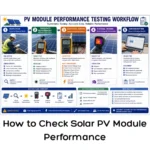
A complete guide to testing solar PV module performance, including voltage and current measurements, power output analysis, and performance verification techniques.
Solar Tracking System Installation for Maximum Efficiency
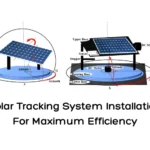
A step-by-step guide to solar tracking system installation, covering setup, alignment, and best practices for maximum efficiency and performance.
Solar ROI vs Payback Period Explained for Commercial & Industrial Projects
Compare payback period and ROI for solar systems. Discover how businesses should evaluate solar investments effectively.