
The performance and durability of any solar photovoltaic (PV) system depend heavily on how well the modules are mounted. Proper mounting ensures optimal tilt, structural stability, and maximum solar electricity generation, while poor mounting can lead to inefficiencies, damage, and increased solar installation charges.
Both rooftop and ground-mounted systems require different mounting approaches based on site conditions, structural design, and project requirements. Correct mounting techniques are essential for safe and efficient renewable solar installations.
This blog provides a complete guide to solar PV module mounting techniques for rooftop and ground systems, helping installers optimize solar panel system cost and performance.
Importance of Proper Mounting in Solar PV Systems
Proper mounting ensures:
- Maximum solar electricity generation
- Structural stability
- Resistance to wind and environmental loads
- Long system lifespan
- Reduced solar energy installation cost
Incorrect mounting increases solar panel system cost due to maintenance and repairs.
Types of Solar PV Mounting Systems
1. Rooftop Mounting Systems
Installed on building roofs for residential and commercial applications.
2. Ground-Mounted Systems
Installed on land for large-scale solar plant setups.
3. Elevated Structures
Raised mounting systems for better airflow and space usage.
4. Tracking Systems
Adjust panel position to follow the sun for higher efficiency.
Rooftop Solar Mounting Techniques
1. Flat Roof Mounting
Methods
- Ballasted systems (no drilling)
- Anchored systems (fixed to roof)
Features
- Adjustable tilt
- Suitable for RCC roofs
2. Sloped Roof Mounting
Methods
- Roof hooks (tile roofs)
- L-foot brackets (metal roofs)
- Clamps (standing seam roofs)
Features
- Follows roof slope
- Minimal structural changes
3. Rail-Based Mounting
- Uses rails to hold panels
- Ensures proper alignment and spacing
4. Rail-Less Mounting
- Direct panel attachment
- Faster installation
Ground-Mounted Solar Techniques
1. Fixed Tilt Ground Mount
- Panels fixed at a specific angle
- Cost-effective
2. Pole Mount Systems
- Panels mounted on poles
- Suitable for small installations
3. Tracking Ground Systems
- Single-axis or dual-axis tracking
- Higher efficiency
4. Foundation-Based Mounting
- Uses concrete footings
- Provides strong structural support
Components Used in Mounting
- Mounting structures
- Rails and beams
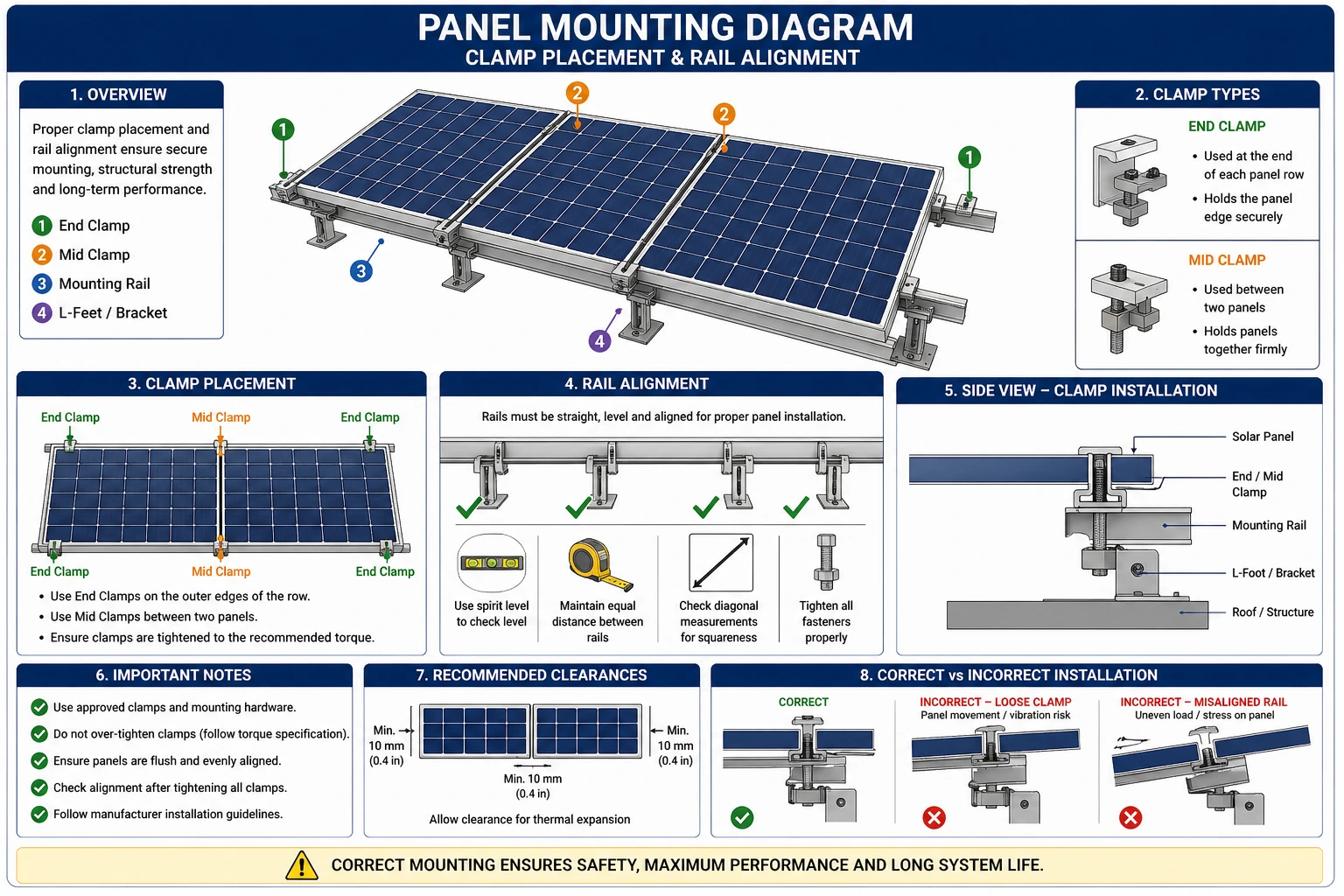
- Clamps (end and mid clamps)
- Fasteners (nuts, bolts)
- Anchors and foundations
Step-by-Step Mounting Process
Step 1 – Site Assessment
Evaluate:
- Roof or land condition
- Orientation and tilt
- Shading
Step 2 – Select Mounting Type
Choose based on:
- Structure type
- Budget
- System size
Step 3 – Install Base Structure
- Fix roof attachments or ground foundations
- Ensure stability
Step 4 – Install Racking System
- Attach rails and supports
- Ensure alignment
Step 5 – Mount Solar Panels
- Place panels on the structure
- Secure using clamps
Step 6 – Alignment and Leveling
- Ensure proper tilt and orientation
Step 7 – Tightening and Securing
- Use torque wrench
- Ensure proper fastening
Step 8 – Final Inspection
- Check alignment, stability, and safety
Quality Checks
1. Structural Stability
Ensure the mounting structure is secure.
2. Alignment
Check panel orientation and tilt.
3. Fastener Tightness
Verify proper torque application.
4. Corrosion Protection
Ensure coatings are intact.
Conclusion
Solar PV module mounting is a critical step that directly impacts system efficiency, durability, and safety. By choosing the right mounting technique and following best practices, installers can ensure reliable and high-performing solar PV systems.
Proper mounting techniques are essential for successful renewable solar installations. Additionally, compliance with standards set by the Ministry of New and Renewable Energy ensures safety and quality.
With the right mounting practices, solar professionals can optimize solar panel system cost, enhance solar electricity generation, and contribute to sustainable solar energy for home use and large-scale renewable solar solutions.
FAQs
Q1. What are the types of solar mounting systems?
Ans: Rooftop, ground-mounted, elevated, and tracking systems.
Q2. Which mounting is best for residential systems?
Ans: Rooftop mounting is commonly used for homes.
Q3. What is the difference between rail and rail-less systems?
Ans: Rail systems use support rails, while rail-less systems attach panels directly.
Q4. Does mounting affect solar panel system cost?
Ans: Yes, proper mounting reduces maintenance and improves efficiency.
Q5. Are safety measures necessary during installation?
Ans: Yes, they ensure safe and efficient installation.
Solar PV Conduit & Cable Routing Plan Guide
A complete guide to preparing solar PV conduit and cable routing plans, including layout design, routing methods, and installation best practices.
Earthing & Lightning Protection Testing for Solar PV Systems
A complete guide to earthing and lightning protection testing for solar PV systems, ensuring safety, regulatory compliance, and long-term system reliability.
Best Solar Panels for Rooftop Projects: How to Choose the Right One
Selecting the right solar panel is crucial for rooftop project success. This guide explains how to evaluate panel types, efficiency, warranties, and performance to ensure maximum power output and long-term savings for your home or business.
How to Improve Energy Efficiency and Save Electricity Costs
Learn how energy conservation and efficiency can help you save electricity, cut costs, and make your home or business more sustainable

1MW Solar Power Plant Construction Cost & Profit in India
Choosing the right industrial solar EPC is critical for plant performance and ROI. This guide explains how Indian industries can select the best solar EPC partner.
Solar Inverter Installation: On-Grid, Off-Grid & Hybrid
A complete guide to on-grid, off-grid, and hybrid solar inverter installation, including setup, wiring, and best practices for safe operation.
What to Expect from a Solar PV System
A complete guide to preparing solar PV system handover documentation, covering technical records, commissioning reports, equipment warranties, operating instructions, and maintenance documents for customers.
Rajasthan Rooftop Solar Subsidy: What Homeowners Need to Know
Rajasthan homeowners can save big with the 2025 rooftop solar subsidy. Learn about the updated rates, eligibility criteria, and benefits to make your switch to solar more affordable.