
A Bill of Material (BOM) is a detailed list of all components, materials, and equipment required to install a solar photovoltaic (PV) system. Preparing an accurate BOM is a critical step for solar installers, as it directly affects project planning, system efficiency, and overall solar panel system cost.
A well-prepared BOM ensures that all necessary components are accounted for, reducing delays, avoiding material shortages, and improving installation quality. Proper documentation and planning, such as BOM preparation, are essential for efficient solar PV system design and execution.
This blog provides a step-by-step guide for preparing a Bill of Material for solar PV systems, helping installers streamline their workflow and optimize solar energy installation cost.
What is a Bill of Material (BOM) in Solar PV Systems?
A Bill of Material (BOM) is a comprehensive list of all items required for installing a solar PV system, including quantities, specifications, and descriptions.
It typically includes:
- Solar panels
- Inverter
- Mounting structures
- Cables and connectors
- Protection devices
- Accessories and hardware
A BOM helps ensure that the solar plant is installed efficiently without missing any essential components.
Importance of BOM in Solar Installation
Preparing a BOM is essential for successful solar project execution.
Key benefits include:
- Accurate cost estimation
- Efficient project planning
- Reduced installation delays
- Better inventory management
- Optimized solar panel system cost
It also helps improve the financial planning of renewable solar projects.
Components Included in a Solar PV BOM
Before preparing a BOM, installers must identify all required components.
Major Components
- Solar PV modules
- Solar inverter
- Mounting structure
- Battery (if required)
- Charge controller
Electrical Components
- DC cables
- AC cables
- Junction box
- Distribution board
- Earthing materials
Protection Devices
- Circuit breakers
- Surge protection devices
- Isolators
Miscellaneous Items
- Nuts and bolts
- Cable trays
- Conduits
- Connectors
Including all components ensures smooth installation of solar panel in rooftop systems.
Step-by-Step Guide to Prepare a BOM
Step 1 – Analyze Site Assessment Data
The first step is to review data collected during the site survey.
This includes:
- Rooftop area
- Shadow analysis results
- Electrical infrastructure
- Customer energy requirements
This information helps determine system size and component requirements.
Step 2 – Determine Solar Plant Capacity
Based on load assessment and electricity consumption, installers calculate the required solar plant capacity.
Example:
- 3 kW solar system
- 5 kW solar system
System capacity directly affects the number of components required.
Step 3 – Calculate Quantity of Solar Panels
The number of panels depends on system capacity and panel wattage.
Example:
If using 500 W panels for a 5 kW system: 5000 W ÷ 500 W = 10 panels
This calculation is essential for determining the total solar panel system cost.
Step 4 – Select Appropriate Inverter
Choose an inverter based on system capacity and type (grid-connected, off-grid, hybrid).
Ensure:
- Inverter capacity matches system size
- Compatibility with grid or battery system
The inverter plays a key role in solar electricity conversion.
Step 5 – Determine Mounting Structure Requirements
Mounting structures depend on:
- Roof type (flat or sloped)
- Installation angle
- Panel arrangement
Accurate estimation ensures structural stability and optimal solar energy generation.
Step 6 – Estimate Cable Requirements
Installers must calculate the length and type of cables required.
Consider:
- Distance between panels and inverter
- DC and AC cable requirements
- Voltage drop limitations
Proper cable selection improves renewable solar system efficiency.
Step 7 – Include Protection Devices
Safety devices must be included in the BOM.
Examples:
- DC isolators
- AC isolators
- Circuit breakers
- Surge protection devices
These devices ensure safe operation of renewable energy technology systems.
Step 8 – Add Earthing and Lightning Protection Materials
Earthing materials include:
- Earthing rods
- Earthing wires
- Chemical earthing compounds
These components protect the solar plant from electrical faults.
Step 9 – Include Monitoring and Metering Devices
Monitoring systems and net meters should be added to the BOM.
- Net meter for grid-connected systems
- Monitoring system for performance tracking
Net metering policies are regulated by the Ministry of New and Renewable Energy.
Step 10 – Add Miscellaneous Materials
Small but essential items must be included.
Examples:
- Connectors
- Cable ties
- Fasteners
- Conduits
These items are necessary for completing the installation process.
Step 11 – Prepare Final BOM Document
The final BOM should include:
- Item name
- Quantity
- Specifications
- Unit cost
- Total cost
This document helps estimate the total solar energy installation cost accurately.
Sample BOM Table Format
Item | Specification | Quantity | Unit Cost | Total Cost |
Solar Panel | 500 W | _ | _ | _ |
Inverter | 5 kW | _ | _ | _ |
DC Cable | 4 sq mm | _ | _ | _ |
Mounting Structure | GI | _ | _ | _ |
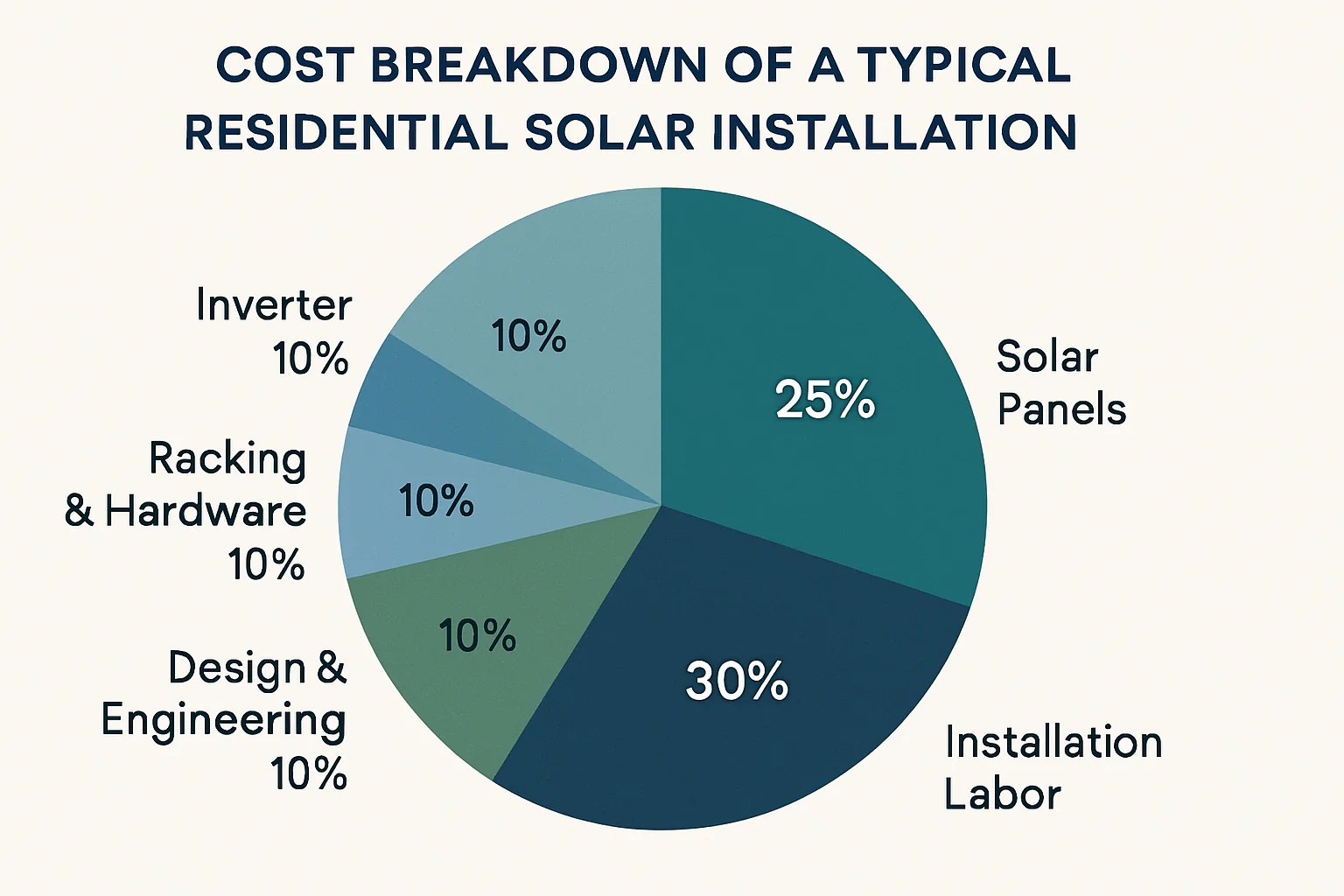
Impact of BOM on Solar Panel System Cost
A well-prepared BOM helps:
- Accurately estimate total project cost
- Reduce unnecessary expenses
- Optimize solar installation charges
- Improve cost of solar per kWh installed
It ensures better financial planning for renewable solar systems.
Best Practices for Preparing a BOM
- Double-check all component quantities
- Use standard specifications and quality materials
- Consider future system expansion
- Include safety and protection devices
- Review BOM before finalizing the proposal
These practices ensure efficient solar project execution.
FAQs
Q1. What is a BOM in solar PV systems?
Ans: A BOM is a detailed list of all materials and components required for solar system installation.
Q2. Why is BOM important in solar installation?
Ans: It helps in accurate cost estimation, efficient planning, and smooth project execution.
Q3. What components are included in a solar BOM?
Ans: It includes solar panels, inverter, mounting structure, cables, protection devices, and accessories.
Q4. How does BOM affect solar energy installation cost?
Ans: A well-prepared BOM helps optimize costs and prevents unnecessary expenses.
Q5. Can BOM help reduce solar installation charges?
Ans: Yes, by ensuring accurate planning and avoiding material wastage, BOM helps reduce overall installation costs.
Conclusion
Preparing a Bill of Material (BOM) is an essential step in planning and executing a solar PV installation. It ensures that all components are accounted for, enabling accurate cost estimation and efficient system design. By following a structured approach, installers can create a comprehensive BOM that improves project execution and system performance.
Proper planning and documentation are key to successful solar installations. Additionally, guidelines from the Ministry of New and Renewable Energy support efficient and safe solar system deployment.
With a well-prepared BOM, solar installers can optimize solar panel system cost, reduce solar energy installation cost, and ensure reliable renewable solar system performance. This ultimately supports the adoption of renewable energy technology and promotes sustainable solar energy for home use and commercial applications.

Solar Installation Cost in Haryana: Pricing, Savings & Subsidy Guide
Solar installation cost in Haryana varies by system size, components, and subsidy eligibility. This guide explains per-kW pricing, government incentives, and how much owners can save with rooftop solar in 2025, helping you choose the right system at the right budget.
Top Industrial Solar EPC: How to Choose the Right Solar EPC Company for Industries in India
Choosing the right industrial solar EPC is critical for plant performance and ROI. This guide explains how Indian industries can select the best solar EPC partner.

Market Demand of Solar PV Installer in India – Growth, Opportunities & Future Scope
India’s solar energy sector is expanding rapidly, creating strong demand for skilled solar PV installers across rooftop, commercial, and utility-scale projects. With increasing investments in renewable energy and rising industrial solar adoption, trained installers are becoming critical to project execution and performance. This blog explores market growth trends, career opportunities, salary potential, and the future scope of solar PV installation jobs in India’s booming renewable energy industry.
Improve Your Power Factor After Solar Installation: Complete Guide
Power factor after solar installation often fluctuates due to system design and load patterns. Learn the key causes, challenges, and solutions for better efficiency.

Rooftop Solar for Factories: Cost, Benefits, ROI & Installation Guide in India
Learn how rooftop solar for factories in India lowers power costs with high ROI, faster payback, and long-term energy savings for industrial facilities.

Ground Mounted Solar Systems: Complete Guide for Commercial & Industrial Projects in India
Ground mounted solar systems are ideal for commercial and industrial projects with available land. This guide explains cost, land requirement, installation process, and ROI in India.
Poor vs Good Solar Installation: Key Differences Explained
A solar system’s performance depends heavily on installation quality. This blog explains the clear differences between a poor and good solar installation — from wiring practices and panel alignment to mounting structures and system safety — helping you make an informed choice and ensure long-term efficiency.
Yes, I Have Installed an Optimized Solar PV Rooftop System at My Premises
A solar power generating system converts sunlight into electricity for residential, industrial, and commercial use. This blog explains the components, working, and benefits of solar systems, helping you understand how to harness solar energy efficiently and sustainably.