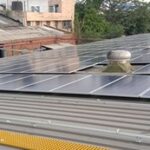
The stronger the sun, the higher the temperature and more energy your solar panels produce, right? No. At a certain point, excessive heat can actually cause a decrease in energy output from your solar panels. The article below explains how temperature affects solar panel efficiency.
How hot do solar panels get?
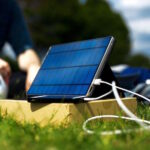
Solar panels are tested at 25 °C and they produce peak efficiency between 15 °C and 35 °C. Solar panels can get as hot as 65 °C at times, which can negatively affect their efficiency.
How does the temperature affect solar panel efficiency?
The idea that more sun will produce more heat and hence more electricity may seem correct, but this is incorrect. The efficiency of a solar panel decreases as it increases in temperature. Just as with any other electronic equipment, solar panel performance does get reduced as they get hot. This happens because of the laws of thermodynamics, which say that with increased heat comes decreased power output. Thus, warmer temperatures will always mean less output for PV cells. This loss in efficiency is quantified in a unit called the temperature coefficient which varies from model to model.
Understanding the “temperature coefficient”
The impact of temperature on solar panel efficiency is known as the temperature coefficient. Solar Panels Manufacturers rate their products’ susceptibility to temperature in the form of the temperature coefficient, which is expressed as a percentage per degree Celsius. It is standard practice to test solar panels for power output at 25 °C. So, if a panel is rated to have a temperature coefficient of -0.50% per °C, that panel’s output power will decrease by half of a percent for every degree the temperature rises about 25 °C. To better understand, let’s look at an example. If you have solar panels with an efficiency rating of 17 percent and a temperature coefficient of -0.45, they will lose 0.45% of their efficiency for every degree above 25 °C. So, if the surface temperature of your roof increases to 30 °C, your solar panel’s efficiency will fall to 16.7 percent. Similarly, if it increases to 35 °C, the solar panel’s efficiency will fall to 16.3 percent.
What should you do to avoid solar panels overheating?
There will always be some energy output loss due to heat regardless of the solar panels you install. However, there are ways to reduce the effect of hot temperatures on solar panels. In the process of making the panels, companies use a thermally conductive substrate to help vent heat away from the glass layers of the module. Solar panels are commonly installed a few inches above the roof to ensure there is a free flow of air above and below the panels. In addition to it, ventilation systems or fans can be added to your solar PV system to help assist the movement of air around the panels.
Which panels to install?
Before installing solar panels, you need to know all the types of solar panels available in the market along with their features. If you want to maximize the amount of energy that your solar panels will generate for you, then your solar panel’s temperature coefficient is something that you want to be familiar with. The three commonly used solar panels are monocrystalline, polycrystalline, and thin-film panels. The standard temperature coefficient for mono and polycrystalline panels typically falls somewhere between -0.26% and -0.50% per degree celsius whereas the temperature coefficient of thin-film panels lies around -0.20 and -0.25% per degree celsius. This means that thin-film panels are much better at handling heat than other panel types.
Key Points to Remember
- If a panel is operating at temperatures lower than 25 °C, the temperature coefficient will actually be positive, and your solar panels will increase in efficiency.
- This means that the best conditions for optimal solar production are cold, sunny days, which in turn means you don’t have to live in a warm climate to benefit from solar power. This efficiency gain in cold weather helps to offset losses that occur during the summer months.
- Conversely, if you do live in a climate that is warm and sunny throughout the year, you may want to invest in higher-end solar panels that come with a lower temperature coefficient.
It’s important to take precautions to keep your solar panels efficient. Solar projects in some areas have actually failed due to the tremendous amount of heat they absorb from the sun. However, you can enjoy long-term benefits from your solar panels if you research thoroughly before installing the panels and have the right installation company.