
In solar photovoltaic (PV) projects, the quality of materials received on-site directly impacts the performance, safety, and lifespan of the entire solar plant. Even if procurement is done correctly, improper or defective materials can lead to installation issues, reduced solar electricity generation, and increased solar installation charges.
Therefore, conducting a thorough inspection of all materials upon delivery is a critical step for installers and EPC professionals. Proper inspection ensures that all components meet required standards and specifications before installation begins.
This blog provides a complete inspection checklist for materials received at solar PV project sites, helping professionals maintain quality and optimize solar panel system cost.
Importance of Material Inspection in Solar Projects
Material inspection is essential for:
- Verifying quality and authenticity
- Preventing installation delays
- Avoiding defective components
- Ensuring system safety and performance
- Reducing solar energy installation cost
Skipping inspection can lead to costly replacements and system failures.
Documents to Verify Before Inspection
Before checking physical materials, verify the following documents:
- Purchase Order (PO)
- Delivery challan
- Invoice
- Warranty certificates
- Test certificates
Ensure all documents match the procurement specifications.
General Inspection Checklist
1. Quantity Verification
- Count all delivered items
- Match with purchase order and BOM
- Check for missing or extra materials
2. Physical Condition Check
- Inspect for visible damage
- Look for cracks, dents, or scratches
- Ensure packaging is intact
3. Specification Verification
- Check ratings and specifications
- Verify compatibility with system design
4. Certification Check
- Ensure components meet standards supported by the Ministry of New and Renewable Energy.
5. Labeling and Identification
- Check manufacturer labels
- Verify serial numbers
- Ensure proper marking
Component-Wise Inspection Checklist
1. Solar Panels
- Inspection Points
- Check for cracks or micro-cracks
- Verify wattage and specifications
- Inspect the frame and glass condition
- Check the junction box and connectors
Proper inspection ensures efficient solar electricity generation.
2. Solar Inverters
- Inspection Points
- Check physical condition
- Verify model and capacity
- Inspect terminals and connectors
- Ensure no moisture damage
3. Batteries (if applicable)
- Inspection Points
- Check for leakage or swelling
- Verify voltage and capacity
- Inspect terminals
- Ensure proper packaging
4. Mounting Structures
- Inspection Points
- Check for corrosion or damage
- Verify material quality
- Ensure correct dimensions
5. Cables and Connectors
- Inspection Points
- Check insulation quality
- Verify cable size and type
- Inspect connectors (MC4, etc.)
6. Electrical Panels and Accessories
- Inspection Points
- Check circuit breakers and isolators
- Verify ratings and specifications
- Inspect wiring and terminals
Inspection Tools Required
Use appropriate tools for inspection:
- Multimeter
- Clamp meter
- Measuring tape
- Visual inspection tools
- Documentation checklist
These tools help ensure accuracy in inspection.
Step-by-Step Inspection Process
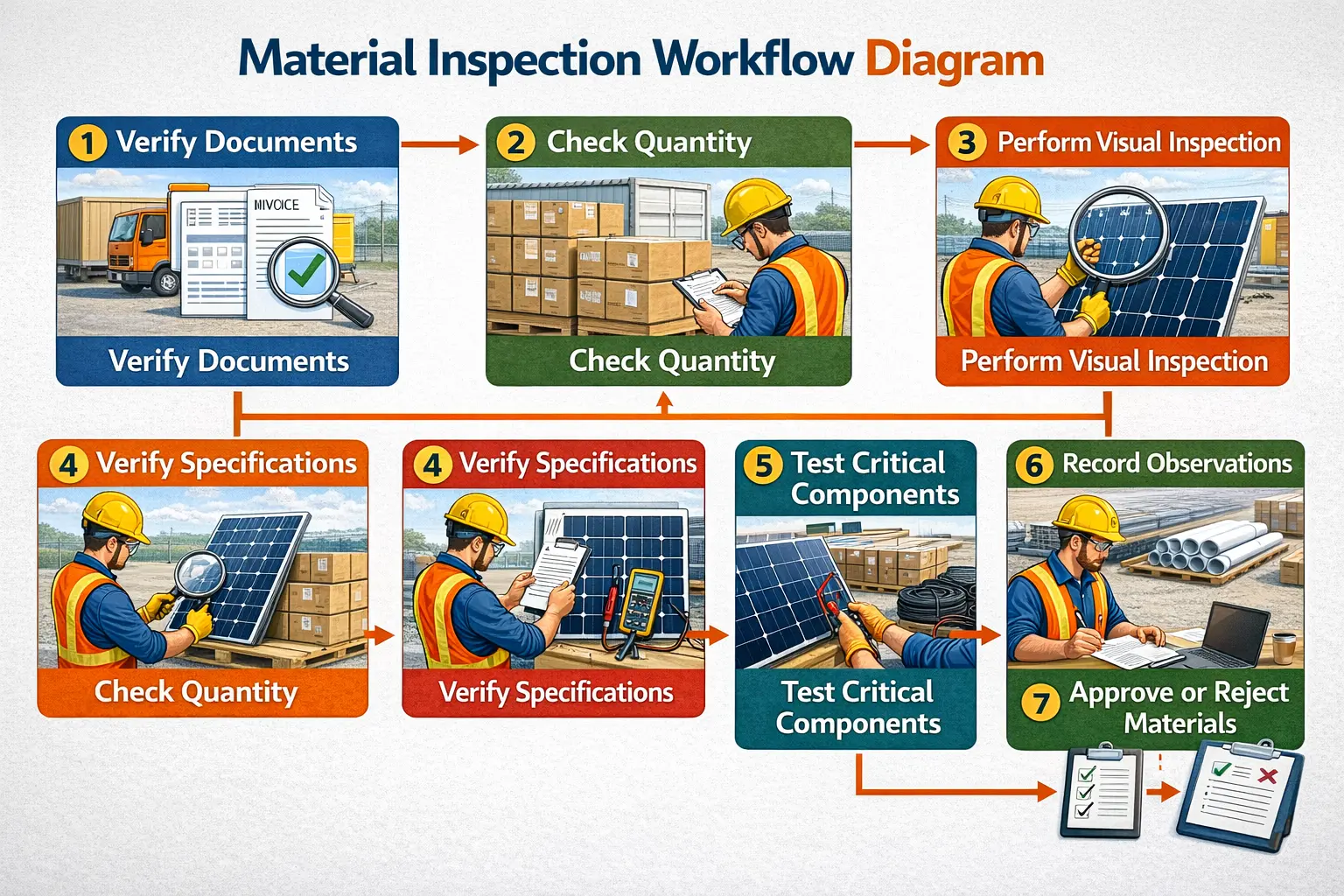
Step 1 – Verify Documents
- Cross-check delivery documents with the purchase order.
Step 2 – Check Quantity
- Count all materials and match with the BOM.
Step 3 – Perform Visual Inspection
- Look for physical damage or defects.
Step 4 – Verify Specifications
- Check ratings and compatibility with system design.
Step 5 – Test Critical Components
Use testing instruments for:
- Voltage
- Continuity
- Insulation
Step 6 – Record Observations
- Maintain inspection records for future reference.
Step 7 – Approve or Reject Materials
- Accept materials meeting standards
- Reject or replace defective items
Impact on Solar Panel System Cost
Proper inspection helps:
- Avoid the installation of defective materials
- Reduce repair and replacement costs
- Improve system efficiency
- Optimize the cost of solar per kWh installed
Conclusion
Checking materials received on-site is a crucial step in ensuring the success of solar PV projects. A thorough inspection process helps verify quality, prevent defects, and ensure compatibility with system design. By following a structured checklist and using proper tools, installers and EPC professionals can avoid costly mistakes and improve system performance.
Proper inspection practices are essential for maintaining quality and reliability in solar installations. Additionally, adherence to standards set by the Ministry of New and Renewable Energy ensures safe and efficient renewable solar system implementation.
With effective inspection practices, solar professionals can optimize solar panel system cost, enhance solar electricity generation, and support the growth of sustainable solar energy for home use and large-scale renewable solar solutions.
FAQs
Q1. Why is material inspection important in solar PV projects?
Ans: It ensures quality, prevents defects, and improves system performance.
Q2. What documents should be checked during inspection?
Ans: Purchase orders, invoices, delivery challans, and warranty certificates.
Q3. How are solar panels inspected?
Ans: By checking for cracks, verifying specifications, and inspecting connectors.
Q4. What happens if defective materials are used?
Ans: It can lead to system failure, reduced efficiency, and higher costs.
Q5. Are testing tools required for inspection?
Ans: Yes, tools like multimeters and clamp meters are used for verification.
Safe Access and Tool Safety at Solar PV Sites
A complete guide to safely accessing solar PV sites and minimizing tool-related hazards through proper planning, equipment inspection, handling, storage, and safe work practices.

Identification of Solar PV Installation Tools and Their Applications
Solar PV installation requires various tools and equipment for safe and efficient system setup. This guide explains the essential tools used by solar installers and their functions.
Solar PV Startup & Energy Meter Recording Guide
A complete guide to solar PV startup procedures and energy meter recording, ensuring proper commissioning, documentation, and system performance verification.

Difference Between Single-Phase and Three-Phase Voltage and Its Use for Solar PV Installer – Complete Guide
Understanding the difference between single-phase and three-phase voltage is essential for solar PV installers. While single-phase supply is common in residential systems, three-phase power is widely used in commercial and industrial solar projects. This complete guide explains electrical phase differences, applications in solar installations, and how choosing the right phase connection impacts system efficiency, safety, and performance.
EIB Green Hydrogen India: €1 Billion Investment to Boost Clean Energy Transition
The European Investment Bank (EIB), the bank of the European Union, has joined forces with the India Hydrogen Alliance (IH2A) to increase support for the development of green hydrogen projects across India.
Choosing the Right Solar Panel: Complete Guide for India
Solar is among the fastest-growing industries in India. This is mainly because solar energy is not only renewable but is also attractive from a financial point of view.
Solar Electrical Installation Toolkit: Inspection & Usage Guide
A complete guide to the electrical installation toolkit for solar installers, including inspection procedures, tool usage, and safety practices.

1 MW Solar Plant Cost in Uttar Pradesh | A Complete Guide
Planning to install a 1 MW solar power plant in Uttar Pradesh? This guide covers 2025 pricing, subsidy details, ROI, and savings for industries and businesses.