
Sloped roofs are among the most common surfaces for residential solar photovoltaic (PV) installations. Unlike flat roofs, sloped roofs naturally provide an inclination angle, which can enhance solar electricity generation if properly utilized. However, installing solar panels on sloped roofs requires careful consideration of roof type, mounting systems, structural integrity, and safety practices.
For installers and EPC professionals, understanding sloped roof installation techniques is essential to ensure efficient performance and long-term reliability. Proper mounting design and structural assessment are key to successful solar PV installations.
This blog provides a complete guide to solar installation on sloped roofs, covering design principles, mounting systems, and best practices.
Why Choose Sloped Roofs for Solar Installation?
Sloped roofs are ideal for solar energy for home use due to:
- Natural tilt for better sunlight exposure
- Reduced the need for additional mounting structures
- Efficient water drainage
- Aesthetic integration with the building
These advantages make sloped roofs suitable for residential solar panel in rooftop installations.
Key Design Considerations for Sloped Roof Solar Systems
1. Roof Orientation
- South-facing roofs are ideal in India
- East and west-facing roofs can also be used
Proper orientation maximizes solar electricity generation.
2. Roof Tilt Angle
The existing roof slope often determines the panel angle.
- Ideal tilt is close to the latitude
- Minor adjustments may be required
3. Roof Material
Common roof types:
- Metal sheets
- Tiles
- RCC roofs
Mounting systems vary depending on the material.
4. Structural Strength
Ensure the roof can support:
- Panel weight
- Mounting system
5. Shadow Analysis
Avoid shading from:
- Chimneys
- Trees
- Nearby buildings
Shading reduces system efficiency.
6. Waterproofing
- Proper installation should not damage roof waterproofing.
Types of Mounting Systems for Sloped Roofs
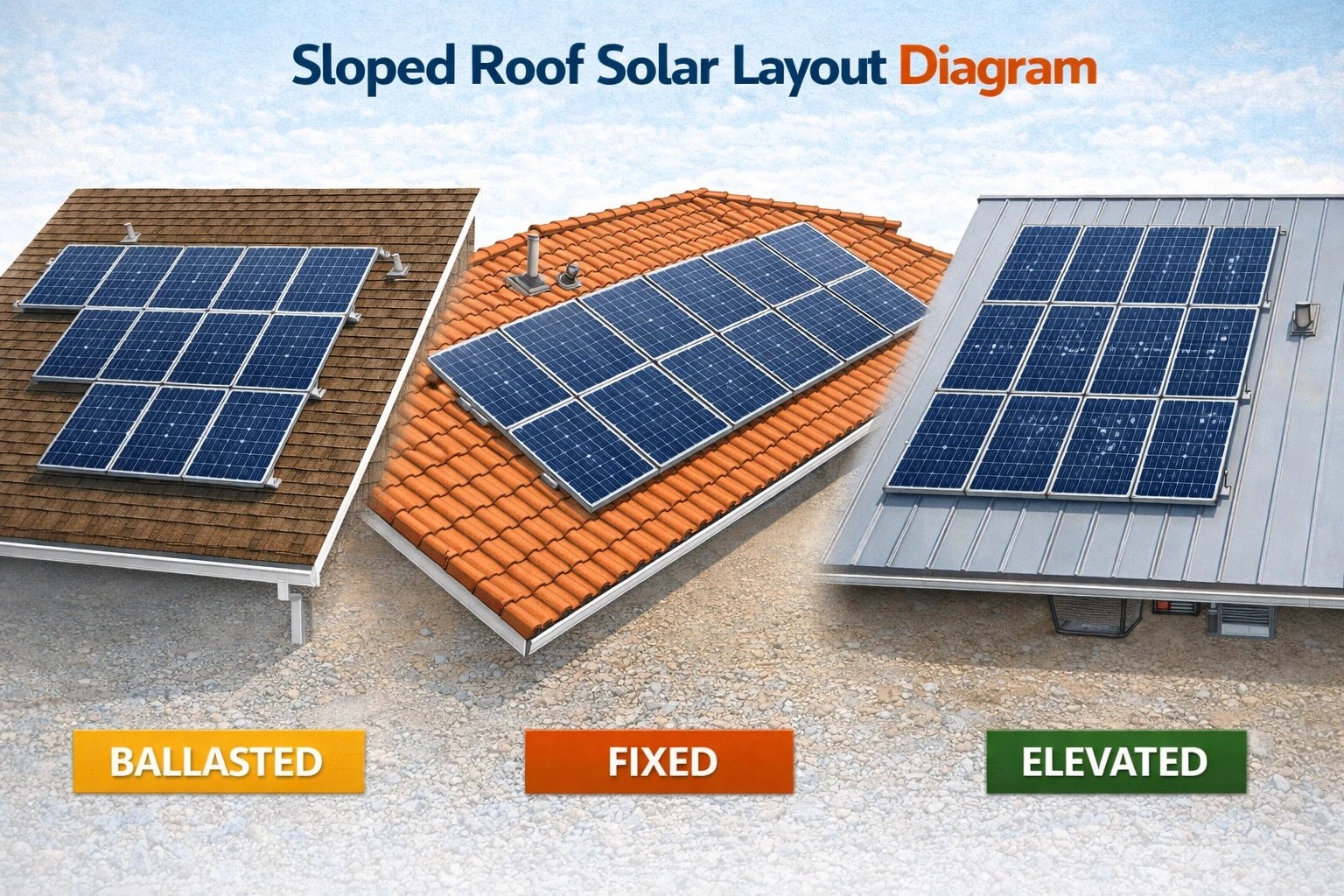
1. Rail-Based Mounting System
Description
- Panels are mounted on rails fixed to the roof.
Advantages
- Strong and durable
- Easy alignment
Applications
- Most residential installations
2. Rail-Less Mounting System
Description
- Panels are mounted directly using clamps without rails.
Advantages
- Lightweight
- Cost-effective
3. Flush Mount System
Description
- Panels are installed parallel to the roof surface.
Advantages
- Aesthetic appearance
- Low wind resistance
4. Tilted Mount System
Description
- Additional tilt is provided using structures.
Advantages
- Improved energy generation
- Flexible angle adjustment
5. Standing Seam Clamp System
Description
- Used for metal roofs without drilling.
Advantages
- No roof penetration
- Easy installation
Steps for Installing Solar Panels on Sloped Roofs
Step 1 – Site Assessment
Evaluate:
- Roof condition
- Orientation
- Shading
Step 2 – System Design
Determine:
- Panel layout
- Mounting system
- Electrical configuration
Step 3 – Structural Analysis
- Ensure the roof can support the system load.
Step 4 – Mounting Installation
- Fix mounting structures securely.
Step 5 – Panel Installation
- Install panels and ensure proper alignment.
Step 6 – Electrical Wiring
- Connect panels to the inverter and system components.
Step 7 – Testing and Commissioning
- Ensure proper functioning of the solar plant.
Best Practices for Sloped Roof Solar Installation
1. Ensure Proper Waterproofing
- Prevent leakage by sealing mounting points.
2. Use Appropriate Mounting System
- Select based on roof type and material.
3. Maintain Proper Spacing
- Ensure ventilation and reduce overheating.
4. Follow Safety Measures
- Use harnesses and safety gear during installation.
5. Optimize Panel Placement
- Maximize exposure to sunlight.
6. Follow Standards and Guidelines
- Adhere to regulations set by the Ministry of New and Renewable Energy.
Impact on Solar Panel System Cost
Sloped roof installations affect:
- Mounting system cost
- Installation complexity
- Maintenance requirements
- Cost of solar per kWh installed
Efficient design helps reduce solar energy installation cost.
Conclusion
Solar installation on sloped roofs offers an efficient and practical solution for generating solar electricity, especially for residential applications. By understanding design considerations, selecting appropriate mounting systems, and following best practices, installers can ensure safe and high-performing solar PV systems.
Proper mounting and structural assessment are critical for successful installations. Additionally, compliance with guidelines from the Ministry of New and Renewable Energy ensures safety and reliability.
With the right approach, solar professionals can optimize solar panel system cost, enhance solar electricity generation, and contribute to sustainable solar energy for home use and large-scale renewable solar solutions.
FAQs
Q1. Are sloped roofs suitable for solar installation?
Ans: Yes, they are ideal due to natural tilt and efficient drainage.
Q2. Which mounting system is best for sloped roofs?
Ans: Rail-based systems are most commonly used.
Q3. Does roof orientation affect solar performance?
Ans: Yes, south-facing roofs provide maximum energy output.
Q4. How is waterproofing maintained during installation?
Ans: By sealing mounting points and using proper installation techniques.
Q5. Is additional tilt required for sloped roofs?
Ans: Usually not, but adjustments can improve efficiency if needed.

Complete Guide To 100 kW Solar Setup Cost And Benefits In Uttar Pradesh
Planning to install a 100 kW solar power plant in Uttar Pradesh? This guide covers everything — from installation costs and available subsidies to long-term savings and payback time. Learn how investing in solar can reduce your electricity expenses and support a sustainable energy future for your business.

Battery Polarity & Voltage Testing Guide for Safe Installation
A complete guide to battery polarity and voltage testing, ensuring safe battery installation and reliable performance in solar PV systems.

How to Calculate PV Power Output? Step-by-Step Guide
Calculating PV power output helps you estimate how much electricity a solar system can generate. This step-by-step guide explains the PV power output formula, examples, and key factors affecting solar energy production.
Standalone Solar PV System Startup Guide
A complete guide to standalone solar PV system startup, including commissioning steps, safety inspections, and operational checks for reliable performance.
Cut Factory Electricity Bills with Solar Energy: Smart Power Saving Guide for Industries in India
Discover how solar energy helps factories in India reduce electricity bills, improve ROI, and achieve long-term industrial power savings.
Sanctioned Load & Rooftop Solar: Everything You Need to Know
Learn why sanctioned load is crucial before rooftop solar installation. Understand its role, process, and impact on solar panel efficiency and subsidy eligibility.
Solar Projects Challenges in India: Module Supply Shortages and Policy Delays Slow Growth
India’s utility-scale solar projects face delays due to module supply shortages and policy challenges, impacting the growth of renewable energy.
Solar Industry Faces Growing Losses from Underperforming Equipment
According to the Raptor Maps’ Global Solar Report, the amount of power loss due to equipment anomalies has nearly doubled from 1.61% in 2019 to 3.13% in 2022. This trend is expected to continue, with anomaly-driven power loss potentially growing to almost 6% by 2025.