
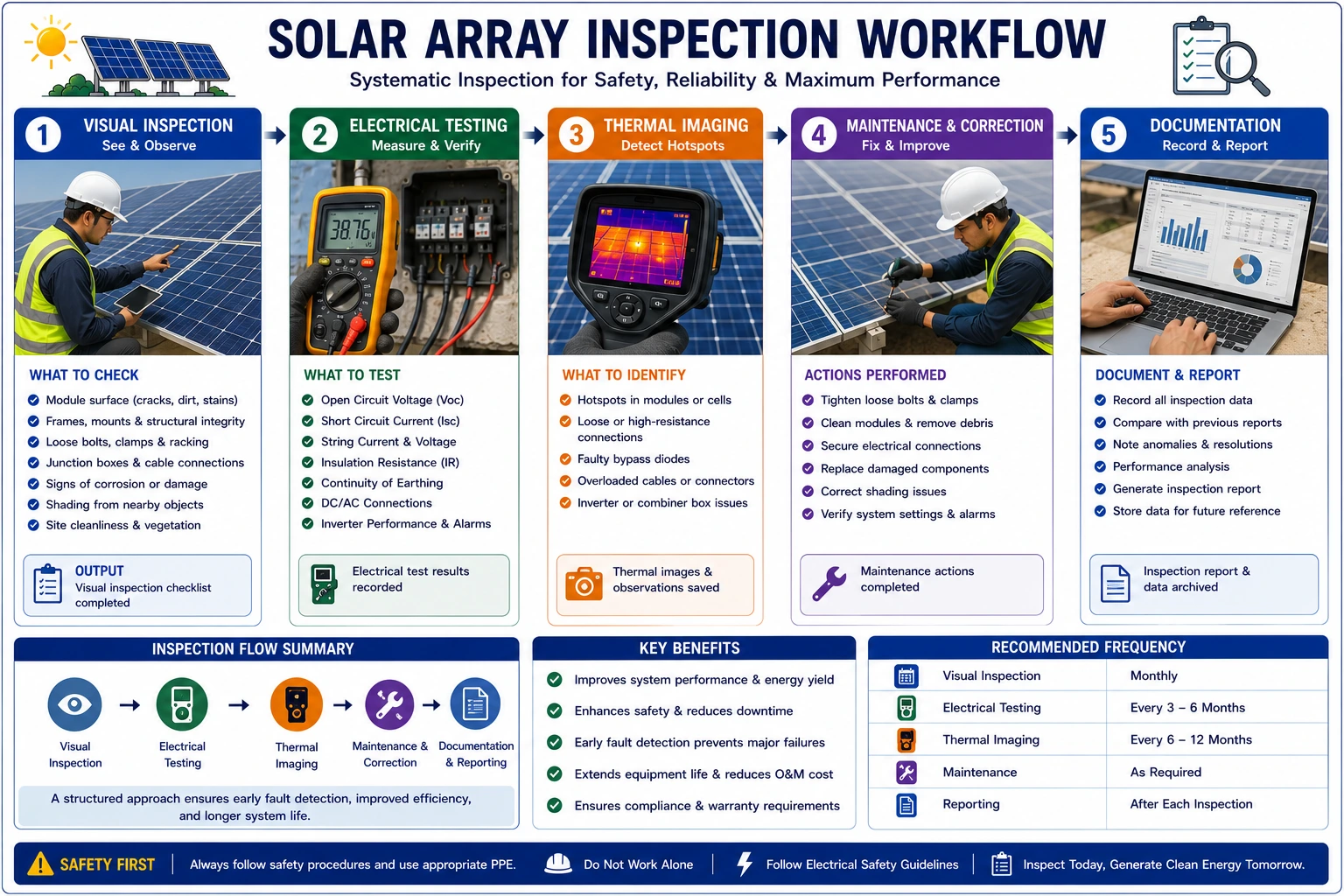
Solar arrays are the primary power-generating components of a solar photovoltaic (PV) system. Comprising multiple interconnected PV modules mounted on a structural framework, solar arrays capture sunlight and convert it into electricity for residential, commercial, industrial, and utility-scale applications. Since solar arrays are continuously exposed to harsh environmental conditions such as dust, rain, wind, ultraviolet (UV) radiation, snow, temperature fluctuations, bird activity, and pollution, regular inspection and maintenance are essential to ensure optimal performance, safety, and long-term reliability.
A well-maintained solar array operates more efficiently, produces higher energy output, experiences fewer unexpected failures, and has a longer service life. Conversely, neglected maintenance can lead to reduced power generation, equipment damage, electrical hazards, and increased operating costs. Regular inspections help identify issues such as damaged PV modules, loose electrical connections, shading, corrosion, structural defects, cable deterioration, grounding faults, and inverter-related problems before they affect system performance.
Inspection and maintenance activities should follow manufacturer recommendations, project specifications, and applicable electrical safety standards. Accurate documentation of maintenance activities also supports warranty claims, preventive maintenance planning, and long-term asset management.
Routine inspection and maintenance of solar arrays are essential practices for maximizing renewable solar system efficiency, ensuring operational safety, and extending equipment lifespan.
This comprehensive guide explains the importance of solar array maintenance, inspection procedures, required tools, maintenance schedules, common faults, documentation methods, safety precautions, and industry best practices.
What is a Solar Array?
A solar array is a group of interconnected photovoltaic modules arranged to generate electricity. Depending on the project size, multiple arrays may be connected to form a complete solar PV power plant.
A solar array generally includes:
- PV modules
- Mounting structures
- DC cables
- Connectors
- Junction boxes
- Grounding system
- Combiner boxes
Together, these components generate and transmit solar electricity to the inverter.
Why is Solar Array Inspection Important?
Routine inspections help ensure that every component of the solar array functions correctly.
Regular inspection helps:
- Detect equipment damage early
- Improve renewable solar system efficiency
- Prevent unexpected failures
- Reduce maintenance costs
- Increase energy production
- Improve electrical safety
Preventive inspections are more economical than corrective repairs.
Objectives of Solar Array Maintenance
The primary objectives include:
Performance Optimization
Maintain maximum solar electricity generation.
Equipment Protection
Prevent damage to modules, cables, and supporting structures.
Safety Assurance
Identify electrical and mechanical hazards before failures occur.
Cost Reduction
Reduce emergency maintenance and replacement expenses.
Regulatory Compliance
Ensure compliance with manufacturer recommendations and safety standards.
Components to Inspect in a Solar Array
A complete inspection covers all major system components.
1. PV Modules
Inspect for:
- Cracked glass
- Delamination
- Discoloration
- Hotspots
- Dirt accumulation
- Water ingress
- Broken frames
Healthy modules maximize energy production.
2. Mounting Structures
Check for:
- Loose bolts
- Corrosion
- Bent members
- Structural misalignment
- Foundation stability
Proper structural support is essential for long-term reliability.
3. DC Cables
Inspect for:
- Damaged insulation
- Loose cable ties
- UV degradation
- Abrasion
- Rodent damage
Damaged cables should be repaired promptly.
4. Connectors
Verify:
- Secure locking
- Corrosion
- Overheating
- Moisture ingress
Faulty connectors may increase resistance and energy losses.
5. Junction Boxes
Inspect for:
- Cracks
- Loose covers
- Burn marks
- Water ingress
- Cable condition
6. Grounding System
Verify:
- Ground conductor continuity
- Secure bonding
- Corrosion-free connections
- Earth resistance
Grounding is essential for personnel and equipment safety.
7. Combiner Boxes
Inspect:
- Fuses
- Surge protection devices
- Wiring
- Terminals
- Signs of overheating
8. Inverters
Although separate from the array, inverter performance should also be monitored during maintenance.
Inspect:
- Display indicators
- Fault logs
- Cooling systems
- Electrical connections
Common Problems Found During Solar Array Inspection
Typical issues include:
- Dust accumulation
- Bird droppings
- Shading
- Loose electrical connections
- Broken modules
- Corroded connectors
- Cable damage
- Hotspots
- Ground faults
- Structural corrosion
Early identification minimizes energy losses.
Tools Required for Solar Array Inspection
Common inspection equipment includes:
- Digital multimeter
- Clamp meter
- Infrared thermal camera
- Insulation resistance tester
- Earth resistance tester
- IV curve tracer
- Pyranometer
- Module temperature sensor
- Flashlight
- Inspection checklist
- Camera
- Personal protective equipment (PPE)
Use calibrated instruments for accurate measurements.
Step-by-Step Solar Array Inspection Procedure
Step 1 – Review Maintenance Records
Before inspection:
Review:
- Previous inspection reports
- Maintenance logbook
- Fault history
- Manufacturer recommendations
Historical data supports effective maintenance planning.
Step 2 – Verify Safe Working Conditions
Ensure:
- Safe weather conditions
- Proper rooftop access
- Stable ladders
- Appropriate PPE
- Electrical safety procedures
Do not work during storms or strong winds.
Step 3 – Perform Visual Inspection
Inspect the entire solar array for:
- Physical damage
- Dirt
- Loose components
- Corrosion
- Shading
Record all observations.
Step 4 – Inspect PV Modules
Verify:
- Glass condition
- Frame integrity
- Junction boxes
- Connectors
- Surface cleanliness
Damaged modules should be evaluated for repair or replacement.
Step 5 – Inspect Mounting Structures
Check:
- Tightness of bolts
- Structural stability
- Corrosion
- Alignment
Mechanical defects may affect array safety.
Step 6 – Inspect Electrical Components
Examine:
- Cables
- Connectors
- Combiner boxes
- Grounding conductors
- Disconnect switches
Loose electrical connections should be corrected immediately.
Step 7 – Measure Electrical Performance
Record:
- DC voltage
- DC current
- Insulation resistance
- Ground resistance
- Power output
Compare measurements with expected values.
Step 8 – Perform Thermal Inspection
Use an infrared thermal camera to detect:
- Hotspots
- Loose terminals
- Overheated connectors
- Faulty modules
Thermal imaging identifies hidden defects.
Step 9 – Carry Out Required Maintenance
Typical maintenance includes:
- Cleaning modules
- Tightening connections
- Replacing damaged cables
- Repairing grounding
- Replacing faulty modules
Follow manufacturer recommendations.
Step 10 – Document Inspection Results
Record:
- Inspection date
- Components inspected
- Measurements
- Faults identified
- Corrective actions
- Technician details
Update the maintenance logbook.
Preventive Maintenance Activities
Routine maintenance typically includes:
- Module cleaning
- Electrical testing
- Structural inspection
- Cable inspection
- Grounding verification
- Thermal imaging
- Performance testing
- Inverter inspection
Preventive maintenance reduces long-term operating costs.
Recommended Inspection Frequency
Inspection intervals depend on environmental conditions and project requirements.
General recommendations include:
Maintenance Activity | Typical Frequency |
Visual inspection | Monthly |
Module cleaning | As required |
Electrical inspection | Quarterly |
Grounding inspection | Every 6 months |
Thermal imaging | Annually |
Comprehensive preventive maintenance | Annually |
Always follow manufacturer recommendations and site-specific maintenance plans.
Conclusion
Routine inspection and maintenance of solar arrays are fundamental to achieving safe, efficient, and reliable solar electricity generation throughout the operational life of a renewable solar system. By conducting regular visual inspections, electrical testing, thermal imaging, grounding verification, module cleaning, and structural assessments, technicians can identify faults at an early stage, prevent major equipment failures, improve energy production, and extend the lifespan of valuable solar assets.
Systematic inspection and preventive maintenance of solar arrays are essential responsibilities for solar installers, commissioning engineers, EPC contractors, and operations and maintenance professionals. Furthermore, following technical recommendations and maintenance practices promoted by the Ministry of New and Renewable Energy, together with manufacturer guidelines, helps ensure safe, standards-compliant, and professional operation of solar PV systems.
By implementing scheduled inspection programs, using calibrated testing instruments, documenting maintenance activities accurately, responding promptly to identified faults, and following industry best practices, solar professionals can optimize solar panel system cost, maximize renewable solar system reliability, improve long-term energy production, and ensure the continued success of residential, commercial, industrial, and utility-scale solar energy projects.
FAQs
Q1. Why is routine inspection of solar arrays important?
Ans: Routine inspections help identify physical damage, electrical faults, dirt accumulation, shading, loose connections, and structural issues before they reduce energy production or create safety risks.
Q2. Which components should be inspected in a solar array?
Ans: A complete inspection should include PV modules, mounting structures, DC cables, connectors, junction boxes, combiner boxes, grounding systems, and supporting electrical equipment such as inverters.
Q3. What tools are commonly used during solar array maintenance?
Ans: Common tools include digital multimeters, clamp meters, infrared thermal cameras, insulation resistance testers, earth resistance testers, IV curve tracers, pyranometers, and appropriate personal protective equipment.
Q4. How often should a solar array be inspected?
Ans: Inspection frequency depends on environmental conditions, manufacturer recommendations, and project requirements. Visual inspections are commonly performed monthly, while detailed electrical and thermal inspections are generally conducted periodically as part of preventive maintenance programs.
Q5. What are the benefits of maintaining accurate maintenance records?
Ans: Maintenance records provide a history of inspections, testing, repairs, component replacements, and performance trends, making troubleshooting easier, supporting warranty claims, and improving long-term asset management.
Solar System for FMCG Industry: Cost, Benefits, Installation & ROI in India
A complete guide on solar systems for the FMCG industry in India covering installation cost, benefits, ROI, system sizing, and the installation process.
Workplace Safety Incident Reporting Guide for Solar PV
A complete guide to establishing and following safe work procedures in solar PV systems, ensuring worker safety during installation, testing, commissioning, operation, and maintenance.

Role of PV Solar Installer in India – Responsibilities, Skills, and Industry Importance
PV solar installers play a critical role in India’s rapidly expanding solar energy sector. From rooftop systems to large-scale industrial projects, skilled installers ensure safe, efficient, and compliant solar plant deployment. This guide explains the responsibilities, technical skills, certifications, and career opportunities for PV solar installers in India, along with their growing importance in supporting the nation’s renewable energy transition.

Latest MNRE List: Approved Solar Module Manufacturers
Check the latest MNRE-approved list of solar module manufacturers to ensure quality and compliance for your solar projects in India.
Save on Electricity in Haryana Using Net Metering: A Complete Guide
Learn how to save on electricity in Haryana with net metering. Step-by-step guide on benefits, installation, and cost savings for your home or business
New IREDA Loan Scheme for Solar Rooftop Projects: Benefits, Eligibility & Interest Rates
India’s renewable energy push gets a major boost with the new IREDA loan scheme for solar rooftop projects. This scheme offers low-interest financing, simplified approvals, and better support for residential, commercial, and industrial consumers. Here’s a detailed look at its benefits, eligibility, interest rates, and how to apply for funding.

Net Metering and Its Advantages Explained: How Solar Users Save More on Energy Bills
Learn what Net Metering and its advantages mean for you—cut electricity costs, earn energy credits, and boost solar efficiency easily.
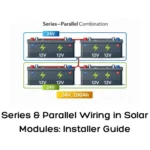
Series & Parallel Wiring in Solar Modules: Installer Guide
A practical guide to solar module interconnection using series and parallel wiring, covering setup, calculations, and best practices for installers.