Understanding the difference between single-phase and three-phase voltage is essential for every solar PV installer. Whether installing a residential rooftop solar system or a large industrial solar plant, selecting the correct phase connection directly impacts system design, inverter selection, load distribution, and overall performance.
In renewable energy systems, especially solar power installations, improper understanding of electrical phase supply can lead to inefficiencies, inverter mismatch, or even system failure. This guide explains single-phase vs three-phase voltage, their differences, practical applications, and their importance for solar PV installers.
What Is Single-Phase Voltage?
Single-phase voltage uses a single alternating current (AC) waveform to deliver electricity. It typically consists of one phase wire and one neutral wire.
Key Characteristics:
- Standard supply in most homes
- Voltage in India: 230V (approximately)
- Suitable for light residential loads
- Simple wiring and lower installation cost
- Limited load-handling capacity
Single-phase systems are commonly used for lights, fans, small appliances, and basic residential needs.
What Is Three-Phase Voltage?
Three-phase voltage uses three alternating currents, each separated by 120 degrees. It consists of three-phase wires and usually one neutral wire.
Key Characteristics:
- Standard supply in commercial and industrial buildings
- Voltage in India: 415V (approximately between phases)
- Handles heavy loads efficiently
- More stable and consistent power delivery
- Suitable for motors and industrial machinery
Three-phase systems are ideal for factories, large offices, malls, and high-capacity equipment.
Technical Difference Between Single-Phase and Three-Phase
Parameter | Single-Phase | Three-Phase |
Number of Phases | 1 | 3 |
Voltage (India) | ~230V | ~415V |
Power Delivery | Pulsating | Continuous & Balanced |
Load Capacity | Low to Moderate | High |
Wiring Complexity | Simple | More Complex |
Best For | Homes, Industries & Commercial Buildings | Homes, Industries & Commercial Buildings |
Inverter Type | Single-Phase Inverter | Three-Phase Inverter |
Three-phase power provides smoother energy transfer because power is delivered continuously rather than in peaks.
Why Phase Selection Matters for Solar PV Installers
A solar PV installer must always check the existing electrical connection before designing a solar power system.
1. Inverter Selection
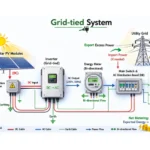
- Single-phase connection requires a single-phase solar inverter.
- A three-phase connection requires a three-phase inverter.
Installing the wrong inverter type can result in grid compatibility issues.
2. Load Calculation
- Single-phase systems are suitable for smaller loads (typically up to 5–7 kW in residential settings).
- Three-phase systems can support higher capacities, making them suitable for 10 kW, 20 kW, or larger commercial installations.
3. Net Metering Compliance
Many utility companies require three-phase connections for higher-capacity solar systems.
4. Load Balancing
In three-phase systems, the load must be balanced across phases to prevent overloading one line.
Applications in Solar Installations
Single-Phase Solar Systems
- Residential rooftop solar (1 kW – 5 kW)
- Small shops and offices
- Rural households
Three-Phase Solar Systems
- Industrial solar power plants
- Commercial buildings
- Warehouses and factories
- Large housing societies
- Agricultural solar pumps
Advantages of Single-Phase for Solar
- Lower initial cost
- Easier installation
- Suitable for small-scale projects
- Minimal technical complexity
Advantages of Three-Phase for Solar
- Higher power capacity
- Better efficiency for large loads
- Stable voltage supply
- Suitable for motors and heavy equipment
- Reduced power losses in large installations
Important Considerations for Solar PV Installers
- Always verify the electricity bill to identify the connection type
- Match the inverter capacity with the sanctioned load
- Ensure proper cable sizing
- Maintain phase balance in three-phase systems
- Follow local electrical regulations
- Coordinate with the utility provider for approvals
Proper planning ensures optimal system performance and safety.
Conclusion
Understanding the difference between single-phase and three-phase voltage is crucial for efficient and safe solar PV installation. Single-phase systems are ideal for small residential setups, while three-phase systems are designed to handle higher loads in commercial and industrial environments.
For a solar PV installer, phase identification directly influences inverter selection, load distribution, system capacity, and regulatory compliance. As solar adoption increases across residential and industrial sectors, knowledge of phase systems ensures optimal performance, reduced losses, and long-term reliability.
Choosing the correct phase configuration is not just a technical requirement; it is a foundation for building a stable and efficient renewable energy system.
FAQs
Q1. How do I know if my connection is single-phase or three-phase?
Ans: Check your electricity bill or distribution panel.
Q2. Can I install a three-phase inverter on a single-phase supply?
Ans: No, the inverter must match the supply type.
Q3. Is three-phase better for solar?
Ans: Yes, for higher capacity systems and heavy loads.
Q4. What voltage is single-phase in India?
Ans: Approximately 230V.
Q5. What voltage is three-phase in India?
Ans: Approximately 415V between phases.