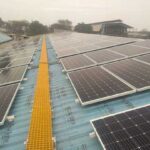
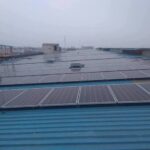
With rising power tariffs and increasing focus on sustainability, rooftop solar for factories has emerged as one of the most effective energy solutions for industrial businesses in India. Factory rooftops often provide large, unused spaces that can be converted into high-capacity solar power plants, helping manufacturers significantly reduce electricity expenses while improving environmental responsibility.
A well-planned industrial rooftop solar system not only lowers operational costs but also provides long-term energy security and predictable power pricing.
Rooftop solar for factories refers to installing solar photovoltaic (PV) panels on industrial building roofs to generate electricity for captive consumption or grid export. These systems are typically designed for high load requirements and can range from 50 kW to multiple megawatts depending on roof size and electricity usage.
Factory solar installations are suitable for:
- Manufacturing plants
- Textile and fabrication units
- FMCG production facilities
- Warehouses and logistics hubs
- Engineering and heavy industries
Why Factories Are Ideal for Rooftop Solar Installation
Factories are considered highly suitable for commercial rooftop solar projects because:
- Large roof areas are usually available
- Daytime energy consumption aligns with solar generation
- High electricity tariffs increase savings potential
- Strong return on investment (ROI)
- Minimal disruption to existing operations
This combination makes solar power for industries a financially smart decision.
Key Components of a Factory Rooftop Solar System
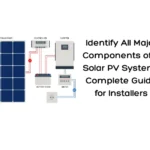
A professionally executed industrial solar installation includes:
- High-efficiency solar panels (Mono PERC / TOPCon / Bifacial)
- Solar inverters with MPPT technology
- Aluminium or galvanized mounting structures
- DC and AC cabling with protection systems
- Net-metering or open-access connectivity
- SCADA or remote monitoring dashboards
- Earthing and lightning protection systems
Quality components ensure better solar panel efficiency and long operational life.
Rooftop Solar Installation Process for Factories
1. Site Survey & Structural Assessment
Roof strength, shadow analysis, and load capacity are evaluated.
2. Energy Audit & Capacity Planning
Electricity consumption data is analyzed to determine optimal system size.
3. Engineering & Layout Design
Panel tilt angle, inverter placement, and cable routing are planned.
4. Approvals & Net-Metering
DISCOM permissions and documentation are completed.
5. Installation & Commissioning
Panel mounting, wiring, inverter connection, and testing are conducted.
6. Monitoring & Maintenance
Routine cleaning and performance tracking ensure consistent output.
Benefits of Rooftop Solar for Factories
Significant Electricity Savings
Factories can reduce monthly power bills substantially through solar electricity generation.
Faster ROI
High daytime consumption leads to quicker payback periods.
Energy Price Stability
Solar protects against fluctuating grid tariffs.
Sustainability & ESG Compliance
Adopting renewable energy solutions enhances corporate image and environmental responsibility.
Efficient Space Utilization
Unused rooftops become productive energy assets.
Cost Factors for Factory Rooftop Solar Installation
The rooftop solar cost for factories varies based on:
- System capacity and panel wattage
- Roof structure and reinforcement needs
- Inverter type and monitoring system
- Safety equipment and cabling
- Installation complexity and approvals
Although the upfront solar panel system cost differs by project size, the long-term cost per unit of solar electricity becomes highly economical.
ROI & Performance Expectations
A well-designed industrial rooftop solar plant can:
- Generate substantial annual electricity units depending on location
- Achieve payback within a few years
- Deliver consistent savings for 25+ years
- Improve overall business profitability
Factors such as Global Horizontal Irradiation (GHI), panel efficiency, and maintenance quality influence output.
Technology Trends in Factory Rooftop Solar
Modern C&I solar EPC companies increasingly adopt:
- Bifacial and TOPCon solar modules
- High-capacity string inverters with MPPT
- Smart SCADA monitoring platforms
- AI-based performance analytics
- Robotic or semi-automatic cleaning systems
These technologies improve solar performance ratio and reduce operational losses.
Why Rooftop Solar for Factories Is Making Solar Energy Economical
Falling solar panel prices, better financing options, and professional EPC execution are making solar energy economical for industrial businesses. Rooftop installations allow factories to control energy costs, reduce dependency on grid power, and create long-term infrastructure assets without acquiring additional land.
Conclusion
Rooftop solar for factories is a practical and financially rewarding approach to energy management. By converting unused roof space into a high-efficiency solar power system, factories can achieve significant cost savings, stronger ROI, and improved sustainability credentials. Partnering with an experienced industrial solar installation company ensures safe execution, optimal design, and reliable performance for decades of clean energy generation.
FAQs
Q1. Is rooftop solar suitable for all factories?
Ans: Yes, provided the roof structure and load capacity are adequate.
Q2. How much capacity can a factory rooftop support?
Ans: It depends on roof area, typically ranging from tens of kW to several MW.
Q3. What is the lifespan of a factory solar plant?
Ans: Generally 25-30 years with proper maintenance.
Q4. Does rooftop solar affect factory operations?
Ans: No, installation is usually non-intrusive and does not interrupt production.
Q5. Is battery backup necessary for factories?
Ans: Not mandatory unless backup power is specifically required