
As India continues to shift toward renewable energy and solar energy, one term that appears everywhere is “photovoltaic power output.” Whether you are planning solar installation for home use, setting up a commercial plant, or comparing solar panel system cost, understanding photovoltaic output helps you choose the right system.
In this blog, we break down what PV power output means, how it is calculated, what factors affect it, and why it directly impacts your savings, ROI, and the total cost of solar installation in places like Haryana, UP, MP, Rajasthan, and across India.
What Is Photovoltaic Power Output?
Photovoltaic (PV) power output simply means the amount of electricity generated by a solar panel when sunlight falls on it. PV modules convert sunlight into solar electricity using semiconductor materials like silicon. This output is usually measured in watts (W) or kilowatts (kW).
The stronger the sunlight, the higher the photovoltaic output. This is why areas with better solar exposure offer higher returns and lower solar installation cost per kWh.
PV output helps users understand:
- How much energy the solar panels can produce daily or monthly
- Whether the system can power all home or industrial loads
- How much savings they can expect on electricity bills
- What should be the ideal system size based on solar panel area per kW
Understanding this value is important before you calculate solar energy installation cost or compare solar module price per watt.
How Is Photovoltaic Power Output Calculated?
The PV output depends on a combination of technical and environmental factors. Here’s the simplified formula:
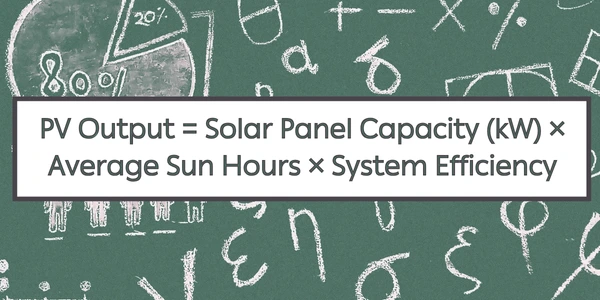
For example, a 1 kW system with 4.5 hours of good sunlight can produce around 4 to 4.5 units per day.
Why this matters:
- Helps calculate the yearly output
- Helps estimate the home roof solar panels cost and payback
- Allows businesses to plan large systems based on cost of solar per kWh installed
The better the sunlight and panel quality, the more energy generated, making renewable solar one of the most economical energy sources today.
Factors That Affect Photovoltaic Power Output
1. Quality of Solar Panels
Higher-quality panels generate more energy. Monocrystalline panels, for example, offer higher efficiency but come at a higher smart solar panel price.
2. Irradiation Levels
States with strong sunlight, like Rajasthan and Haryana, produce more solar electricity daily.
3. Panel Orientation & Tilt
Panels must be tilted correctly to get maximum exposure.
4. Temperature
Very high temperatures can reduce output slightly, which is why installation quality matters.
5. Inverter Quality
The PV output also depends on how efficiently the inverter converts DC to AC.
Understanding these factors helps in calculating whether your solar roof installation cost is optimized for maximum energy generation.
Why PV Output Matters for Homes
For homeowners planning to reduce monthly electricity bills, PV output is the main deciding point. A higher output means:
- Lower dependency on grid electricity
- Higher monthly savings
- Faster payback of the average cost of solar panels on a house
- Maximum benefit from subsidised solar panels for the home under the government solar subsidy scheme
With increasing electricity tariffs, the right PV output can help households become energy independent while making solar energy economical.
Why PV Output Matters for Commercial & Industrial Use
Commercial units rely heavily on machinery, lighting, and HVAC systems. Higher PV output directly translates into:
- Huge electricity bill reduction
- Stronger savings on demand charges
- Lower operational cost per unit
- Better ROI on solar panel system cost
Industries in Haryana, Rajasthan, UP, and MP especially benefit because they receive high solar irradiation, giving better generation per kW.
How Does PV Output Influence Solar Installation Cost?
Solar installation cost depends on:
- Required energy output
- Panel type
- Inverter capacity
- Rooftop or ground setup
- Local sunlight conditions
If you want a certain energy output, the system size is calculated backwards. This is used to estimate:
- Solar module price per watt
- Solar installation cost per kWh
- Total cost of solar installation, including BOS materials
When PV output is high, the payback becomes faster, and the solar energy installation cost becomes more justified.
PV Output and Land / Roof Requirements
PV output also helps determine how much space you need:
- 1 kW requires 80-100 sq. ft. (varies by panel efficiency).
- Higher efficiency = Less space needed.
This calculation is important for both solar panel in rooftop installations and open land projects.
How to Maximise Photovoltaic Power Output
To get the best performance from your solar plant:
- Choose high-efficiency panels
- Check the solar panel area per kW before sizing the plant
- Ensure proper tilt and shadow-free installation
- Select a high-quality inverter
- Opt for reliable installation teams
- Clean the panels regularly
These steps ensure your plant produces maximum solar electricity for many years.
Conclusion: PV Output = Better Savings + Better ROI
Photovoltaic power output is the most important factor in determining how much energy your solar system can generate and how quickly you recover your investment. Whether you’re installing solar for home or industrial use, a higher PV output ensures:
- Lower electricity bills
- Higher monthly savings
- Maximum benefit from subsidies
- Long-term reliable power generation
If you’re planning to install a solar system and want to understand your ideal PV output, Smart Roof Solar can help you calculate the right size, space, and cost based on your load requirements.
FAQs
Q1. Does PV power output remain the same throughout the day?
Ans: No, it fluctuates based on sunlight intensity, temperature, and shading.
Q2. Do batteries increase PV power output?
Ans: No, batteries only store excess energy; they don’t increase the generation itself.
Q3. How long do solar panels maintain their rated output?
Ans: Most panels retain 80-90% of their original output even after 25 years.
Q4. What is the degradation rate in photovoltaic systems?
Ans: It’s the yearly reduction in panel efficiency, typically 0.5-0.7% for good-quality modules.
Q5. Can I increase PV output without adding more panels?
Ans: Optimizers, microinverters, and better tilt/orientation can boost usable output.
Stop Losing Power: The Ultimate Guide to Solar DC & AC Cable Sizing for Max Efficiency
DC and AC cabling are the lifelines of any Solar PV Rooftop System. Learn how proper cable selection, connection design, and installation can help achieve optimum power output and long-term safety.

500 kW Solar System Price in Haryana: Latest Cost, Benefits & Savings
Looking to install a 500 kW solar system in Haryana? Discover the latest 2025 price range, government incentives, and key benefits for commercial and industrial users. Learn how adopting solar can cut electricity bills and boost long-term savings.
Solar Savings Made Simple: Know Your Cost Cuts in 2025
Maximize your solar savings in 2025. Learn how solar energy reduces electricity costs for homes and businesses.
Blame it on Sun! Average Solar PLFs not satisfactory
Explore the reasons behind low average Solar PLFs, from environmental factors to system design, and learn strategies to boost solar plant performance
Should You Replace Solar Panels with Solar Shingles?
Discover how solar batteries store excess energy, maximize your solar system’s efficiency, and provide reliable power during outages. Learn about the types, benefits, lifespan, and maintenance tips to make the most of your solar investment.
EIB Green Hydrogen India: €1 Billion Investment to Boost Clean Energy Transition
The European Investment Bank (EIB), the bank of the European Union, has joined forces with the India Hydrogen Alliance (IH2A) to increase support for the development of green hydrogen projects across India.

Solar Industry Faces Growing Losses from Underperforming Equipment
According to the Raptor Maps’ Global Solar Report, the amount of power loss due to equipment anomalies has nearly doubled from 1.61% in 2019 to 3.13% in 2022. This trend is expected to continue, with anomaly-driven power loss potentially growing to almost 6% by 2025.
Haryana’s GEOA 2025: A Boost for Captive Solar Plants and Wind Energy Developers
Haryana’s GEOA 2025 paves the way for growth in captive wind and solar energy projects with investor-friendly reforms.