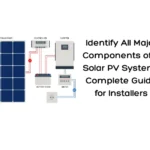
When designing a solar power system, choosing the right charge controller is critical. The charge controller directly affects system efficiency, battery health, and long-term savings. The two most commonly used controllers are MPPT (Maximum Power Point Tracking) and PWM (Pulse Width Modulation).
Understanding the difference between MPPT and PWM charge controllers helps homeowners, commercial users, and industries make better decisions about solar electricity generation, renewable solar investments, and total solar installation cost.
What Is a Solar Charge Controller?
A solar charge controller is an electronic device placed between the solar panels and the battery bank. Its main function is to regulate voltage and current coming from solar panels and ensure safe battery charging.
It protects batteries from:
- Overcharging
- Deep discharge
- Reverse current
- Voltage fluctuations
A quality controller improves solar energy installation cost recovery and enhances system lifespan.
What Is an MPPT Charge Controller?
An MPPT charge controller continuously tracks the maximum power point of the solar panels and converts excess voltage into usable current. This allows the system to harvest the highest possible energy from solar modules.
Key Characteristics of MPPT
- High efficiency (up to 30% more energy)
- Supports higher panel voltage
- Better for large and commercial systems
- Optimises solar module price per watt value
- Works well in cold and variable weather
MPPT technology plays a major role in making solar energy economical.
What Is a PWM Charge Controller?
A PWM controller directly connects solar panels to the battery and gradually reduces charging current as the battery approaches full charge. It does not convert voltage.
Key Characteristics of PWM
- Simple and low-cost
- Best for small systems
- Panels must match battery voltage
- Lower efficiency
- Suitable for basic solar energy for home use
PWM controllers are often used where the solar panel system cost must remain minimal.
Core Difference Between MPPT and PWM
Feature | MPPT Charge Controller | PWM |
Efficiency | Very high | Moderate |
Voltage conversion | Yes | No |
System size | Medium to large | Small |
Energy output | Maximum utilisation | Limited |
Panel Flexibility | High | Low |
Cost | Higher | Lower |
ROI | High | Basic |
This directly impacts the total cost of solar installation and long-term solar electricity output.
Performance Comparison
- MPPT controllers allow panels to operate at optimal voltage, improving daily energy harvest. PWM controllers force the panel voltage to match battery voltage, resulting in unused potential.
This difference becomes critical when calculating:
- Cost of solar per kWh installed
- Solar installation cost per kWh
- Average cost of solar panels on a house
Impact on System Design
MPPT Systems
- Require fewer panels
- Reduce cable losses
- Allow a flexible solar panel area per kW
- Support high-capacity renewable energy technology
PWM Systems
- Require more panels
- Limited expansion capability
- Suitable for lighting and basic loads
Cost vs Value
Although MPPT controllers cost more initially, they reduce:
- Oversizing of panels
- Battery replacement frequency
- Maintenance expenses
This significantly improves solar roof installation cost-effectiveness and enhances long-term energy savings. PWM controllers are economical upfront but deliver lower returns over system life.
Which One Should You Choose?
Choose MPPT if:
- You want maximum solar electricity
- You are installing rooftop or commercial systems
- You aim to reduce home roof solar panels cost over time
- You use high-wattage solar modules
Choose PWM if:
- Your system is very small
- The budget is extremely limited
- Voltage matching is already achieved
Role in Renewable Energy Systems
Modern renewable solar solutions depend on MPPT controllers to maximize system performance, reduce losses, and improve the overall solar installation charges return.
MPPT controllers play a major role in advancing renewable energy and solar energy integration globally.
Conclusion
The difference between MPPT and PWM charge controllers lies in efficiency, flexibility, and long-term value. MPPT controllers deliver higher solar output, better system protection, and improved economic benefits, while PWM controllers offer a basic, low-cost solution for small applications.
Choosing the right controller helps lower the total solar energy installation cost, improves battery health, and ensures stable solar electricity generation.
At Smart Roof Solar, we design systems using advanced MPPT technology to deliver higher efficiency, optimized output, and stronger long-term returns from renewable solar investments.
FAQs
Q1. Can MPPT and PWM charge controllers be used in off-grid and hybrid systems?
Ans: Yes, both can be used, but MPPT controllers are more suitable for off-grid and hybrid systems due to better energy utilization.
Q2. How does shading affect MPPT and PWM performance differently?
Ans: MPPT controllers can partially recover power under shading, while PWM controllers suffer significant output loss.
Q3. Do MPPT controllers require more maintenance than PWM controllers?
Ans: No, both require minimal maintenance, though MPPT controllers may need firmware updates in advanced systems.
Q4. Are MPPT controllers compatible with different panel brands?
Ans: Yes, MPPT controllers are highly compatible with mixed panel brands and varying voltage ratings.
Q5. How do charge controllers impact battery lifespan?
Ans: Proper regulation from both controllers extends battery life, but MPPT controllers offer more precise charging protection.