In the competitive market of Solar PV Rooftop System industry, installers may quote aggressively in order to get the order but this reduction in prices may not be from the margins rather from substandard system components. Customer concentrates mostly on quality of panel and inverters.
While it cannot be denied that quality panels and inverters should give higher generation of power but for better and trouble free life & working of the solar power generation we cannot ignore quality of Earthing and other Protection components. These components of the total system mean a lot for the well being of solar power generation. Any compromise or low quality standards, for Earthing/SPD/ACDB/AJB etc can be fatal not only for the power system but also for human life.
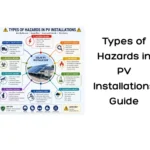
In this blog we will be talking on few such issues.
Issues with Solar PV Rooftop System
Earthing:
Many installers are using plain commercially available GI Wire for earthing rather than GI Zn plated copper wire/strips, compromising qualities of Good Earthing.
Good earthing Must be of:
- Low electrical resistance
- Good corrosion resistance
- Able to dissipate high fault current repeatedly
Earthing Wire
The earthing strip/wire should exhibit low resistance to electrical current, should be able to withstand the impact of corrosion inducing agents and must be capable of dissipating abnormal fault current regularly.
The strips/wires for earthing should be constructed out of superior quality copper, aluminum or Galvanized Iron (GI). Flexibility in thickness and width should be present. A normal earthing strip may have its thickness anywhere between 3 to 6 mm whereas the width may vary from 15 – 100 mm. This flexibility ensures that the strip can prove useful in varied applications. The thermal and electrical conductivity of the earthing strip should be good.
Galvanized earthing strips
Galvanized strips come loaded with all the qualities that you may seek in a perfect earthing strip. Disregard of safety matters and use of faulty electrical equipment have claimed many lives. Hence the earthing strip you choose for your application should have accurate dimension, robust build and corrosion resistance.
Galvanized earthing strips are manufactured using premium quality copper/iron or steel. The strips are subject to galvanization in accordance with the ISI specifications. Earthing strips are most preferred in areas where the soil conditions are rocky. The coating of zinc on the galvanized strips is recommended to be a minimum of 80 microns. The hot dipped galvanized iron strips have a width in the range of 25-75 mm and thickness of 3-12 mm. The strips have protracted life and require very little maintenance during their lifetime.
Lightning and Surge protection devices
Other problem arises with poor selection of Lightning and Surge protection devices, which can be the cause of continual and intermittent difficult-to-diagnose problems in a facility, often resulting in loss of production and failure of equipment.
AJB/ACDB
To save money many installers do not add required protection devices in AJB/ACDB. For a safer functioning of the Solar PV rooftop system, on the DC side AJB (Array Junction Box) we must add fuses (if required, as per the Design), SPD’s (surge protection device) and DC Isolator (if not present in the Inverter). These things are important for the worst scenarios that may happen on the site.
For instance, if DC side Surge protection device and fuses are not added, and a high surge comes, then it may damage the Inverter. Inverter Company’s warranty do not cover claim on damage due to such scenarios. Hence, if we are saving some money by not adding these safety devices to AJB (i.e. roughly around Rupees Fifteen Thousand), then we are risking the life of our Inverter (that cost around Rupees Two lakh, for 20 KVA), and associated dangers to the surroundings.
The same is required for ACDB (AC Distribution Box), we must add MCBs/MCCBs, Isolators and SPD’s to protect our system and human life too.
Lightning arrestors (LA)
Lightning arrestors (LA) again an important component that should be put at your site. The cost of a LA is not too much, but the cost of damage caused by not installing it will be very high. Recently there have been loss of life of 14 persons due to lightening in Andhra Pradesh (Sept 2015).
So you need to check these things with your installer, whether they are using the appropriate protections such as Earthing, LA, ACDB and AJB, if yes then of what quality and standards, so that the system installed is fully protected and can work safely.
Keep visiting our website for more such blogs.