
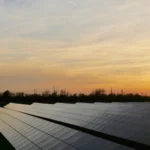
Rooftop Solar for Factories: Maximum kW You Can Install
Industrial Rooftop Solar installer can plan to install solar panels (KW) as per their solar requirements. Let us say solar requirements of factories, cold storages, warehouses, commercial buildings, Malls etc.
Understanding sizing of industrial rooftop solar plant
To understand industrial rooftop solar plant sizing, let us assume a hypothetical case of industry located in Kundali, Sonipat (Haryana). Following is known about the plant.
- Roof made of metal shed and has an area of 3000sqmeters,
- Contract load of 1,500 KW,
- An average monthly electricity consumption of 70,000 units or kWh
- Connected to a distribution transformer of 2,000KVA.
Factors of consideration to design industrial rooftop solar plant design
Following factors should be taken into consideration while designing the solar system for your roof.
- Roof Size determines the maximum capacity of the solar plant that can be installed.
- Each panel has an area of roughly 2 sq meter (1 meter X 2 meter) with a capacity of around 325 watts. So broadly, 3 panels can make 1 KW of solar installation. Which implies 1 KW can be installed in 6 sq meter of roof area in ideal conditions.
- However, space is required to be left between the panel rows to avoid shadow on the panels. As the panel structures are raised to provide inclination and better exposure to sunlight, the shadow free area further decreases.
- Typically, on concrete roofs, 10 sq meter would be a good estimate for 1 KW of solar panels. For inclined metal sheds and asbestos roofs, the area required to install 1 KW of solar panels would decrease based on the direction of the shed. A South facing shed can accommodate more solar panels than the one facing north.
- For the roof in the above example, a solar plant of 300-350 KW (=3000 /10) can be installed based on the size and inclination of roof.
2. Industrial rooftop Solar Plant size in KWs cannot be more than the Contract Load. In Haryana, Delhi, Uttar Pradesh, Rajasthan and other states, the size of solar plant is constraint by the Contract Load of the Building as per the Discom’s regulations. So, in this case, the maximum size of the solar plant that can be installed on the roof is 1500 KW.
3. Electricity bill is an important factor to determine the industrial rooftop solar plant size. As the Net Metering facility is available in all the states of India. Thus, the annual electricity consumption of the industrial unit, factory, warehouse or the building should be considered while sizing the industrial rooftop solar plant.
- In Haryana, UP and Delhi, consumers should consider a solar generation of 1400 kWh per KW of solar panels with 5 percent variation in the first year of the plant’s installation.
- In the above example, the factory has average monthly consumption of 70,000 units or annual consumption of 8,40,000 units (=70,000 X 12).
- To reduce the variable part of the electricity bill to zero, the industrial unit should install 600 KW (=8,40,000 / 1,400) of solar panels on the roof or within the campus.
4. Availability of Distribution Transformer capacity is important for the solar plant.
All the state regulators and Discoms have specified the maximum capacity of solar plants that can be connected to a Distribution transformer. For example, Haryana allows only 15% of the distribution transformer capacity that can be used by the solar plant. While Delhi allows 20% of the transformer capacity and Uttar Pradesh allows 25% of transformer capacity.
In the example above, the transformer has a capacity of 2000 KVA. So, a maximum of 300 KW (=15% of 2000) of solar panels can be connected to this transformer.
Discoms may consider the distribution transformer located in the premises of the industry also. As the distribution transformer in spite of the transformer being owned by the consumer. Therefore, it is important to check with the Discom for the maximum solar capacity that can be installed and Net Metered with the Distribution Transformer.
So, going by the above 4 factors, the Kundali consumer in this example can plan for a solar plant of only 300 KW. The factors are (1) Roof Size (2) Contract Load (3) Electricity Bill (4) Distribution Transformer capacity. In this case, the size of distribution transformer and the roof size are constraining factors.
Suggested Articles

1 MW Solar Plant Cost in Haryana | A Complete Guide
Planning a 1 MW solar power plant in Haryana? This guide covers complete 2025 cost details, subsidy schemes, ROI, and savings potential for industrial users.

New Loan Scheme for solar rooftop projects by IREDA
Solar installation for petrol pumps offers huge savings and energy independence. This 2025 guide explains system cost, subsidy, ROI, and installation process.

Solar Panel Installation on Tiled Roofs: Complete Homeowner Guide
When you’re ready to install solar panels on your home, there are many factors that will determine the unique design and cost of your solar system. Various roof types require different processes for installation. For example, lightweight tile roofs can present unique challenges and considerations for a solar installer. Here are a few things you need to know before adding solar energy to your tile roof.

Fire Hazard in a Solar Setup at Rice Mill, Kaithal – Case Study and Safety Insights
A recent fire incident at a rice mill in Kaithal highlights the critical importance of safety in solar installations. This case study analyzes the root causes, system faults, and preventive actions that can help industries avoid similar hazards in their solar setups.

What Is Solar Performance Ratio (PR)? Meaning, Formula & Importance
Solar Performance Ratio (PR) is a key indicator of how efficiently a solar power system converts available sunlight into usable electricity. This guide explains what PR is, how it is calculated, why it matters, and how it directly impacts your solar system’s actual energy output.
UP Electricity Tariff Increase 2015-16: Rates Rise by Rs 0.40–1.00 per Unit – What Consumers need to know
Uttar Pradesh has increased electricity tariffs for 2015-16, ranging from Rs 0.40 to 1.00 per unit. This update explains the revised rates, the sectors affected, and what consumers need to know about the tariff hike.
End of Rooftop Solar Subsidy for Industrial & Commercial Consumers: What You Need to Know
The rooftop solar subsidy for industrial and commercial consumers is coming to an end. This guide explains the implications for businesses, updated policies, and strategies to adopt solar power without relying on subsidies.

Types of Hazards in PV Installations Guide
A complete guide to the types of hazards in PV installations, covering electrical, mechanical, fire, chemical, environmental, structural, and workplace safety risks.