
Solar energy is one of the most abundant and clean sources of power available on Earth. With rising electricity costs and increasing environmental concerns, more homes and industries are turning toward solar power systems. But a common question people ask is how exactly sunlight turns into usable electricity. The answer lies in the science behind solar panels and the photovoltaic effect.
Understanding how solar energy into electricity helps individuals and businesses make informed decisions when investing in renewable energy systems. The process may sound technical, but it follows a clear and fascinating chain of events.
What Is Solar Energy?
Solar energy is the radiant light and heat that comes from the sun. This energy travels in the form of photons, which are tiny packets of light energy. When these photons reach the surface of a solar panel, they interact with specially designed materials that generate electricity.
Key Components Involved in Solar Power Generation
Before diving into the conversion process, it is important to understand the major components of a solar power system:
- Solar Panels (PV Modules) – Capture sunlight and generate DC electricity
- Solar Inverter – Converts DC into AC electricity
- Charge Controller – Regulates voltage and protects batteries
- Solar Battery (Optional) – Stores excess energy
- Mounting Structure – Holds panels at the correct tilt angle
- Electrical Wiring & Safety Devices – Ensures safe power flow
Each of these components plays a specific role in transforming sunlight into usable power.
Step-by-Step Process: How Solar Panels Convert Solar Energy into Electricity
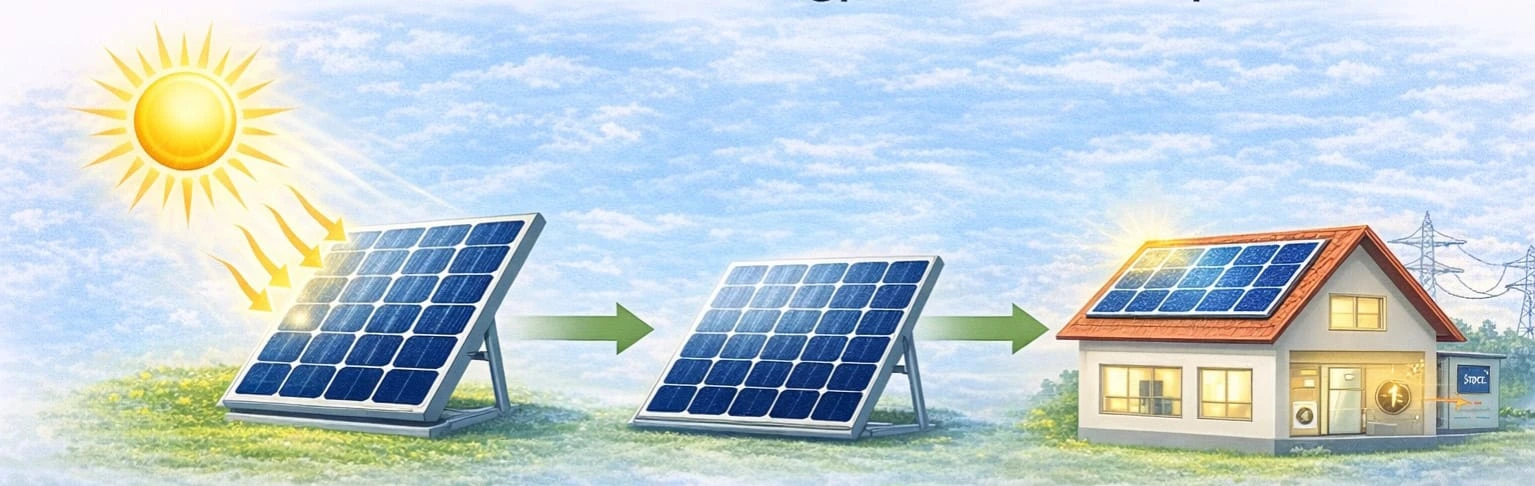
1. Absorption of Sunlight
Solar panels are made of photovoltaic (PV) cells, usually composed of silicon. When sunlight hits the panel surface, the PV cells absorb photons from the sun.
2. Creation of Electron Movement
Inside the solar cell, the absorbed photon energy knocks electrons loose from their atomic structure. This movement of electrons creates an electric current. This phenomenon is known as the photovoltaic effect.
3. Generation of Direct Current (DC)
The flowing electrons produce Direct Current (DC) electricity. However, most homes and businesses operate on Alternating Current (AC) power, so further conversion is required.
4. Conversion from DC to AC
A solar inverter converts DC electricity into AC electricity so it can power appliances, machines, lighting systems, and other electrical equipment.
5. Distribution or Storage of Electricity
After conversion, electricity is either:
- Supplied directly to the building
- Stored in solar batteries for later use
- Exported to the grid in grid-connected systems
What Happens Inside a Solar Cell?
A solar cell has two silicon layers:
- N-type Layer – Contains extra electrons
- P-type Layer – Contains fewer electrons (holes)
When sunlight hits the cell, electrons move from the N-type layer to the P-type layer through an external circuit, generating electricity. This controlled flow is what powers electrical devices.
Factors That Affect Solar Energy Conversion Efficiency
Not all solar panels produce the same amount of electricity. Several factors influence output:
- Sunlight Intensity – Brighter sunlight increases power generation
- Panel Angle & Orientation – Correct tilt improves absorption
- Temperature – Extremely high heat can reduce efficiency
- Dust & Dirt Accumulation – Dirty panels produce less power
- Panel Quality & Technology – Higher efficiency modules perform better
- Shading – Even small shadows reduce output significantly
Types of Solar Power Systems
Grid-Tied Solar System
Connected directly to the electricity grid. Excess energy can be exported, and electricity can be drawn when solar output is low.
Off-Grid Solar System
Operates independently using battery storage. Suitable for remote areas without grid access.
Hybrid Solar System
Combines grid connection and battery storage for maximum flexibility and energy security.
Benefits of Converting Solar Energy into Electricity
- Renewable and sustainable power source
- Reduces electricity bills
- Low maintenance costs
- Environment-friendly and zero emissions
- Energy independence
- Long lifespan of 25+ years for solar panels
- Scalable for homes and industries
Conclusion
Understanding how solar energy into electricity makes it easier to appreciate the science and value behind solar power systems. Through the photovoltaic effect, solar panels capture sunlight, generate direct current (DC), and, with the help of an inverter, convert it into usable alternating current (AC) for homes and businesses. What may seem like a complex technical process is actually a smooth and reliable chain of energy transformation designed for efficiency and long-term performance.
As solar technology continues to improve and adoption increases across residential, commercial, and industrial sectors, solar energy is becoming a mainstream and dependable power source. With minimal maintenance, long system lifespan, and significant savings potential, investing in solar is not just an environmentally responsible choice, it is also a smart financial decision.
In a world moving toward cleaner and more sustainable energy solutions, solar power stands out as a practical, scalable, and future-ready source of electricity for generations to come.
FAQs
Q1. Do solar panels generate electricity at night?
Ans: No, solar panels require sunlight; batteries or grid power are used at night.
Q2. What type of current do solar panels produce?
Ans: They produce Direct Current (DC) electricity.
Q3. Why is an inverter necessary in a solar system?
Ans: It converts DC electricity into usable AC electricity.
Q4. Can solar panels work on cloudy days?
Ans: Yes, but electricity generation is reduced.
Q5. How long do solar panels last?
Ans: Most panels have a lifespan of 25–30 years.

SmartRoof Solar Associate Program – Easy Way to Earn with Solar Referrals
Join the SmartRoof Solar Associate Program. Refer solar leads, earn rewards, and support clean energy growth in your community.

Solar ROI for Commercial & Industrial Projects in India: Cost, Payback & Profits
Learn how commercial and industrial solar projects deliver strong ROI for businesses in India through lower energy costs, faster payback, and long-term profit generation.

Breakthrough in Solar Technology: 33.2% Efficient Perovskite-Silicon Cell
Scientists achieve a breakthrough in solar technology with a perovskite-silicon tandem cell reaching a record 33.2% efficiency for higher energy output.
Solar Panel Sizes and Features in Delhi/NCR: A Complete Guide
Planning to install solar panels in Delhi/NCR? Explore the different sizes, technologies, and key features of solar panels available for residential, industrial, and commercial use. Learn how to choose the right one for your energy needs and roof space.
India Raises Solar Purchase Obligation (SPO) to 8%: A Complete Guide
The Solar Purchase Obligation (SPO) in India is set to increase to 8%, pushing companies to adopt more solar energy. This guide explains the implications for businesses, compliance strategies, and how organizations can align with renewable energy targets.
EIB Green Hydrogen India: €1 Billion Investment to Boost Clean Energy Transition
The European Investment Bank (EIB), the bank of the European Union, has joined forces with the India Hydrogen Alliance (IH2A) to increase support for the development of green hydrogen projects across India.
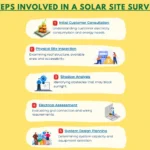
Benefits of Site Survey in Solar PV Installation
Shadow analysis is a critical step in solar site assessment. It helps solar installers identify shading obstacles and optimize panel placement for maximum energy generation.

Yes, I Have Installed an Optimized Solar PV Rooftop System at My Premises
A solar power generating system converts sunlight into electricity for residential, industrial, and commercial use. This blog explains the components, working, and benefits of solar systems, helping you understand how to harness solar energy efficiently and sustainably.