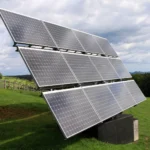
Ground mounted solar systems are becoming one of the most preferred renewable energy solutions for industries, commercial establishments, and large energy consumers in India. Unlike rooftop solar, a ground mounted solar power plant is installed directly on land using specially designed mounting structures, allowing higher capacity installation and better energy generation efficiency.
For businesses with available land or large open spaces, ground mounted solar installations provide scalability, optimal panel orientation, and long-term financial returns.
What Is a Ground Mounted Solar System?
A ground mounted solar system is a solar photovoltaic (PV) installation where solar panels are fixed on metal or aluminium structures anchored into the ground instead of rooftops. These systems are commonly used for:
- Industrial solar power plants
- Solar farms and utility-scale projects
- Commercial energy projects
- Open access solar plants
- Captive power generation for factories
Ground installations allow better design flexibility compared to rooftop solar.
Types of Ground Mounted Solar Systems
1. Fixed Tilt Ground Mounted Solar
Panels are installed at a fixed angle optimized for the location’s latitude.
Best for: Cost-effective and low-maintenance projects.
2. Solar Tracking Systems
Panels move along the sun’s path to maximize solar radiation capture.
Best for: Higher generation and large-scale solar farms.
Land Requirement for Ground Mounted Solar
The land requirement depends on system size and panel wattage. On average:
- 1 MW ground mounted solar plant: 4-5 acres
- 500 kW solar plant: 2-2.5 acres
- 100 kW solar plant: 0.5-0.7 acre
Flat, shadow-free land with good Global Horizontal Irradiation (GHI) ensures better output and improved solar performance ratio.
Key Components of a Ground Mounted Solar Power Plant
A professionally designed ground mounted solar installation includes:
- High-efficiency solar panels (Mono PERC / TOPCon / Bifacial)
- Solar inverters with MPPT technology
- Galvanized mounting structures and foundations
- DC and AC cabling with protection systems
- SCADA or remote monitoring system
- Transformer and switchgear units
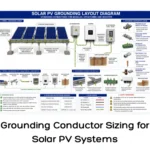
- Earthing and lightning protection
Quality components directly impact solar panel efficiency and plant longevity.
Ground Mounted Solar Installation Process
1. Site Survey & Feasibility Study
Solar irradiation analysis, soil testing, and load estimation.
2. Engineering & Layout Design
Panel spacing, tilt angle, and inverter sizing are finalized.
3. Approvals & Grid Connectivity
DISCOM approvals, net-metering or open-access permissions.
4. Civil & Structural Work
Foundation casting, structure erection, and alignment.
5. Electrical Installation
Panel mounting, inverter connection, and cabling.
6. Testing & Commissioning
Performance checks and grid synchronization.
7. Operation & Maintenance
Routine cleaning, monitoring, and preventive maintenance.
Benefits of Ground Mounted Solar Systems
Optimal tilt and orientation increase solar power output.
Capacity can be expanded as energy demand grows.
Better Cooling & Efficiency
Open airflow reduces heat loss compared to rooftops.
Lower per-unit electricity cost over 25+ years.
Perfect for industrial solar projects and utility-scale plants.
Ground Mounted Solar vs Rooftop Solar
Parameter | Ground Mounted Solar | Rooftop Solar |
Capacity | High | Limited by Roof space |
Efficiency | Higher due to optimal tilt | Slightly lower |
Land Needed | Required | Not required |
Maintenance | Easier access | Roof-dependent |
Scalability | High | Limited |
Businesses with land availability usually prefer ground mounted solar power plants for larger capacities.
Cost Factors in Ground Mounted Solar Projects
The solar plant cost depends on multiple elements:
- Solar panel wattage and technology
- Mounting structure design
- Soil condition and civil work
- Distance from grid connection point
- Inverter type and monitoring system
- Safety and protection equipment
Although initial investment is higher than small rooftop systems, the levelized cost of energy (LCOE) becomes very economical over time.
Technology Trends in Ground Mounted Solar
Modern solar EPC companies are adopting:
- Bifacial solar modules
- Single-axis and dual-axis trackers
- AI-based performance analytics
- Smart SCADA dashboards
- Robotic panel cleaning systems
These advancements improve overall generation and reduce operational losses.
Why Ground Mounted Solar Is Making Solar Energy Economical
With falling module prices, better financing options, and improved EPC execution, ground mounted solar solutions are making solar energy economical for industries and investors. The ability to install large capacities with optimal efficiency makes it one of the most reliable renewable energy investments today.
Conclusion
Ground mounted solar systems offer a powerful combination of scalability, efficiency, and long-term cost savings. For industries, commercial establishments, and solar investors with available land, a ground mounted solar power plant is a strategic step toward energy independence and sustainability. With the right solar EPC partner, quality components, and proper planning, these systems can deliver clean electricity and stable financial returns for decades.
FAQs
Q1. How much land is required for ground mounted solar?
Ans: Approximately 4-5 acres per 1 MW capacity.
Q2. Is ground mounted solar better than rooftop solar?
Ans: For large capacities and higher efficiency, yes.
Q3. What is the lifespan of a ground mounted solar plant?
Ans: Typically 25-30 years with proper maintenance.
Q4. Can ground solar plants be expanded later?
Ans: Yes, scalability is one of their biggest advantages.
Q5. Do ground mounted solar systems require batteries?
Ans: Not mandatory unless backup or off-grid power is needed.