
Solar photovoltaic (PV) systems are widely used for generating clean and renewable electricity for homes, businesses, and industries. However, before installing a solar power system, it is essential to determine which type of solar PV system is most suitable for a particular site and user requirement.
The three common types of solar PV systems include grid-connected systems, off-grid systems, and hybrid solar systems. The selection of the correct system type depends on several technical, economic, and environmental factors. Careful evaluation of site conditions, electricity consumption patterns, and infrastructure is necessary before deciding the appropriate solar PV system configuration.
This blog explains the important factors that influence the selection of the type of solar PV system to be installed, helping installers and consumers make informed decisions.
Types of Solar PV Systems
Before discussing the deciding factors, it is important to understand the major types of solar PV systems.
1. Grid-Connected Solar System
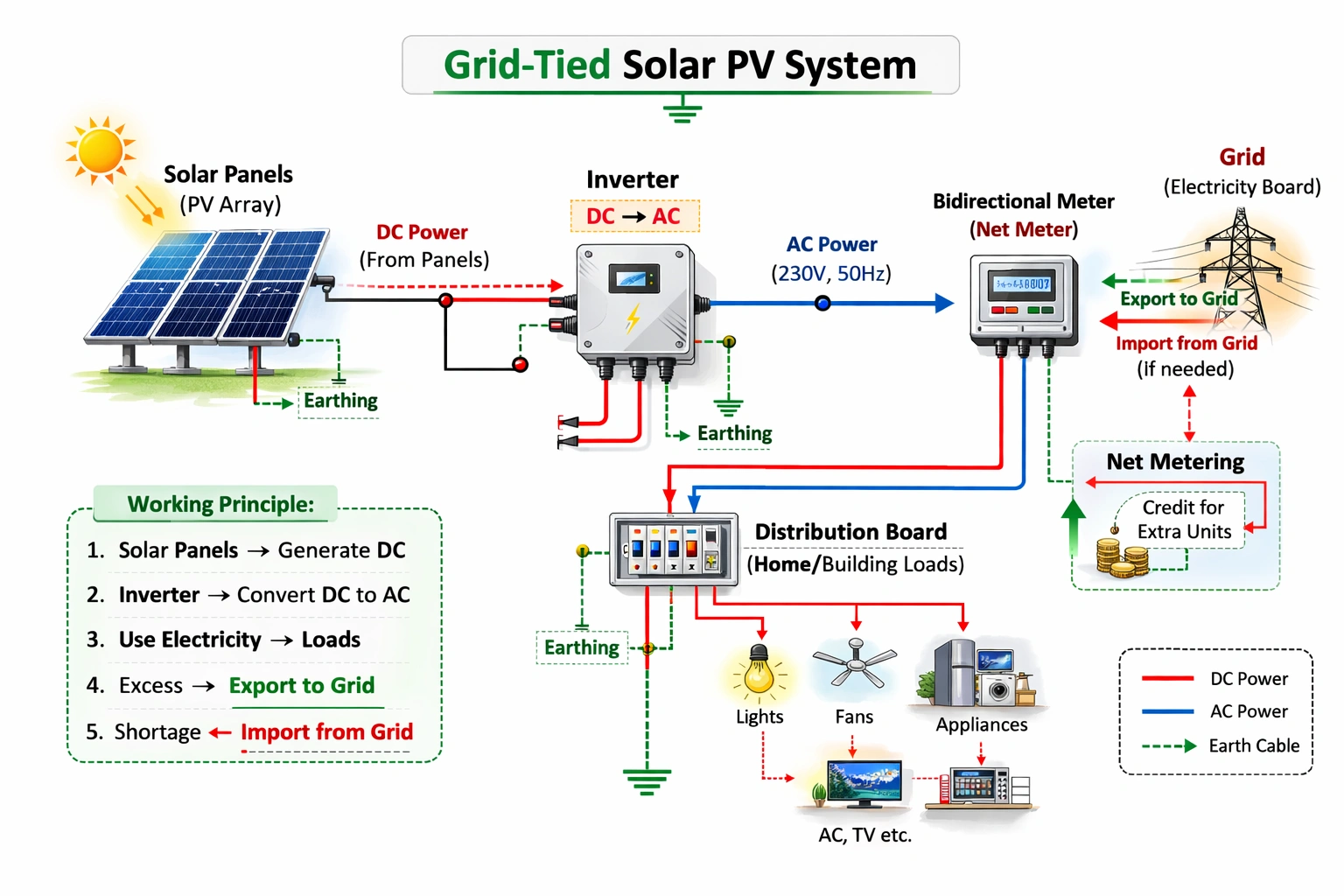
A grid-connected solar system is directly connected to the utility power grid. Electricity generated by the solar panels can be used by the building, and excess electricity can be exported to the grid through net metering.
Features:
- No battery storage required
- Lower solar installation charges
- Suitable for urban areas with reliable grid supply
2. Off-Grid Solar System
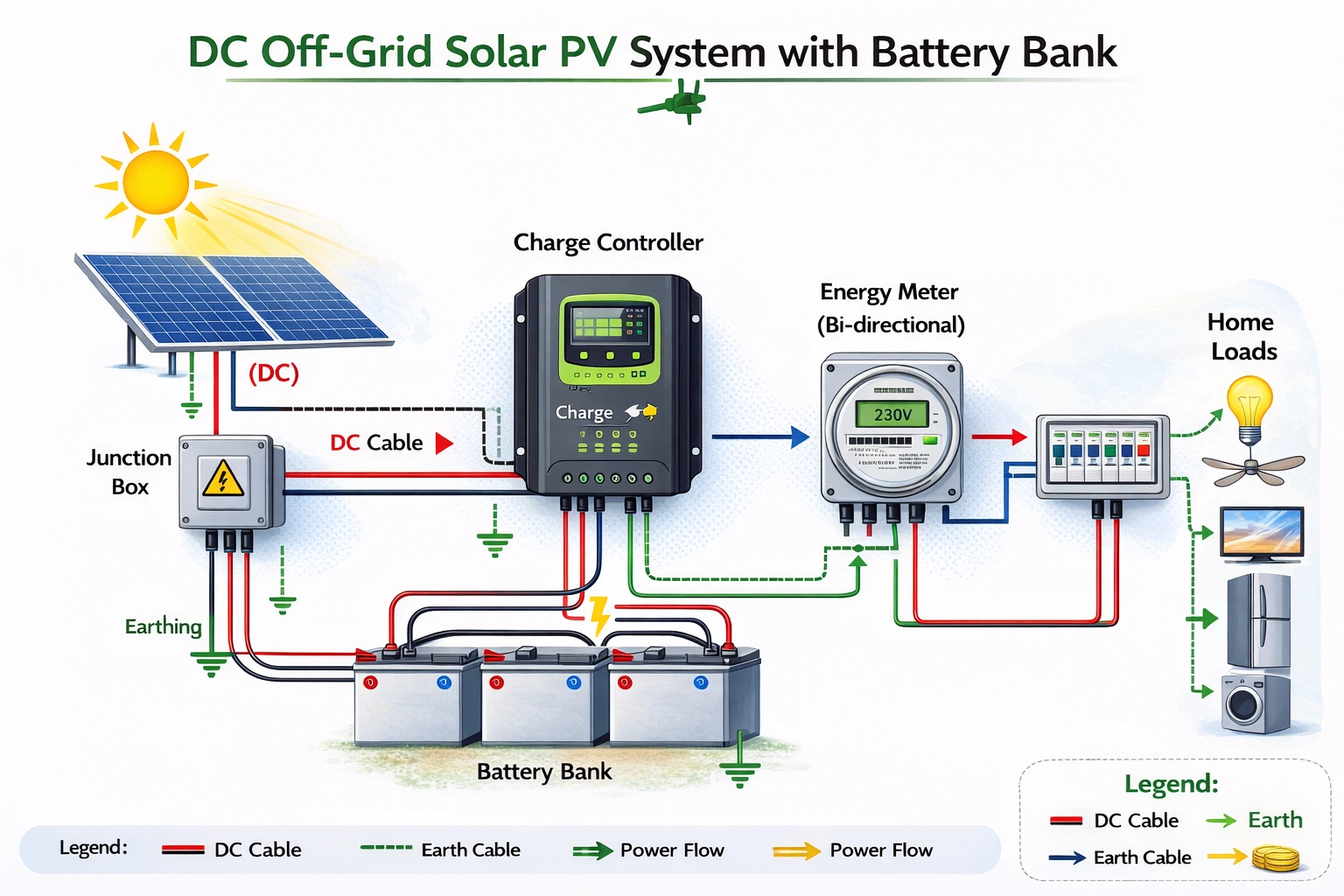
An off-grid solar system operates independently from the utility grid and uses batteries to store electricity.
Features:
- Suitable for remote areas without grid access
- Requires battery storage
- Higher solar energy installation cost due to batteries
3. Hybrid Solar System
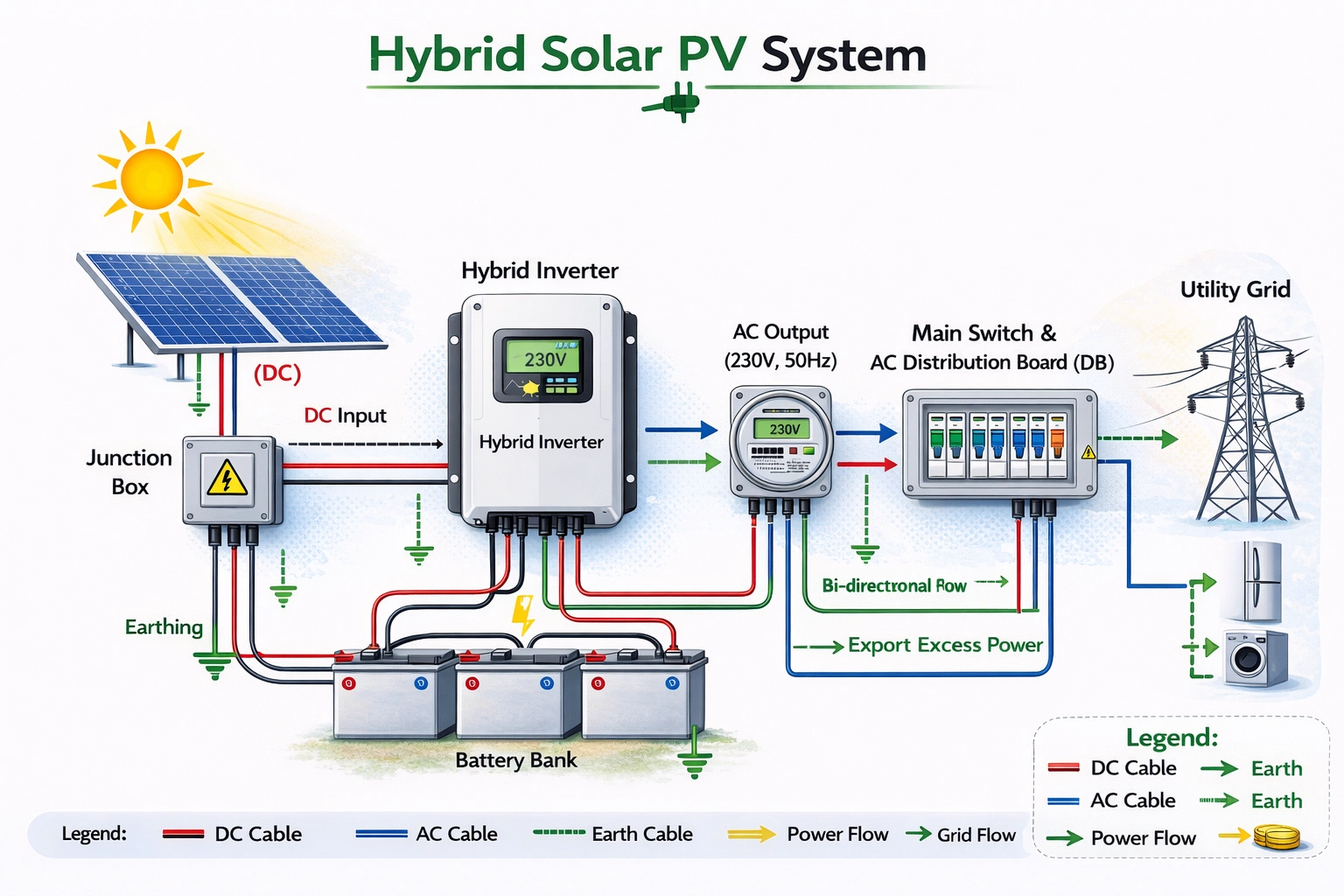
A hybrid system combines the advantages of grid-connected and off-grid systems.
Features:
- Connected to the grid
- Includes battery backup
- Provides electricity during power outages
Hybrid systems are becoming popular for solar energy for home use where power interruptions are frequent.
Important Factors Deciding the Type of Solar PV System
Several key factors influence the selection of the appropriate solar PV system type.
1. Availability of Utility Grid
- The availability and reliability of the electricity grid play a major role in system selection.
- If grid supply is available and reliable, a grid-connected solar system is usually preferred.
- If the location does not have grid connectivity, an off-grid solar system is required.
- Grid-connected systems also allow users to benefit from net metering policies.
2. Electricity Consumption Pattern
Understanding the energy consumption pattern is important when selecting the solar system type.
Factors considered include:
- Daily electricity usage
- Peak load demand
- Daytime vs nighttime energy consumption
For buildings with high nighttime consumption, hybrid or off-grid systems may be more suitable.
3. Budget and Solar Panel System Cost
- Budget is a major factor in deciding the type of solar PV system.
- Grid-connected systems are usually the most affordable option.
- Off-grid systems require batteries, increasing the solar energy installation cost.
- Hybrid systems are more expensive but provide backup power.
- Careful planning helps reduce the cost of solar per kWh installed.
4. Availability of Government Solar Subsidies
Government incentives also influence system selection. In India, the Ministry of New and Renewable Energy provides subsidies primarily for grid-connected rooftop solar systems.
These subsidies help reduce solar panel system cost and encourage adoption of renewable solar solutions.
5. Need for Power Backup
Some locations experience frequent power outages. In such cases, users may require battery backup.
- Grid-connected systems shut down during power cuts.
- Hybrid systems provide electricity using battery storage.
Therefore, areas with unreliable electricity supply often prefer hybrid solar systems.
6. Installation Site Conditions
The physical characteristics of the installation site also influence system selection.
Important considerations include:
- Rooftop space availability
- Structural strength of the building
- Orientation and tilt of the roof
- Presence of shading obstacles
Proper site conditions ensure efficient solar panel in rooftop installations.
7. Energy Storage Requirement
Energy storage plays an important role in solar system selection.
Battery storage is required when:
- The grid is unavailable
- Backup power is needed
- Energy needs to be stored for nighttime usage
However, batteries increase installation cost and maintenance requirements.
8. Maintenance and System Complexity
- Different solar systems require different levels of maintenance.
- Grid-connected systems have minimal maintenance.
- Off-grid systems require battery maintenance.
- Hybrid systems involve more complex system management.
- Users must consider long-term operational requirements before choosing the system type.
9. Future Energy Needs
Future electricity demand should also be considered when selecting the solar system type.
Installers should evaluate:
- Expansion plans for the building
- Future addition of appliances or electric vehicles
- Increasing energy consumption
Planning for future demand helps avoid costly system upgrades later.
Impact of System Type on Solar Energy Installation Cost
The choice of solar PV system significantly affects the total installation cost.
Solar System Type | Installation Cost | Maintenance Requirement |
Gid-Connected | Low | Minimal |
Off-Grid | High | Moderate |
Hybrid | Moderate to high | Moderate |
Selecting the appropriate system ensures efficient investment in renewable energy technology.
Best Practices for Selecting a Solar PV System
Professional solar installers follow these best practices when recommending a system type.
- Conduct a detailed site survey
- Analyze electricity consumption patterns
- Evaluate grid availability and reliability
- Consider customer budget and future needs
- Ensure compatibility with government subsidy schemes
These practices help design efficient renewable solar systems.
Conclusion
Selecting the appropriate type of solar PV system is essential for ensuring efficient and reliable solar electricity generation. Several factors, including grid availability, energy consumption patterns, budget, site conditions, and backup requirements, must be carefully evaluated before making a decision. By considering these factors, installers can recommend the most suitable solar solution for residential, commercial, or industrial applications.
Proper planning and system selection are key to successful solar installations. Choosing the right system helps optimize solar energy installation cost, improve renewable solar system efficiency, and support the adoption of sustainable renewable energy technology.
With the right approach, solar PV systems can provide reliable solar energy for home use, reduce electricity expenses, and contribute to a cleaner and more sustainable energy future.
FAQs
Q1. What are the main types of solar PV systems?
Ans: The three main types are grid-connected systems, off-grid systems, and hybrid solar systems.
Q2. Which solar system is the most affordable?
Ans: Grid-connected solar systems are generally the most affordable because they do not require battery storage.
Q3. When should an off-grid solar system be used?
Ans: Off-grid systems are used in locations where the electricity grid is unavailable.
Q4. Why are hybrid solar systems becoming popular?
Ans: Hybrid systems provide both grid connectivity and battery backup, making them suitable for areas with frequent power outages.
Q5. How do government subsidies influence solar system selection?
Ans: Government subsidies often apply to grid-connected rooftop solar systems, reducing solar installation charges for consumers.
Identify All Major Components of a Solar PV System: Complete Guide for Installers
Understand all major components of a solar PV system, from panels and inverters to mounting structures and BOS. This complete guide helps installers design efficient and reliable solar power systems.
Can Solar Systems Support Industrial Motors and Machines? A Complete Guide
Discover how using solar for heavy machines can power industrial equipment reliably and cost-effectively for greener operations.

Solar Rooftop Projects: Benefits of Intentional Islanding for Power Backup
Discover the role of intentional islanding in solar rooftop projects. Ensure continuous power supply, system safety, and reliable energy even during grid failures.
How to Read the Electricity Bill Before Deciding Solar Plant Capacity
Load assessment is an essential step before installing a solar PV system. It helps determine electricity consumption and ensures accurate system sizing for optimal solar performance.
Solar PV Procurement Process Guide for EPC & Installers | Step-by-Step
A well-planned procurement process is critical for the success of any solar PV project. This guide explains step-by-step how EPC companies and installers can efficiently source solar panels, inverters, and balance of system components while ensuring quality, cost-effectiveness, and timely delivery.

How to Calculate PV Power Output? Step-by-Step Guide
Calculating PV power output helps you estimate how much electricity a solar system can generate. This step-by-step guide explains the PV power output formula, examples, and key factors affecting solar energy production.
Solar Inverters India: How to Choose the Best for Your Solar System
India’s solar market offers a wide range of inverters, making selection challenging. This guide explains key factors to consider, helping users choose the right inverter for residential, commercial, and industrial solar projects effectively.
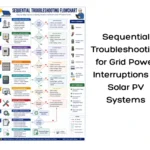
Sequential Troubleshooting for Grid Power Interruptions in Solar PV Systems
A complete guide to sequential troubleshooting in solar PV systems, helping identify and resolve faults during grid power supply interruptions through systematic testing and diagnosis.