
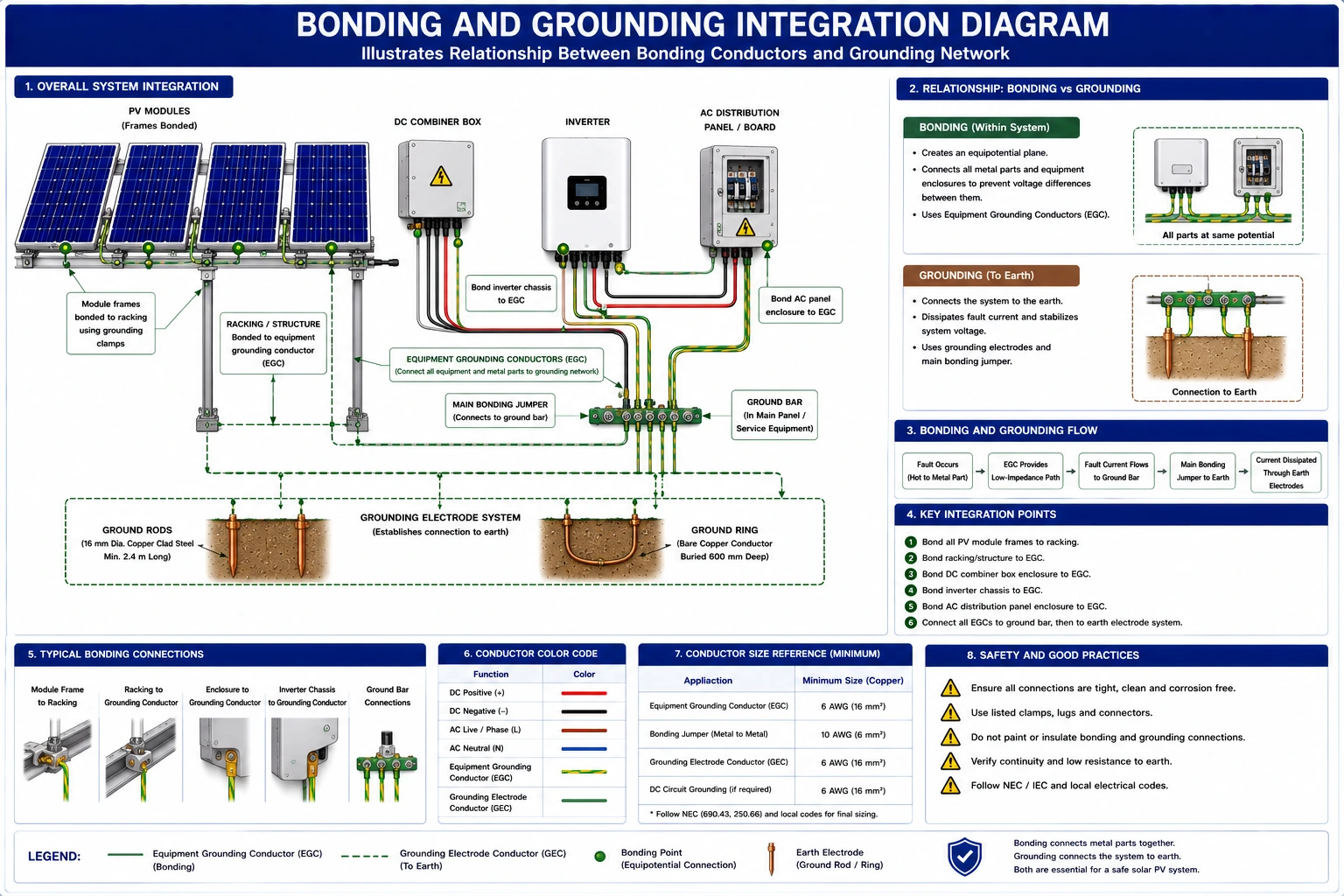
In solar photovoltaic (PV) systems, ensuring proper electrical bonding and corrosion protection is critical for maintaining system safety, reliability, and long-term performance. While grounding provides a path for fault currents to flow safely to earth, bonding ensures that all metallic electrical equipment and conductive components remain at the same electrical potential, minimizing the risk of electric shock and equipment damage.
In addition, solar installations are exposed to harsh environmental conditions such as moisture, humidity, temperature fluctuations, dust, and pollution. These factors can cause oxidation and corrosion at electrical connections. Applying anti-oxidant material helps protect electrical joints, improves conductivity, and extends the life of the solar PV system.
Improper bonding or failure to apply anti-oxidant compounds can lead to loose connections, overheating, corrosion, increased resistance, equipment failure, and higher solar installation charges. Therefore, bonding and corrosion protection are essential practices in renewable solar projects.
Proper bonding and corrosion prevention are fundamental requirements for safe solar electricity generation and reliable renewable energy technology installations.
This blog provides a complete guide to bonding all electrical equipment and applying anti-oxidant materials in solar PV systems, including installation procedures, materials, testing methods, safety precautions, and best practices.
What is Electrical Bonding?
Electrical bonding is the process of connecting all metallic, conductive, and non-current-carrying components together using bonding conductors or bonding devices.
The objective is to:
- Maintain equal electrical potential
- Reduce shock hazards
- Improve fault current flow
- Enhance system safety
- Support effective grounding
Bonding works together with grounding, but serves a different purpose.
Difference Between Bonding and Grounding
Bonding | Grounding |
Connects metallic parts together | Connects the system to the Earth |
Equalizes electrical potential | Dissipates fault current into the Earth |
Reduces touch voltage | Provides fault current path |
Improves electrical safety | Enhances system protection |
Why Bonding is Important in Solar PV Systems
Proper bonding helps:
- Prevent electric shock
- Improve fault current flow
- Reduce voltage differences
- Protect electrical equipment
- Improve lightning protection performance
- Optimize solar panel system cost
Without proper bonding, electrical faults may not clear effectively, increasing safety risks and maintenance costs.
Electrical Equipment That Requires Bonding
1. Solar Module Frames
All metallic module frames should be electrically bonded.
Benefits:
- Improved safety
- Enhanced grounding effectiveness
2. Mounting Structures
Bonding is required for:
- Rails
- Supports
- Brackets
- Structural frames
3. Solar Inverters
Inverter enclosures and metallic parts require bonding.
4. DC Combiner Boxes
Metallic enclosures should be bonded to the grounding system.
5. AC Distribution Panels
Bonding ensures proper fault current paths.
6. Battery Racks and Enclosures
Particularly important in hybrid and off-grid systems.
7. Cable Trays and Conduits
Metallic trays and conduits should be bonded to maintain continuity.
What is Anti-Oxidant Material?
Anti-oxidant material is a specially formulated compound applied to electrical connections to reduce oxidation and corrosion.
Commonly used on:
- Aluminum conductors
- Copper-aluminum joints
- Grounding connections
- Bonding conductors
Anti-oxidant compounds help maintain low-resistance electrical connections over time.
Why Apply Anti-Oxidant Material?
Solar PV systems operate outdoors and face exposure to:
- Moisture
- Humidity
- Rain
- Salt-laden environments
- Industrial pollutants
Anti-oxidant material helps:
- Prevent corrosion
- Improve conductivity
- Reduce connection resistance
- Extend equipment lifespan
- Improve renewable solar system reliability
Benefits of Proper Bonding and Anti-Oxidant Application
Enhanced Electrical Safety
- Reduces touch voltage hazards.
Improved Equipment Protection
- Protects electrical equipment during fault conditions.
Reduced Corrosion
- Prevents deterioration of electrical joints.
Better System Reliability
- Improves long-term operational performance.
Lower Maintenance Costs
- Reduces inspection and repair requirements.
Optimized Solar Panel System Cost
- Improves overall lifecycle economics.
Materials Required for Bonding
Bonding Conductors
Common materials:
- Copper
- Tinned copper
- Copper-clad steel
Bonding Jumpers
- Used between metallic components.
Grounding and Bonding Clamps
- Provide secure electrical connections.
Bonding Lugs
- Used for equipment bonding connections.
Anti-Oxidant Compound
- Applied to electrical joints and terminations.
Tools Required
Installation Tools
- Wire stripper
- Cable cutter
- Crimping tool
- Torque wrench
- Screwdrivers
Testing Equipment
- Digital multimeter
- Continuity tester
- Earth resistance tester
Safety Equipment
- PPE
- Insulated tools
- Lockout/tagout devices
Step-by-Step Procedure for Bonding Electrical Equipment
Step 1 – Review Electrical Drawings
Study:
- Single Line Diagram (SLD)
- Earthing layout
- Bonding details
Identify all bonding points.
Step 2 – Inspect Equipment Locations
Verify bonding requirements for:
- Solar modules
- Structures
- Inverters
- Combiner boxes
- Distribution panels
Step 3 – Install Bonding Conductors
Connect metallic equipment using approved bonding conductors.
Ensure:
- Correct conductor sizing
- Secure routing
Step 4 – Bond Solar Module Frames
Use approved bonding clips or grounding hardware. Ensure continuity between adjacent modules.
Step 5 – Bond Mounting Structures
Connect:
- Rails
- Supports
- Structural members
Create a continuous conductive path.
Step 6 – Bond Inverter Enclosures
Connect the inverter bonding points to the grounding network. Follow manufacturer recommendations.
Step 7 – Bond Combiner Boxes and Electrical Panels
- Ensure all metallic enclosures are bonded properly.
Step 8 – Bond Cable Trays and Conduits
- Maintain electrical continuity throughout the cable management system.
Applying Anti-Oxidant Material
Step 1 – Clean Contact Surfaces
Remove:
- Dirt
- Dust
- Oxidation
- Grease
Use approved cleaning methods.
Step 2 – Inspect Conductors and Connectors
- Verify that contact surfaces are undamaged.
Step 3 – Apply Anti-Oxidant Compound
Apply a thin, even layer on:
- Conductors
- Lugs
- Connectors
- Bonding points
Avoid excessive application.
Step 4 – Complete Electrical Connection
Install:
- Lugs
- Clamps
- Bonding hardware
Secure using specified torque values.
Step 5 – Remove Excess Material
- Clean any excess compound around the connection.
Testing After Bonding Installation
1. Continuity Testing
Verify electrical continuity between bonded components.
2. Grounding Verification
- Confirm connection to the grounding network.
3. Visual Inspection
Check:
- Connection quality
- Corrosion protection
- Mechanical integrity
4. Torque Verification
- Ensure all fasteners are tightened correctly.
5. Documentation Review
Record:
- Bonding locations
- Test results
- Inspection findings
Conclusion
Proper bonding of all electrical equipment and the application of anti-oxidant materials are essential elements of a safe, durable, and high-performing solar PV installation. By ensuring continuous electrical bonding and protecting critical connections from corrosion, installers can improve system reliability, reduce maintenance requirements, and enhance long-term operational safety.
Bonding and corrosion prevention are fundamental requirements in renewable solar systems and solar energy for home use. Furthermore, adherence to recommendations issued by the Ministry of New and Renewable Energy helps ensure compliance with industry standards and safe installation practices.
By implementing proper bonding techniques, applying anti-oxidant materials where required, and conducting thorough inspections and testing, solar professionals can optimize solar panel system cost, improve solar electricity generation reliability, and support the long-term success of residential, commercial, industrial, and utility-scale renewable energy technology projects.
FAQs
Q1. What is the purpose of bonding in a solar PV system?
Ans: Bonding connects metallic equipment together to maintain equal electrical potential and improve electrical safety.
Q2. Which solar components require bonding?
Ans: Solar modules, mounting structures, inverters, combiner boxes, battery racks, cable trays, and metallic conduits typically require bonding.
Q3. Why is antioxidant material applied to electrical connections?
Ans: It helps prevent oxidation and corrosion, improves conductivity, and extends connection life.
Q4. Is an antioxidant compound necessary for all electrical connections?
Ans: It is especially important for aluminum conductors, mixed-metal connections, grounding points, and outdoor installations exposed to moisture.
Q5. How can installers verify proper bonding?
Ans: Through continuity testing, visual inspections, grounding verification, torque checks, and documentation review.
Inverter Circuit Board Fault Guide for Solar PV Systems
A complete guide to identifying inverter circuit board faults in solar PV systems, recognizing when professional service is required, and following safe maintenance procedures.
Battery Bank Installation Guide for Solar PV Systems
A step-by-step guide to battery bank installation for solar PV systems, covering location planning, battery setup, and safety requirements.
Delhi Government Pledges to Boost Renewable Energy Generation
Delhi, the capital city of India, is moving towards a greener future with an ambitious plan to generate an additional 6,000 MW of electricity using renewable energy sources.

Solar for Commercial Buildings in India: Costs, Benefits & ROI Explained
Solar for commercial buildings in India is becoming the smartest way to cut electricity bills and increase energy independence. This guide explains system costs, benefits, ROI, and how solar power helps offices, malls, hotels, and commercial complexes become more sustainable and profitable.

Haryana Electricity Tariff Hike Impacts All Consumer Categories in 2015-16
Haryana electricity tariffs were increased across all consumer categories in 2015-16, raising power costs for households, industries, and businesses statewide.

How DISCOMs Implement Net Metering for Solar Power Plants
Discover the process of net metering implementation by DISCOMs for solar power plants. Understand the benefits, billing mechanism, and how it maximizes solar energy utilization.
Electrical Hazards in Solar PV Systems Guide
A complete guide to identifying electrical hazards in solar PV systems, covering shock, arc flash, DC voltage, wiring, grounding, and electrical fire risks.

How to Connect a Solar Panel to an MPPT Charge Controller: Step-by-Step Guide
This guide explains how to connect a solar panel to an MPPT charge controller step by step. Learn correct wiring, safety tips, and best practices to ensure efficient and reliable solar power performance.