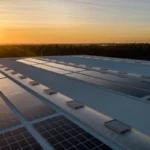
China’s Solar Industry Poised for Continued Growth in 2023 and Beyond
China’s solar industry exports surged by 64% to $52 billion in 2022, despite global trade tensions. The country’s low-cost supply and technological expertise were key factors in this growth.
Europe was the top export market for Chinese solar modules, accounting for 56% of total exports. Southeast Asia was the second-largest export market, with a 31% share.
The U.S. tariffs on Chinese-made modules have driven module production to Southeast Asia, where manufacturers rely on imported cells from China.
Wood Mackenzie, a global research and consultancy group, found that Chinese photovoltaic (PV) modules were up to 57% cheaper than the modules produced in the U.S. and EU. The primary reason for this price gap is the cost of materials. China has low energy costs, scaling advantages, and government support, which give local manufacturing an edge over the U.S. and EU counterparts.
The U.S. goal to produce 100% U.S.-made modules by 2026 will be difficult to achieve due to the significant lack of wafer and cell production. Even the incentives rolled out by the government will not be able to fully bridge the manufacturing cost gap with the Chinese-manufactured modules.
The China-targeted PV trade policies by the U.S. have benefited the Southeast Asia region, which has developed a mature supply chain and large production capacity for export. Chinese manufacturers account for 55% of the region’s PV manufacturing capacity, which builds on Chinese-produced components.
The EU and India have also set ambitious targets for domestic PV manufacturing, but they are facing challenges in meeting these targets. The EU is advocating trade restrictions to secure its domestic PV manufacturing, but specific policies to drive capacity building and displace imports are missing. India has suspended the Approved List of Models and Manufacturers regulations for a year, citing the lack of larger capacity solar modules in the country as the reason.
China’s domestic solar PV industry continues to invest in upstream sectors, which are more profitable than modules. The available export module capacity in the country is expected to grow to 149 GW by 2026. Wood Mackenzie suggests that companies outside of China, even with multiple opportunities, will find it challenging to compete with China’s low-cost supply chain and pool of expertise, which it has developed over a decade.
The European Commission has published the Green Deal Industrial Plan, which will utilize €250 billion (~$269.51 billion) of existing EU funds to safeguard and enhance the competitiveness of its clean energy industry.
India exported solar cells and modules worth $479 million (~₹39.5 billion) in the first quarter of the calendar year 2023, a staggering increase of 6,293% year-over-year.
Suggested Articles

India and IMT-GT JBC Sign MoU to Boost Energy Efficiency in Southeast Asia
The first meeting of the G20 Energy Transitions Working Group was held in Bengaluru, India, and was a success, with participants sharing a consensus on the priority areas of energy security and diversified supply chains.
CAPEX or OPEX? How to Choose the Best Solar Ownership Model
Choosing between the CAPEX and OPEX models can greatly impact your solar savings and ownership benefits. This guide explains both models to help you make the right decision.

Solar Chankya: Complete Guide to Solar Systems and Components
Discover the key components of solar systems—from panels to inverters and batteries—and how they work together for efficient energy solutions

Basics of Electricity and Electric Terms and Laws Required for Renewable Energy – Complete Guide
Understanding the basics of electricity is essential for anyone working in renewable energy and solar power systems. From voltage and current to Ohm’s Law and power calculations, strong electrical fundamentals ensure safe and efficient solar installations. This complete guide explains key electrical terms, units, formulas, and laws required for renewable energy professionals, students, and solar PV installers.
Generation Based Incentive Proposed for Rooftop Solar in Haryana
Haryana plans to offer Generation Based Incentive (GBI) for rooftop solar installations, promoting clean energy adoption and reducing electricity costs for consumers.
Agrivoltaics: Merging Solar Power with Farming
Discover how solar batteries store excess energy, maximize your solar system’s efficiency, and provide reliable power during outages. Learn about the types, benefits, lifespan, and maintenance tips to make the most of your solar investment.
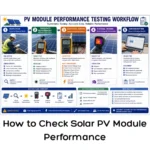
How to Check Solar PV Module Performance
A complete guide to testing solar PV module performance, including voltage and current measurements, power output analysis, and performance verification techniques.
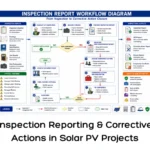
Inspection Reporting and Corrective Actions
A complete guide to preparing solar PV inspection reports and implementing corrective actions to ensure quality, compliance, and project performance.