
In solar photovoltaic (PV) systems, electrical connections play a critical role in ensuring safe and efficient power transmission. Among these connections, cable termination is one of the most important processes during solar installation. Proper cable termination ensures reliable electrical contact between cables and equipment such as solar modules, combiner boxes, inverters, batteries, and distribution panels.
Incorrect cable termination can lead to loose connections, overheating, voltage drops, electrical faults, fire hazards, and increased solar installation charges. Therefore, solar installers and EPC professionals must understand the correct termination procedures, tools, and safety practices required for renewable solar projects.
Proper electrical connections and cable management are essential for safe solar electricity generation and long-term system reliability.
This blog provides a complete guide to cable termination in solar installations, including tools required, step-by-step procedures, safety precautions, testing methods, and best practices.
What is Cable Termination?
Cable termination is the process of securely connecting electrical cables to equipment terminals or connectors to ensure proper current flow.
In solar PV systems, cable termination is required at:
- Solar modules
- DC combiner boxes
- Inverters
- Battery banks
- AC distribution panels
- Earthing systems
Importance of Proper Cable Termination
Proper cable termination helps:
- Reduce electrical resistance
- Prevent overheating
- Improve electrical efficiency
- Enhance system safety
- Increase equipment lifespan
- Optimize solar panel system cost
Improper termination can increase:
- Maintenance expenses
- Energy losses
- Solar installation cost per kWh
Types of Cable Termination Used in Solar PV Systems
1. Lug Termination
Uses cable lugs and terminals for secure connections.
Common Applications:
- Inverters
- Battery banks
- Distribution panels
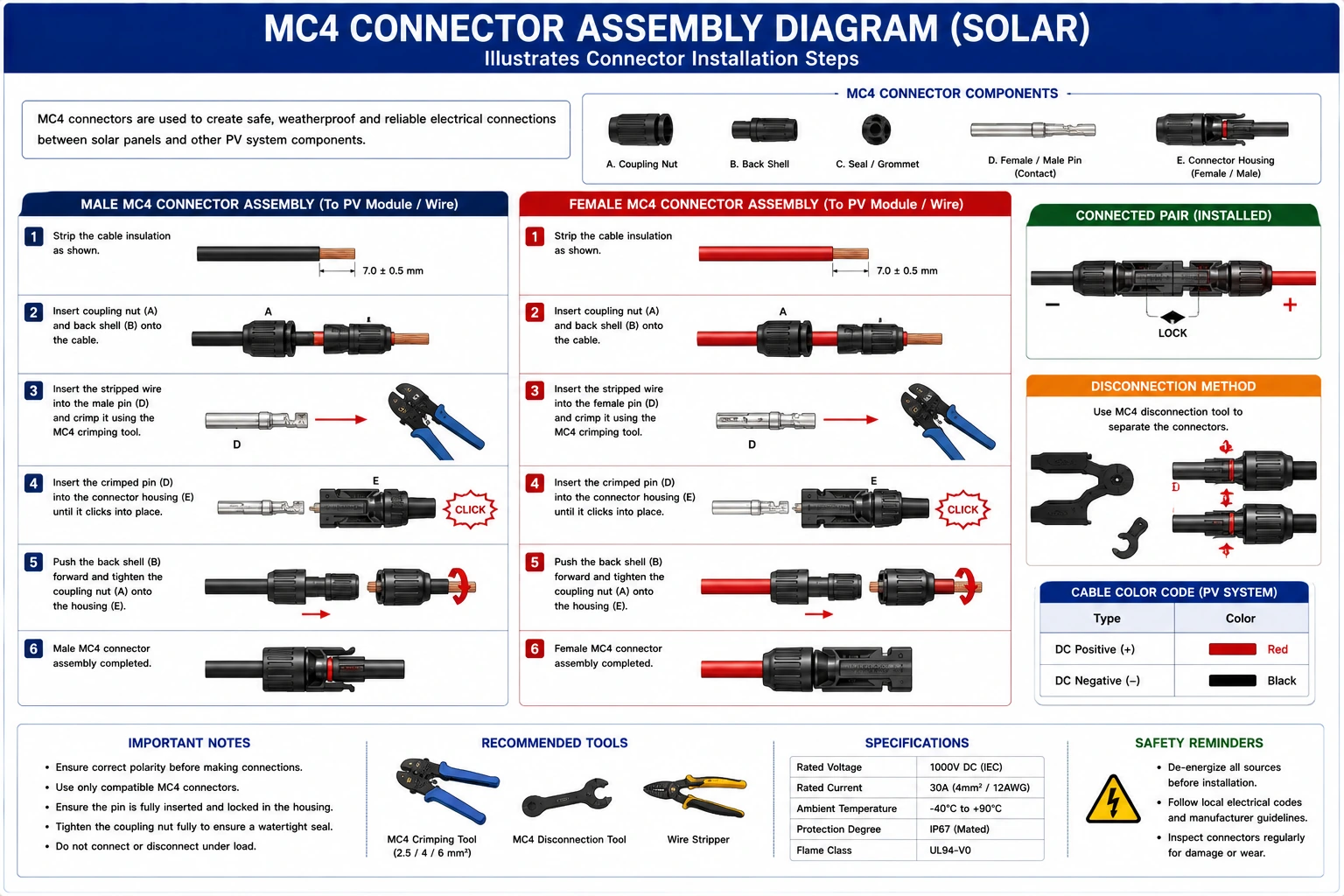
2. MC4 Connector Termination
Used for solar module interconnections.
Features:
- Weatherproof
- UV resistant
- Quick locking mechanism
3. Ferrule Termination
Uses ferrules for stranded conductors.
Benefits:
- Better conductor protection
- Improved connection reliability
4. Screw Terminal Connections
Used in combiner boxes and electrical panels.
Tools Required for Cable Termination
1. Cable Cutter
Used for clean cable cutting.
2. Wire Stripper
Removes cable insulation safely.
3. Crimping Tool
Used for crimping lugs, ferrules, and connectors.
4. Torque Wrench
Ensures proper tightening torque.
5. Multimeter
Used for continuity and voltage testing.
6. Insulation Tester
Checks insulation integrity.
Materials Required for Cable Termination
- Cable lugs
- Ferrules
- Heat shrink sleeves
- MC4 connectors
- Insulation tape
- Cable glands
Factors to Consider Before Cable Termination
1. Cable Size Compatibility
- Ensure lugs and connectors match cable size.
2. Voltage and Current Ratings
- Termination components must support system ratings.
3. Environmental Conditions
Outdoor installations require:
- UV-resistant connectors
- Waterproof protection
4. Equipment Specifications
- Follow manufacturer recommendations.
Step-by-Step Cable Termination Procedure
Step 1 – Isolate Electrical Supply
Before starting work:
- Shut down the inverter
- Disconnect the battery supply
- Isolate AC and DC circuits
Step 2 – Verify Cable Length and Size
- Ensure proper cable dimensions and conductor size.
Step 3 – Cut the Cable Properly
- Use cable cutters to achieve a clean cut.
Step 4 – Strip Cable Insulation
- Remove insulation carefully without damaging conductors.
Step 5 – Select Proper Lug or Connector
Choose connectors according to:
- Cable size
- Voltage rating
- Current capacity
Step 6 – Insert Cable into Lug or Ferrule
- Ensure full conductor insertion.
Step 7 – Crimp the Connection
- Use appropriate crimping tools for secure termination.
- Improper crimping can lead to loose connections and overheating.
Step 8 – Apply Heat Shrink Sleeve (If Required)
- Provides insulation and environmental protection.
Step 9 – Connect to Equipment Terminal
Attach terminated cable to:
- Inverter terminals
- Combiner box terminals
- Battery terminals
- Distribution panels
Step 10 – Tighten Connections Properly
- Use the torque wrench according to the manufacturer’s specifications.
Step 11 – Label the Cables
Identify:
- AC cables
- DC cables
- Earthing cables
Step 12 – Perform Electrical Testing
Verify:
- Continuity
- Voltage levels
- Polarity
- Insulation resistance
MC4 Connector Termination Procedure
Step 1 – Strip Solar Cable
- Remove insulation carefully.
Step 2 – Insert Cable into MC4 Pin
- Ensure correct conductor placement.
Step 3 – Crimp MC4 Pin
- Use the MC4 crimping tool.
Step 4 – Assemble Connector Housing
- Secure the locking mechanism properly.
Step 5 – Test Connector Continuity
- Verify electrical performance.
Quality Checks After Cable Termination
1. Pull Test
Ensures the mechanical strength of termination.
2. Continuity Testing
Verifies electrical connection integrity.
3. Insulation Resistance Testing
Checks insulation quality.
4. Thermal Inspection
Detects overheating points.
5. Torque Verification
Ensures proper tightening.
Applications in Solar Projects
1. Residential Rooftop Solar Systems
Ensures safe solar energy for home use.
2. Commercial Solar Plants
Supports reliable power distribution.
3. Utility-Scale Renewable Solar Projects
Improves long-term system reliability.
Conclusion
Proper cable termination is essential for ensuring safe, efficient, and reliable solar PV system operation. By using the correct tools, selecting suitable connectors, following proper crimping procedures, and conducting quality testing, installers can significantly improve electrical performance and long-term durability.
Secure electrical connections are fundamental to renewable solar systems and solar energy for home use. Additionally, adherence to standards established by the Ministry of New and Renewable Energy ensures safe and standardized installation practices.
With proper cable termination techniques, solar professionals can optimize solar panel system cost, improve solar electricity generation efficiency, and support sustainable renewable energy technology deployment across residential, commercial, and industrial sectors.
FAQs
Q1. Why is cable termination important in solar PV systems?
Ans: It ensures safe and reliable electrical connections.
Q2. What tools are commonly used for cable termination?
Ans: Crimping tools, wire strippers, torque wrenches, and multimeters.
Q3. Why are MC4 connectors used in solar installations?
Ans: They provide secure, weatherproof solar cable connections.
Q4. Does cable termination affect solar panel system cost?
Ans: Yes, proper termination reduces maintenance and equipment failure costs.
Q5. What safety precautions should installers follow?
Ans: Use PPE, insulated tools, and isolate power sources before work.

Difference Between Single-Phase and Three-Phase Voltage and Its Use for Solar PV Installer – Complete Guide
Understanding the difference between single-phase and three-phase voltage is essential for solar PV installers. While single-phase supply is common in residential systems, three-phase power is widely used in commercial and industrial solar projects. This complete guide explains electrical phase differences, applications in solar installations, and how choosing the right phase connection impacts system efficiency, safety, and performance.
Utility Disconnect Installation in Solar PV Systems Guide
A step-by-step guide to utility disconnect installation in solar PV systems, including wiring, safety measures, and installation best practices.

New Loan Scheme for solar rooftop projects by IREDA
Solar installation for petrol pumps offers huge savings and energy independence. This 2025 guide explains system cost, subsidy, ROI, and installation process.
How to Check Equipment Location for Solar PV Systems
A complete guide to battery bank enclosure and rack installation, including site verification, setup procedures, and safety practices for solar PV systems.

Solar for Warehouses and Malls: Cost, Benefits, Installation & ROI in India
A complete guide on solar for warehouses and malls in India covering installation cost, benefits, ROI, system sizing, and installation process.
Safe Handling of Solar PV Components: Complete Guide for EPC & Installers
Proper material handling is crucial in solar PV projects to avoid damage, reduce losses, and ensure safety. This guide covers best practices for transporting, storing, and installing solar components efficiently.
Workmanship Inspection and Tool Proficiency in Solar PV Projects
A complete guide to solar PV workmanship and tool proficiency, helping installers maintain quality standards and demonstrate technical competency.
Solar Rooftop Subsidy: Why It’s Time for a Change of Mindset
While solar rooftop subsidies help reduce upfront costs, true adoption requires a mindset shift. This guide discusses why businesses and homeowners should focus on long-term benefits, sustainability, and strategic planning beyond relying solely on incentives.