
Before installing a solar photovoltaic (PV) system, it is essential to evaluate the existing electrical infrastructure of the building. One of the most critical steps in the planning stage is assessing the building wiring system. This evaluation helps ensure that the existing electrical wiring can safely support the integration of a solar power system.
Building wiring assessment helps solar installers determine whether the electrical system can handle the additional power generated by the solar plant. It also helps identify any required upgrades or modifications before preparing a final installation proposal. Electrical system inspection is an essential part of solar site assessment to ensure safety, system compatibility, and efficient energy distribution.
This blog explains why assessing building wiring is necessary before making a solar installation proposal and how it impacts system performance, safety, and solar panel system cost.
What is Building Wiring Assessment in Solar Installation?
Building wiring assessment refers to the process of evaluating the existing electrical wiring, distribution boards, and electrical infrastructure of a building before installing a solar PV system.
This assessment includes checking:
- Wiring condition and capacity
- Distribution boards and circuit breakers
- Earthing system
- Load distribution
- Safety compliance
Proper evaluation ensures that the building’s electrical system can safely integrate solar electricity generated from the solar plant.
Why Building Wiring Assessment is Necessary
Solar panels generate electricity that is connected to the building’s electrical system. If the wiring is outdated or improperly installed, it may lead to safety hazards or reduced system efficiency.
Assessing wiring helps ensure:
- Safe integration of solar power with existing electrical systems
- Efficient electricity distribution
- Compliance with electrical standards
It also helps optimize the solar panel system cost by identifying necessary upgrades beforehand.
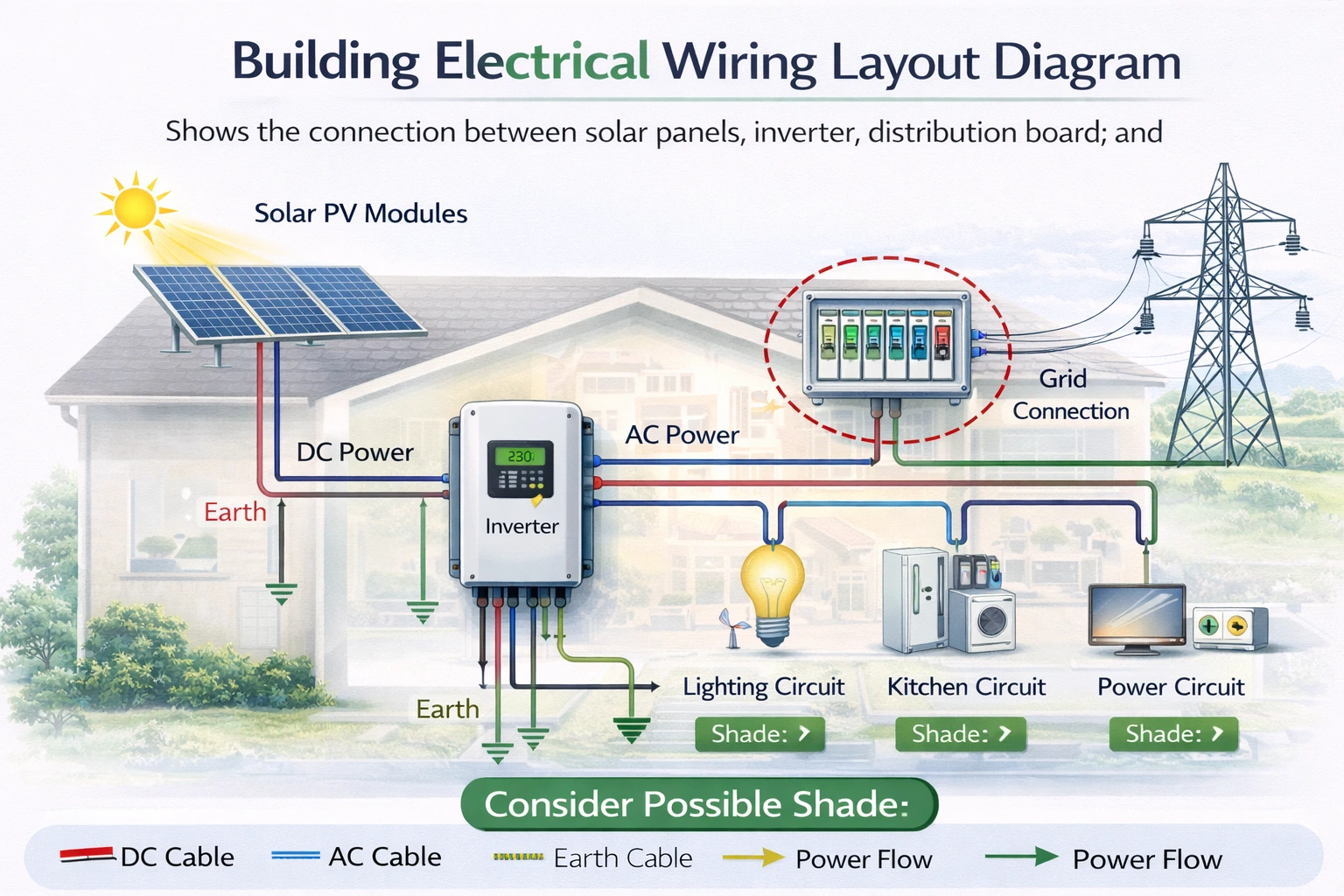
Key Aspects of Building Wiring Assessment
Several important factors must be evaluated when assessing building wiring.
1. Condition of Electrical Wiring
The physical condition of the wiring must be inspected carefully.
Installers check for:
- Damaged insulation
- Loose connections
- Overheating signs
- Old or degraded cables
Faulty wiring may require replacement before installing the solar system.
Proper wiring ensures reliable solar electricity transmission within the building.
2. Wiring Capacity and Load Handling Ability
Electrical wiring must be capable of handling the additional power generated by the solar plant.
If the wiring capacity is insufficient, it may cause:
- Voltage drops
- Overheating
- Power losses
Proper capacity assessment helps ensure safe renewable solar system operation.
3. Distribution Board Inspection
The distribution board (DB) is the central point where electrical circuits are controlled and distributed.
During inspection, installers check:
- Main switch capacity
- Circuit breakers
- Wiring connections
- Space for additional solar connections
A properly designed distribution board ensures smooth integration of solar electricity with building circuits.
4. Earthing and Grounding System
Earthing is critical for electrical safety in solar PV systems.
Installers must verify:
- Proper earthing connections
- Ground resistance levels
- Lightning protection systems
A strong earthing system protects solar equipment and reduces electrical hazards.
5. Meter and Grid Connection
The connection between the solar plant and the grid must be evaluated.
Installers inspect:
- Energy meter location
- Net metering compatibility
- Grid connectivity
This is important for implementing the government solar subsidy scheme and installing subsidised solar panels for home projects.
6. Safety Devices and Protection Equipment
Electrical systems must include safety devices such as:
- Circuit breakers
- Surge protection devices
- Residual current devices (RCD)
These components protect the solar system from electrical faults and improve system reliability.
7. Cable Routing and Electrical Layout
Proper cable routing ensures safe and efficient electricity flow.
Installers evaluate:
- Distance between solar panels and inverter
- Path of DC and AC cables
- Cable protection mechanisms
Optimized cable layout helps reduce energy loss and improves renewable energy technology performance.
Importance of Wiring Assessment Before Solar Proposal
Assessing building wiring before preparing a solar proposal offers several advantages.
1. Improves System Safety
Electrical wiring assessment ensures that the solar PV system operates safely without causing electrical hazards.
2. Helps Determine Equipment Requirements
Installers can identify the correct type of inverter, cables, and protection devices required for the solar installation.
3. Reduces Solar Installation Charges
Identifying wiring issues beforehand prevents unexpected modifications during installation, reducing additional costs.
4. Improves Solar System Efficiency
Efficient wiring minimizes energy losses and enhances solar electricity generation.
5. Supports Accurate Solar Energy Installation Cost Estimation
A detailed electrical inspection allows installers to estimate the total installation cost more accurately.
Impact of Wiring Assessment on Solar Panel System Cost
Assessing building wiring helps optimize overall project costs.
Benefits include:
- Accurate budgeting
- Avoiding unexpected electrical upgrades
- Reducing maintenance issues
- Improving long-term system reliability
It also improves the cost of solar per kWh installed, ensuring better financial returns.
Best Practices for Assessing Building Wiring
Professional solar installers follow several best practices.
- Inspect all electrical circuits and connections
- Check wiring condition and load capacity
- Verify earthing and grounding systems
- Ensure proper safety protection devices are installed
- Document electrical layout before system design
These practices ensure efficient solar panel in rooftop installations.
Conclusion
Assessing building wiring is a crucial step before making a solar installation proposal. A detailed inspection of the electrical infrastructure ensures safe integration of the solar PV system with the building’s existing power network. By evaluating wiring condition, capacity, safety devices, and distribution boards, installers can design efficient renewable solar systems that deliver reliable performance.
Proper electrical assessment helps optimize solar panel system cost, reduce solar installation charges, and improve system efficiency. Accurate wiring evaluation also enhances renewable energy technology performance and ensures long-term reliability of solar electricity systems.
With proper building wiring assessment, solar installations can provide safe, efficient, and sustainable solar energy for home use while supporting the growing adoption of renewable solar solutions.
FAQs
Q1. Why is building wiring assessment important before installing solar panels?
Ans: It ensures that the building’s electrical system can safely handle the power generated by the solar plant.
Q2. What components are checked during wiring assessment?
Ans: Installers inspect electrical wiring, distribution boards, earthing systems, circuit breakers, and grid connections.
Q3. Can poor wiring affect solar system performance?
Ans: Yes. Faulty or undersized wiring can cause energy losses, overheating, and reduced solar electricity output.
Q4. Does wiring assessment affect solar panel system cost?
And: Yes. Identifying electrical upgrades early helps estimate accurate installation costs and prevents unexpected expenses.
Q5. Is earthing necessary for solar PV systems?
Ans: Yes. Proper earthing protects the solar system from electrical faults and lightning strikes.
Higher Electricity Bills in Haryana as Fuel Surcharge Rises
Haryana consumers are facing higher electricity bills after the Haryana Electricity Regulatory Commission (HERC) approved a fuel surcharge hike for DHBVN and UHBVN areas. The increase reflects rising fuel and power purchase costs, directly impacting domestic, commercial, and industrial users across the state.
Affordable Solar Systems and Plants for Small and Medium Enterprises
Learn how SMEs can harness solar energy through tailored solar systems and plants to reduce electricity bills, improve sustainability, and boost efficiency.

Battery Troubleshooting in Solar PV Systems Guide
A complete guide to battery troubleshooting in solar PV systems, including fault diagnosis, performance testing, common battery issues, and effective corrective measures.

Personal Safety Hazards in Solar PV Installations
A complete guide to personal safety hazards in solar PV installations, covering common workplace risks and practical measures to protect solar workers.
Renewable Energy Hits New Heights: 440 GW Capacity in 2023
Learn how global renewable energy capacity is set to surpass 440 GW in 2023, marking record growth and a major shift toward clean, sustainable power.
How Quickly Can Solar Panels Pay for Themselves? Payback Period Explained
Learn how the solar panel payback period works, factors that affect ROI, and how soon you can recover your solar investment.
What Is an Array Junction Box in Solar PV Modules? | Complete Guide
The Array Junction Box (AJB) is a critical component in solar PV systems, connecting multiple solar modules and ensuring safe flow of electricity to the inverter. This blog explains what an AJB is, its key features, types, and why it is essential for both residential and commercial solar installations. Understand how AJBs protect your system from overload, short circuits, and environmental factors while maintaining optimal performance.

Latest MNRE List: Approved Solar Module Manufacturers
Check the latest MNRE-approved list of solar module manufacturers to ensure quality and compliance for your solar projects in India.