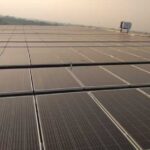
Solar for Schools and Colleges
Colleges are exploring the option of installing solar solutions for some time. This discussion is going around about the attractiveness of solar technology these days. As the colleges as well schools generally have a peak load during the day time, the solar technology becomes feasible for them to consider.
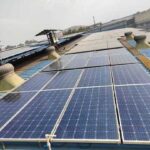
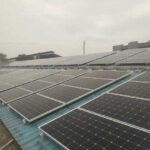
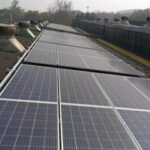
The case of solar for schools and colleges is further supported by huge roof space available with these institutions which can be effectively used for installing solar. In fact, the colleges may have potential to generate surplus power which can be sold to the Distribution Companies at commercial rates.
However the colleges are not out and out commercial organizations, so there appetite to invest into a new technology like solar is limited. Also the colleges are not working for all 365 days in a year so there remains an issue of utilizing all the power generated by the solar solution. There are a number of apprehensions raised by the colleges on the longevity of technology and its ability to meet the generation numbers as specified by the panel manufacturers over a long period.
In this regard, we conducted a number of meetings with a few reputed engineering colleges in Ghaziabad recently to understand their concerns and perspectives on the solar technology while providing clarity on few of these issues. Few excerpts from these discussions are provided below with our responses.
Issue 1 with Solar for Schools and Colleges
In a meeting with the Director of an Engineering college located on Meerut Road, we were told about the expectation from a rooftop solar PV power plant. The Director told us that they would like to run the college load (approximate 50 kW) on ‘Grid’ power for 8-9 hours in morning from (9:00 am to 4:00 pm) and then wanted to shift the load to solar power generation which should be stored in battery. We provided the following clarifications and suggestions.
Suggestions for Solar for Schools and Colleges
- Solar power benefits most when it is consumed by the day loads and is not stored in batteries. We explained him that the cost for a battery connected 50 kW solar PV system will be high and it would be better to start with a grid connected solar solution with net metering facility. Once the college has more confidence on the solar technology, you can plan a system with the battery technology.
- Also a number of advancements have lately happened in the battery technology owing to huge funds spent by the developed countries on the research and innovation in this field. Lithium Ion batteries and Flow batteries are being tested on commercial basis and should be available in the retail market in the next few years at commercially attractive rates.
Issue 2 with Solar for Schools and Colleges
The second question was regarding the ‘Cost’ of the Solar PV system and regarding ‘Government Subsidy’. There was also a question on whether solar technology will actually work. Our views were as follows.
Suggestions
- We explained that a grid connected system would cost around Rs. 80,000 – 90,000 / kW depending on the configuration. A battery connected system would cost more by few more thousand. We also explained the non-availability of subsidy due to limited budget and the subsidy is available on first cum first serve basis. Given the backlog of subsidy applications already lined up with MNRE, it would be difficult to get any subsidy.
- We told that 4000 MW of solar has already been installed in India itself. Many European and American have already installed solar which now runs into few GW and has become major source of power just after thermal energy.
- We further suggested installing a small 10 kW grid connected solar PV system on the classroom block for fan and lighting load which would provide a proof of concept. This would help him to gain experience and confidence on the technology and savings from it, and then they can extend the system for other blocks too.
Issue 3 with Solar for Schools and Colleges
In another meeting, the questions were asked about the key components that are used in a solar rooftop system. Next we were asked about the capacity of a single Solar PV panel and the area required for installing a panel and time required for installation of solar PV power plant.
Suggestion
- Solar PV panels are the key components and its key suppliers are TATA / EMMVEE / Topsun / Vikram Solar. Inverters are the second most important component and its suppliers include from Delta / SMA /Su-kam.
- Panels suitable for their requirements will be of 250 W to 300 W. A shadow free area of 10 meter sq. is required for 1 kWp solar system and it will take around 8-10 weeks after the orders are placed.
Issue 4 with Solar for Schools and Colleges
In a couple of meetings, the questions were asked about the concept of net metering and whether the college should go for this.
Suggestion
- The net metering based rooftop solar projects facilitates self-consumption of electricity generated by the rooftop project and allows for feeding the surplus energy into the network of the distribution licensee. In net metering the beneficiary pays to the utility on net meter reading basis only. When the electricity generated by Solar is not being used in the college premises, this electricity will go to the grid and will be credited to your account.
Many of these queries would resonate to the questions many colleges and schools would have regarding the installation of solar.