India is now shifting towards renewable energy and solar energy, aiming for 500 GW capacity by 2030. The new projects like the Pavagada Solar Park is one such example that is driving solar power but also raises land issues. To overcome such difficulties, Agrivoltaics has been introduced.
Agrivoltaics is the combination of farming and solar energy on the same land, benefitting both agriculture and energy production. This approach allows renewable energy production, without sabotaging the farmland.
In this blog, we’ll explore the essentials of Agrovolataics in India, and how it will affect India in the future developments.
What is Agrovoltaics
Agrovoltaics is a renewable method, where both solar energy production and farming can be done on the same piece of land, simultaneously. This method is useful for farmers for growing crops and generating electricity.
As the number of land owners and farmers are more, this method is a boom in India. Having to choose between solar power or farming, Agrovoltaics solves the misery.
It is very useful in rural areas where pollution is low and land is valuable. This method also allows users to earn extra income from solar energy while still producing crops.
How Does it Work
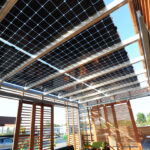
In this, solar panels are set at a height and at angle of 10-15 degrees, so that sunlight reaches the crops below them. This gives ample amount of light for crops to grow and a perfect angle for solar panels to produce electricity.
Some setups use tracking systems as well, which adjust the panels according to the sun’s position automatically. The shade from the panels also protects the crops from extreme rough conditions.
The water used for cleaning the panels can be reused for irrigation. This saves water and helps promote eco-friendly farming practices.
Benefits of Agrovoltaics
After implementing these models, below were the benefits that were observed for both Farmers and solar developers.
For Farmers: Additional income from leasing land or selling solar power
For Energy Sector
- Efficient land use
- Reducing competition with farmland
- Reduced panel overheating due to crop yield, improves solar efficiency
Future Potential
Agrovoltaics have a strong potential in India, especially with the government aiming for renewable energy and farmer support. This method can evict land conflicts and enhance rural incomes at the same time.
India aims to meet its solar energy targets under the National Solar Mission and Agrovoltaics may play a big role in combining green with food security.
With this increasing awareness and support, this model may become a smart solution for sustainable development, by balancing energy needs, climate goals and agricultural productivity.
Case Study
Smart Roof Solar successfully completed its first Agrovoltaic project in Delhi-NCR, transforming 3 acres of land in Hamidpur village into a dual-purpose solar and agricultural space. The project featured the installation of 1,800 solar panels, supported by three 320kW inverters, an ACDB/electric panel, and a 3-in-1-out structuring system.
To ensure efficient power management, a 1.125 MVA transformer with a voltage level of 800/11,000V was installed, along with a VCB panel and an RMU unit. This setup allows seamless energy distribution while maintaining high reliability and safety standards.
This project highlights Smart Roof Solar’s commitment to innovative renewable energy solutions that combine sustainable farming with solar power generation.
Conclusion
Agrovoltaics in India is almost like a dual mission, familiarising with renewable energy on land and boosting farmer’s income. With policy support, investment models, technical standardization, and scaling from small pilots, India can turn agrivoltaics into a mainstream approach.
This could transform rural livelihoods, resolve land conflicts, and dramatically contribute to India’s 2030 energy goals. Partner with Smart Roof Solar to bring sustainable energy solutions to your land today. Partner with Smart Roof Solar to bring sustainable energy solutions to your land today.
FAQs
Q1: Can existing solar farms be converted into agrivoltaic systems?
Ans: Yes, it’s possible to modify existing solar farms into agrivoltaic systems by adjusting panel heights or layouts to allow space and light for farming underneath. However, this retrofitting may require additional investment and structural changes, depending on the original system design.
Q2: What type of farmers are most likely to benefit from agrivoltaics?
Ans: Small and marginal farmers in arid and semi-arid regions, where water scarcity and harsh sun conditions limit crop productivity, can benefit the most. Agrivoltaics can improve soil moisture retention, reduce heat stress on crops, and generate additional income from solar energy.
Q3: Is government insurance or crop protection available for agrivoltaic farms?
Ans: Currently, most crop insurance schemes in India do not specifically cover agrivoltaic setups. However, as the model grows, state governments and insurers may introduce specialized policies to protect dual-use systems from extreme weather, technical failures, or crop loss.
Q4: Can agrivoltaic systems support livestock or only crops?
Ans: Yes, some agrivoltaic models are designed to support livestock grazing, especially in areas with elevated panel installations. Sheep and goats, for example, can graze under solar panels without damaging the equipment, helping farmers optimize land use further.
Q5: Do agrivoltaic systems qualify for carbon credits or green financing?
Ans: Agrivoltaic projects may be eligible for carbon credits or green financing, especially if they contribute to emissions reductions, renewable energy production, and sustainable agriculture. However, eligibility depends on certification standards, project documentation, and partnerships with verified agencies or ESG programs.