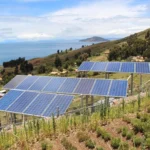
7 Common Myths about Solar Energy in India
Myths About Solar Energy in India -
Solar power is not only less expensive, but it is also the most abundant source of clean energy. Although people are much more aware of solar energies and their importance, there are still some misconceptions about solar energy. Here are some common myths about solar energy that need to be debunked in order to speed our country’s green energy adoption.
1. All solar systems keep working during power outages.
In the event of a power outage, a building powered by a grid-connected solar power system will lose power. During daytime power outages, buildings that are completely off the grid (off-the-grid) or run on a hybrid system will continue to use solar power. For 100 percent uptime, backup batteries can be connected to a grid-tied system. You’ll have power even if there’s a power outage if you install backup batteries. Your solar plant could also be connected to a DG for uninterrupted power.
2. Warmer climates are better for solar power generation.
When it comes to performance, solar panels perform efficiently in sunny, cold, and even cloudy conditions. Solar panels use the sun’s light rather than its heat to generate electricity. Solar panels lose efficiency as the temperature rises. During overcast or rainy seasons, solar panels do not totally shut off. They continue to operate at a lower efficiency level.
3. Solar panels require a lot of maintenance.
The simplest approach to keep your solar panels in proper working order is to keep them free of debris and dirt and to remove any causes of shadowing. If you have concerns about system faults or efficiency, see your system’s user manual and speak with your installer immediately for assistance.
4. Most Indians cannot afford to own a solar power system.
Many of us believe that switching to solar is a luxury and that it is only available to the wealthy. Well, this is not the case. Solar has become a viable choice for all property owners due to falling costs and the availability of attractive financing options.
5. Solar panels damage your roof.
The solar panels protect the area of the roof they cover from external influences like birds and weather. The panels themselves aren’t heavy or large enough to cause damage to the house’s roof. Solar installers are also well-trained and work with the roof’s condition to ensure the optimum fit in terms of utility and aesthetics.
6. You can’t relocate once you shift to solar power.
A person has the option of relocating at any time. When selling a home, a homeowner has two options: sell the house with the solar panels attached, which will almost certainly increase the property’s value; or detach the solar panels and reinstall them at a different location.
7. I can’t switch to solar because I don’t have my own house.
Community solar programs allow you to use solar energy if you rent your home or reside in an apartment building. Multiple people can benefit from a single, shared solar plant thanks to community-based schemes. These can be installed on-site or off-site, depending on your needs. The costs of purchasing and installing the solar energy system are then split among all of the participants.
Solar power is most effective when you make an informed decision, and getting information from reputable sources will eliminate rumors and misinformation. We hope that with this article, you now have a better understanding of the affordability and effectiveness of solar power systems. You can not only save money over time by switching to solar, but you can also lower your carbon footprint and help the environment.
For more such informative blog, check our blogs page. and head over to our LinkedIn Page for more updates on solar Industry
Suggested Articles

Case Study: Successful Design, Installation, and Commissioning of a 50 kWp Rooftop Solar PV Plant
This case study details our experience in designing, installing, and commissioning a 50 kWp solar PV rooftop power plant. Learn how we overcame technical challenges, optimized system performance, and delivered clean, reliable energy. Discover insights on panel selection, inverter sizing, monitoring, and commissioning processes that ensured maximum efficiency and long-term performance for the rooftop solar installation.

Sustainable Solar Panel Disposal: Recycling for a Greener Future
Sustainable solar panel disposal ensures old or damaged panels are recycled responsibly, reducing waste and environmental harm. By adopting eco-friendly recycling and reuse practices, we can recover valuable materials, lower carbon impact, and make solar energy truly sustainable from installation to end-of-life.
How DISCOMs Implement Net Metering for Solar Power Plants
Discover the process of net metering implementation by DISCOMs for solar power plants. Understand the benefits, billing mechanism, and how it maximizes solar energy utilization.
What Is a Solar Power Generating System? | Complete Guide
A solar power generating system converts sunlight into electricity for residential, industrial, and commercial use. This blog explains the components, working, and benefits of solar systems, helping you understand how to harness solar energy efficiently and sustainably.
Latest 100 kW Solar Plant Price in Delhi | Subsidy, ROI & Payback
Thinking about installing a 100 kW solar system in Delhi? This 2025 guide breaks down the 100 kW Solar Plant Cost in Delhi, explaining price per watt, total investment, energy generation, and key benefits for industries and businesses.
AVANCIS Pushes CIGS Thin-Film Solar Modules Beyond 20% Efficiency
AVANCIS achieves a breakthrough in solar technology, pushing CIGS thin-film modules beyond 20% efficiency for higher performance and energy output.
How Are Solar PV Modules Made? Complete Guide to the Manufacturing Process
Choosing the right solar panels can be confusing with so many options in the market. This guide simplifies solar panel selection by comparing types, efficiency ratings, and cost factors. Whether for your home, business, or industry, learn how to make an informed decision and maximize the return on your solar investment.
Delhi charges one of the highest tariffs for commercial load and industrial – average over Rs 10.00 per kWh
Delhi imposes some of the highest electricity tariffs for commercial and industrial consumers, averaging over ₹10 per kWh, impacting businesses and operating costs