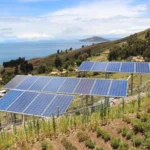
Madhya Pradesh (MP) is steadily emerging as a promising destination for large-scale solar projects. With strong sunlight, supportive state policies, and nodal agency backing via MP Urja Vikas Nigam (MPUVNL), deploying a 1 MW solar power plant in MP is a smart choice for industrial, institutional, or commercial users who aim to save on electricity costs and boost their sustainability credentials.
At Smart Roof Solar, we design, build, and maintain megawatt-scale solar systems, helping clients optimize solar installation charges, reduce the total cost of solar installation, and achieve long-lasting returns.
What Does a 1 MW Solar Plant Mean in MP?
A 1 MW solar power plant typically generates around 14-16 lakh (1.4-1.6 million) kWh of solar electricity per year in Madhya Pradesh, depending on site and design. This scale is ideal for:
- Manufacturing plants and industrial estates
- Cold storage units, processing facilities
- Large schools, universities, and hospitals
- Commercial complexes and data centers
With 1 MW, you not only cut energy bills significantly, but you also leverage economies of scale, bringing down the cost of solar per kWh installed compared to smaller systems.
1 MW Solar Power Plant Cost in MP
1 MW solar power plant cost in MP includes major components like PV modules, inverters, solar panel area per kW structures, cabling, earthing, monitoring, and commissioning.
Capacity | Estimated Cost (excluding GST) |
100 kW in MP | Starting from ₹25,00,000* |
200 kW in MP | Starting from ₹49,00,000* |
300 kW in MP | Starting from ₹75,00,000* |
400 kW in MP | Starting from ₹1,00,00,000* |
500 kW in MP | Starting from ₹1,30,00,000* |
600 kW in MP | Starting from ₹1,56,00,000* |
700 kW in MP | Starting from ₹1,82,00,000* |
800 kW in MP | Starting from ₹2,08,00,000* |
900 kW in MP | Starting from ₹2,25,00,000* |
1 MW in MP | Starting from ₹2,50,00,000* |
*Prices quoted are indicative starting rates for the above-mentioned solar installations and may vary based on project-specific requirements, including ground mount or tin-shed structures, RC installation types, additional accessories like DG sync, safety rails, etc. Final pricing will be confirmed upon detailed site evaluation and project scope assessment.
Power Generation & Payback Analysis
- Estimated Annual Generation: ~14-16 lakh kWh
- Typical Yearly Savings: ₹1.2 – ₹1.6 Crore (if the tariff is ₹8-₹10 per unit)
- Payback Period: Roughly 3.5 – 5 years, depending on capital cost and generation
- System Life: 25+ years, with low O&M (Operations & Maintenance) costs afterwards
After the payback period, the system effectively generates very low-cost renewable energy, making solar a highly economical renewable investment.
Ideal Use Cases for 1 MW in MP
- Large manufacturing units or factory campuses
- Cold storage and warehousing operations
- Educational institutions, universities, and hospitals
- Commercial parks, business complexes
- Government / public buildings and shared infrastructure
These entities typically have high daytime electricity loads and can leverage solar to significantly reduce recurring electricity expenses.
Environmental & Social Impact
Carbon Reduction
Installing a 1 MW plant can reduce more than 1,200 tonnes of CO₂ every year.
Energy Independence
Reduces reliance on grid power and fossil fuels.
Sustainability Profile
Helps businesses meet ESG goals and sustainability commitments.
Local Employment
Provides jobs during installation and ongoing O&M, contributing to local economic development.
O&M & Support by Smart Roof Solar
Smart Roof Solar offers full Operations & Maintenance (O&M) support:
- Preventive maintenance and module cleaning
- Real-time monitoring with performance dashboards
- Fault detection and rectification
- Periodic performance audits and reporting
- Training for in-house technical staff on basic maintenance tasks
With robust O&M, your solar energy installation cost stays optimized, and system performance remains high over decades. Check out our blog to know more – Solar O&M Services & Maximum Power Output – Smart Roof Solar
Why Smart Roof Solar for Your 1 MW Project in MP?
- Proven EPC experience in large-scale solar deployments
- Deep understanding of MPUVNL solar programs and local regulations
- Transparent pricing: detailed breakdowns of solar installation charges, solar module price per watt, and total cost of solar installation
- Advisory support for financing, net-metering, and long-term operations
- Strong O&M capabilities to maximize the cost of solar per kWh installed
Conclusion
A 1 MW solar power plant in Madhya Pradesh delivers strong financial returns, long-term energy savings, and environmental benefits. While large-scale subsidy in MP is limited, smart project design, efficient components, and favorable policies make it a worthwhile investment.
With Smart Roof Solar, you can harness the full power of solar, reduce your electricity bills, improve your sustainability credentials, and secure energy independence for years to come.
FAQs
Q1. What factors influence the total installation cost?
Ans: Module quality, inverter type, structure design, site readiness, and cabling/earthing all impact the final cost.
Q2. Is net metering available for a 1 MW plant in MP?
Ans: Yes, net metering or gross metering can be applied based on project type and DISCOM approvals.
Q3. What type of maintenance does a 1 MW solar plant need?
Ans: Mainly module cleaning, periodic inspections, and monitoring to ensure consistent generation.
Q4. Is rooftop or ground-mounted better for a 1 MW system?
Ans: Both work well; the choice depends on available space, shading, and project design.
Q5. Does a 1 MW plant add value to the property?
Ans: Yes, it enhances energy independence and reduces operational expenses, increasing asset value.