Solar Net Metering in Industrial Units: Opportunities and Risks
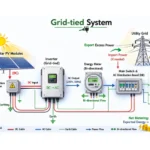
Discoms in almost all the states provide Solar Net Metering facility by which the consumers can store the excess energy generated from the roof top solar plant with the Discom Grid and can use it in later hours.
During the Sun hours, when the load (in KW) of the factory or the commercial building is less than the roof top solar generation for any 15-minute block interval, the excess solar energy goes back to the Grid. During evening hours when the load is more and there is hardly any solar generation, then the stored solar energy is used back by the consumer from the Grid.
Steps of accounting of the roof top solar energy (Solar Net Metering)
The accounting of the roof top solar energy is done on a monthly basis.
- At the end of each month, the solar energy is set off against the energy consumed by the factory or the Plant through a bi-directional meter installed by the Discom at the Consumer premises.
- If there is any excess solar energy which is not used during the month, it is taken forward to the next month in which the consumer can use the same.
- However, if there is unused solar energy left in March (end of Financial Year), then it will lapse as per the policy in Haryana while it will be paid at Rs 2.0 /kWh in Uttar Pradesh. Similar policies exist in other states also including Delhi, Rajasthan and Punjab.
The table below shows the energy accounting and settlement for 1 month (April) under Solar Net Metering for a 100 KW solar system in a typical factory set up with a contract demand of 100 KW.
| Day | Energy Consumed(kWh) | Solar Generation)(kWh) | Banked Energy |
| 1 | 614 | 479 | – |
| 2 | 15 | 478 | 463 |
| 3 | 478 | 491 | 13 |
| 4 | 645 | 444 | – |
| 5 | 633 | 450 | – |
| 6 | 701 | 441 | – |
| 7 | 612 | 520 | – |
| 8 | 426 | 523 | 97 |
| 9 | 12 | 541 | 529 |
| 10 | 459 | 497 | 38 |
| 11 | 723 | 478 | – |
| 12 | 578 | 483 | – |
| 13 | 623 | 429 | – |
| 14 | 701 | 501 | – |
| 15 | 641 | 504 | – |
| 16 | 12 | 502 | 490 |
| 17 | 423 | 476 | 53 |
| 18 | 530 | 472 | – |
| 19 | 481 | 451 | – |
| 20 | 392 | 439 | 47 |
| 21 | 543 | 472 | – |
| 22 | 605 | 462 | – |
| 23 | 12 | 495 | 483 |
| 24 | 452 | 523 | 71 |
| 25 | 545 | 547 | 2 |
| 26 | 393 | 482 | 89 |
| 27 | 479 | 477 | – |
| 28 | 625 | 461 | – |
| 29 | 521 | 441 | – |
| 30 | 12 | 478 | 466 |
| April | 13,886 | 14,437 | 551 |
For certain days in April month, the energy is getting banked or stored with the Discom. At the end of month, solar has generated excess of 551 kWh or units which will be taken forward to the month of May.
Table below shows monthly settlements for the full year of solar energy.
| Month | Energy Consumed(kWh) – (1) | Solar Generation)(kWh) – (2) | (2)-(1) (kWh) | (Cumulative Energy banked (kWh) |
| Apr | 13,886 | 14,437 | 551 | 551 |
| May | 15,672 | 15,432 | (240) | 311 |
| Jun | 14,521 | 13,441 | (1,080) | – |
| July | 12,673 | 11,699 | (974) | – |
| Aug | 11,128 | 10,952 | (176) | – |
| Sep | 11,893 | 11,699 | (194) | – |
| Oct | 12,321 | 11,450 | (871) | – |
| Nov | 11,009 | 9,210 | (1,799) | – |
| Dec | 10,121 | 8,463 | (1,658) | – |
| Jan | 10,344 | 8,712 | (1,632) | – |
| Feb | 11,236 | 11,201 | (35) | – |
| Mar | 11,037 | 13,690 | 2,653 | 2,653 |
So, there is excess solar generation in the months of April and March. However, the excess generation of April month is utilized in future months during the settlement year. But the excess solar generation in month of March will lapse in spite of solar Net Metering facility.
Especially for seasonal industries that has lean period during winter months, the coincidence of the settlement year with the financial year is a problem. For example, the potato cold storages (aloo godowns) has this typical problem as they hit a off season from October to February when their load dips significantly.
Suggested Articles

Latest Solar Mounting Structures: Smarter, Stronger, and More Efficient
Learn how the latest solar mounting structures in 2025 improve efficiency, reduce costs, and power the future of solar installations.

Difference Between Solar Power and Photovoltaic: Explained Simply
Total solar PV power represents the combined power output of a solar photovoltaic system. This guide explains its meaning, calculation, and how it directly impacts solar performance, efficiency, and long-term energy generation.

PM Surya Ghar Muft Bijli Yojana 2025: Online Registration Made Simple
PM Surya Ghar Muft Bijli Yojana 2025: Learn how to register online and get free electricity under this government scheme.

Optimizing Solar Layout for DC Combiner Box Placement
A complete guide to choosing the best location for DC combiner box placement to improve safety, cable routing, and solar system efficiency.

Solar Charge Controller Explained: Purpose, Need & Advantages
A charge controller is a vital component of any solar system. Learn what it does, how it works, and why a solar system cannot function safely without it.

Top Solar Companies & Suppliers in Delhi/NCR – A Complete Guide
Looking for trusted solar panel suppliers in Delhi/NCR? Explore leading solar companies serving Gurgaon, Noida, Faridabad, Manesar, and Ghaziabad. Compare product quality, technology, and services to choose the right solar partner for your home, business, or factory.

Best Solar Panels for Rooftop Projects: How to Choose the Right One
Selecting the right solar panel is crucial for rooftop project success. This guide explains how to evaluate panel types, efficiency, warranties, and performance to ensure maximum power output and long-term savings for your home or business.

Solar Inverter Specifications Explained: How to Read Datasheets & Choose the Right Inverter
Choosing the right solar inverter is critical for system performance and safety. This guide explains how to read inverter datasheets, understand key specifications, and select the best inverter for your solar project.