Solar Microgrids: All you need to know
What is a solar microgrid?
In simple words, solar microgrids are connected power grids or networks. The system collects, stores, and provides clean electricity to an entire town or city using energy produced by the sun. This is accomplished by positioning batteries and sizeable solar panels in a strategic area.
This center area sometimes referred to as a “hub”. Moreover. “hub” is where all the technology is kept in a safe room, frequently beneath the solar panels themselves. Mainly, the solar microgrid is finished by connecting electrical cables from the central power location to local homes, businesses, and farms.
How does a solar microgrid work?
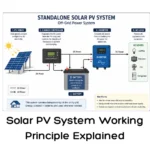
A solar photovoltaic (PV) array collects and produces electricity from sunlight. A solar charge controller is used to control the voltage and current. By doing this, the batteries and solar panels are shielded from harm from overcharging. The combiner box then gathers all the electricity produced by the PV array.
Additionally, it permits a single, consolidated connection to the inverter prior to distribution to the neighborhood. Through the AC/DC inverter, some of the electricity is then directly distributed to customers.
By using an inverter, consumers receive the appropriate electric current for their needs. Depending on how much sunlight there is and how much energy the community uses, some of the electricity produced is stored in batteries for later use. The community can monitor consumer usage with the help of the meters installed.
At last, on-demand electricity is delivered to the home, place of business, or farm. The solar microgrid has a safe control panel that specialists and community members may use to monitor, manage, and repair the system as necessary.
Where are the solar microgrids appropriate?
The solar microgrid is widely regarded as a practical and reliable alternative for rural electrification worldwide. The distant villages that are unable to link to the current infrastructure offered by the government or private firms are best suited for these systems. Solar microgrids are ideal for settlements on tiny islands, in mountainous areas, and in far-flung rural places.
They work best when there is a lot of sunshine. They are dependent on the sun. Most systems also feature storage capacities that enable them to function during periods of scant sunlight, which helps them deal with gloomy weather.
Why use a solar microgrid?
- Improves Electric Reliability
By isolating themselves from the grid during a power outage, microgrids maintain power. This is called ‘islanding.’ When it detects an outage, the system’s controller effortlessly changes from grid power to the microgrid’s local power sources. Customers are then served by solar, generators, battery energy storage, or other microgrid distributed energy sources until the grid’s electricity is restored.
- Enhances resilience and recovery
A microgrid gives its clients energy resilience by preventing power outages in the first place or responding fast when they do happen. The microgrid can be set up to restart a facility’s whole electrical system or the vital parts in the event of an outage. The facility may restart regular operations as the grid power gets restored.
- Lower energy costs for consumers and businesses
By effectively regulating the energy supply, microgrids can lower the cost of energy for their customers. It enables them to plan more easily their short- and long-term energy expenditures. Energy prices fluctuate throughout the day.
An advanced microgrid can take advantage of this unpredictability by managing how much electricity is drawn from the grid vs nearby battery storage and generating sources.
Microgrids may be able to continuously offer energy at a lower cost in regions with high electricity rates. On-site energy that is produced in excess can be sold back to the main grid. Customers with microgrids can take advantage of this benefit.
- Promotes clean energy
More businesses and municipalities are seeking ways to lessen the impact of their power generation on the environment and achieve clean energy targets. Microgrids can utilize a wide range of green power generation technologies. Which includes solar, wind, fuel cells, combined heat, and power (CHP) plants, and energy storage, due to their capacity to mix distributed energy sources seamlessly.
Many CHP plants employ natural gas generators, which are among the cleanest fossil fuels. When renewable energy sources are not available, such as when the sun is not shining, a microgrid can draw power from other sources.
- Faster Construction
As we know conventional power plants require a substantial investment, extensive planning, and years to build. Microgrids on the other hand are built faster as they are relatively more compact than traditional solar panels.
Solar microgrids have a lot of potential as renewable energy solutions in the future. However, they can be sustainable and profitable only when there is direct involvement, training, and cooperation of communities.
Suggested Articles

Solar Cell Technology: Monocrystalline vs Polycrystalline vs Thin-Film
Explore the different types of solar cells, including monocrystalline, polycrystalline, and thin-film, and learn their efficiency, applications, and benefits for solar energy systems.

How to Calculate Savings from Rooftop Solar Solutions: A Complete Guide
Calculating savings from rooftop solar solutions is essential for planning your investment. This guide explains how to estimate cost reduction, return on investment, and long-term financial benefits for residential, commercial, and industrial solar projects.

Rooftop Solar: Reduce Your Electricity Bill and Increase Savings
Discover how installing a rooftop solar system can help you save on electricity bills, reduce peak demand charges, and take advantage of government incentives.

How to Calculate Battery Capacity for Solar Off-Grid Applications
Sizing a solar battery correctly is vital for off-grid performance and energy independence. This guide explains how to calculate battery capacity, choose the right type, and design a balanced off-grid system for uninterrupted power supply.

Difference Between Solar Power and Photovoltaic: Explained Simply
Total solar PV power represents the combined power output of a solar photovoltaic system. This guide explains its meaning, calculation, and how it directly impacts solar performance, efficiency, and long-term energy generation.

Haryana and UP Face Delays in Solar Net Metering Approvals
Net metering for rooftop solar in Haryana and Uttar Pradesh faces procedural delays, affecting solar adoption and efficiency for residential and commercial consumers

Rajasthan Rooftop Solar Subsidy: What Homeowners Need to Know
Rajasthan homeowners can save big with the 2025 rooftop solar subsidy. Learn about the updated rates, eligibility criteria, and benefits to make your switch to solar more affordable.
Introducing the ESS-2000-24V Hybrid Solar Inverter: Smart Power for Modern Homes & Businesses
The ESS-2000-24V Hybrid Solar Inverter delivers intelligent power management for homes and businesses. With advanced solar charging, lithium battery support, and seamless backup, it ensures uninterrupted, efficient, and clean energy for modern users.

India and Japan Strengthen Renewable Energy Cooperation
India and Japan have initiated a partnership under the Asia Energy Transition Initiative (AETI) to support India’s clean energy transition. India has set an ambitious target of achieving net-zero by 2070, while Japan aims to achieve the same by 2050.

Solar Energy Gadgets in India: 9 Cool Devices to Explore
Explore 9 innovative solar-powered gadgets in India that make daily life more sustainable, energy-efficient, and eco-friendly.