
Solar energy has become one of the fastest-growing segments in renewable energy technology. However, before discussing solar installation charges, solar panel system cost, or solar energy installation cost, it is important to understand the different types of solar photovoltaic (PV) systems available in the market.
Each type of solar PV system is designed to serve specific energy needs — whether for solar energy for home use, commercial solar plant applications, or rural electrification projects.
Understanding system classification is fundamental for every solar installer. Correct system selection directly impacts performance, safety, cost of solar per kWh installed, and long-term economic viability.
1. On-Grid Solar PV System (Grid-Tied System)
Overview
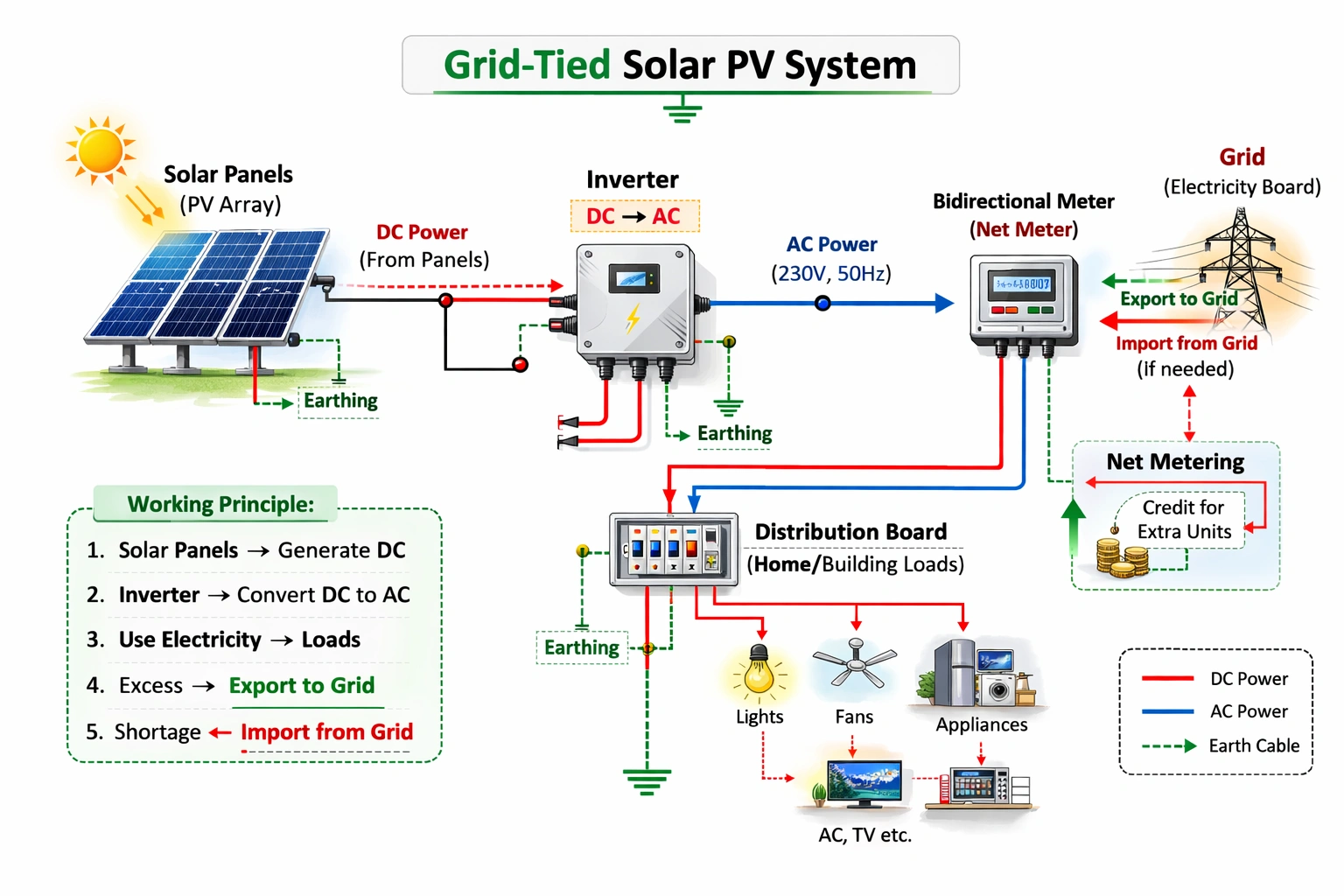
An on-grid solar PV system is connected directly to the utility grid. It is the most common system used for home roof solar panels cost optimization in urban areas.
Components
- Solar PV modules
- On-grid inverter
- Net meter
- AC distribution panel
Operation
- Solar panels generate DC electricity.
- Inverter converts DC to AC.
- AC power supplies household load.
- Excess solar electricity is exported to the grid.
- Net meter records import/export units.
Importance
- Lower solar installation charges compared to hybrid systems
- No battery cost
- Reduced total cost of solar installation
- Lower cost of solar per kWh installed
Suitability
- Residential homes
- Commercial buildings
- Institutions
Widely supported under subsidised solar panels for home and government solar subsidy scheme programs.
2. Off-Grid Solar PV System (Standalone System)
Overview
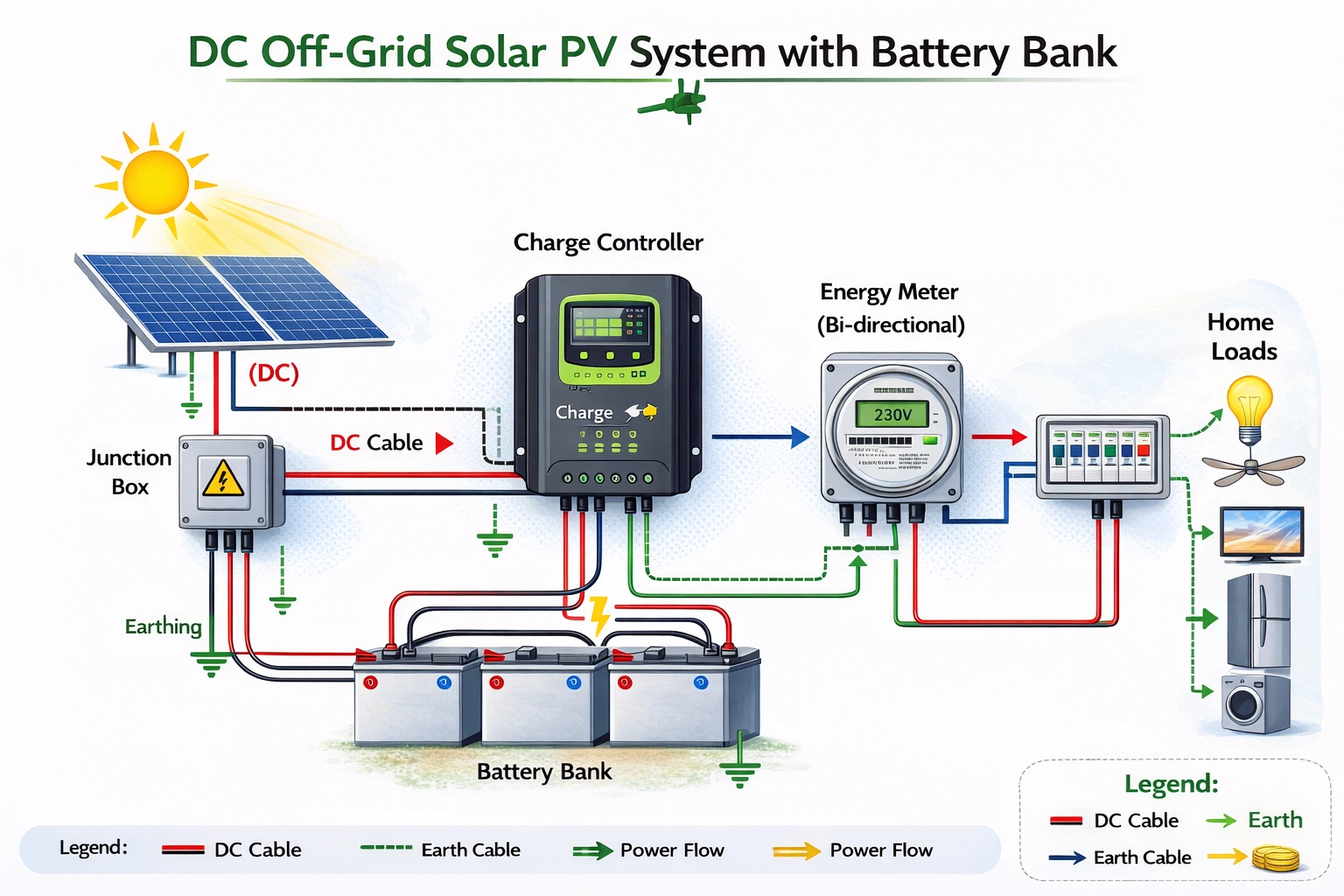
An off-grid solar PV system operates independently of the utility grid. It is commonly used in rural or remote areas where grid supply is unavailable.
Components
- Solar PV modules
- Charge controller
- Battery bank
- Off-grid inverter
Operation
- Solar panels generate DC electricity.
- The charge controller regulates voltage.
- Battery stores excess solar energy.
- The inverter converts stored DC to AC.
Importance
- Provides complete energy independence
- Ensures a continuous solar electricity supply
- Suitable for remote solar plant installations
Cost Consideration
- Higher solar energy installation cost due to batteries.
- Increases the average cost of solar panels on a house if used in urban areas unnecessarily.
3. Hybrid Solar PV System
Overview
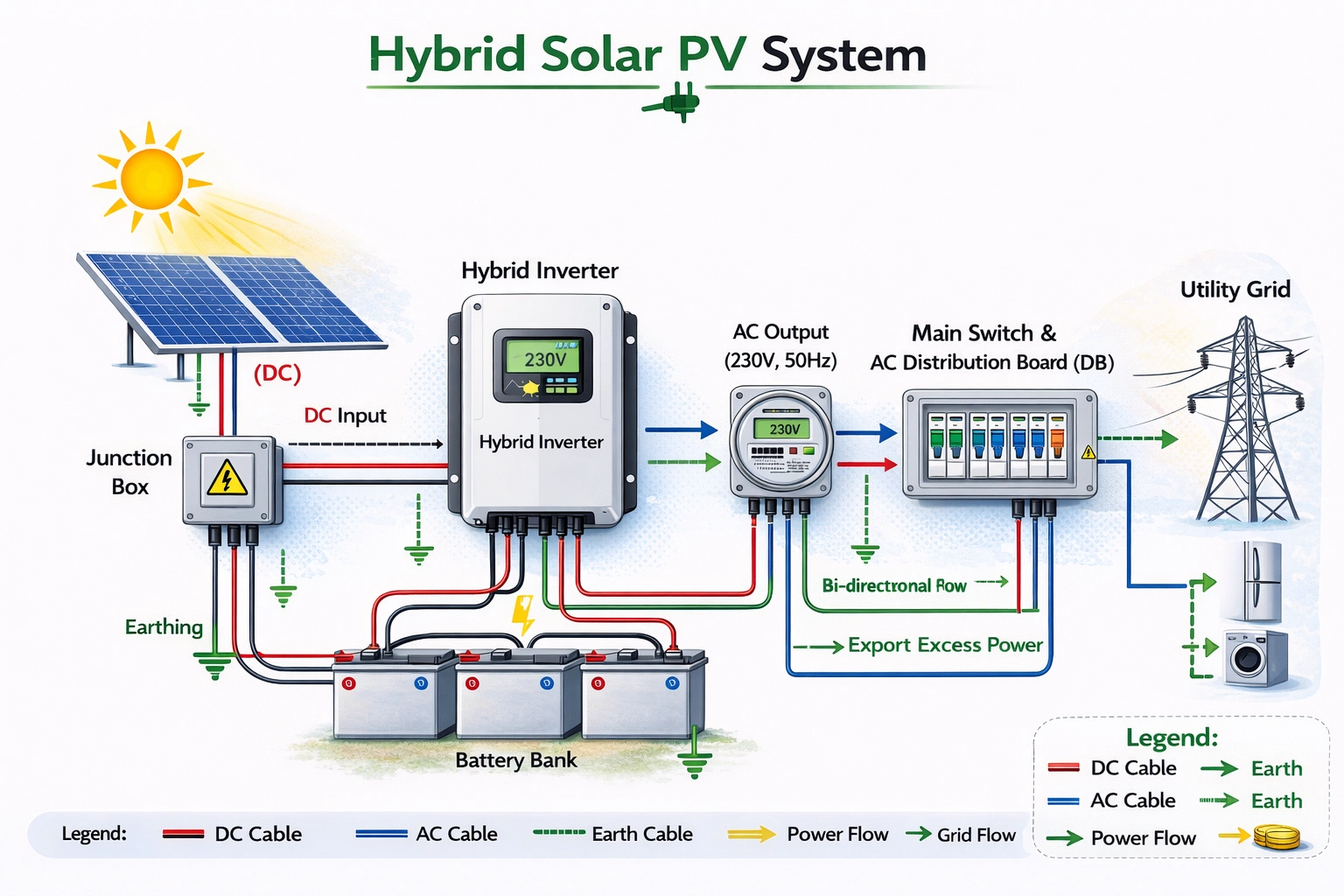
Hybrid systems combine features of on-grid and off-grid systems. They are connected to the grid but also include battery backup.
Components
- Solar panels
- Hybrid inverter
- Battery bank
- Net meter
Operation
- Supplies are loaded from solar energy first
- Stores excess energy in a battery
- Exports extra power to the grid
- Uses battery during outages
Importance
- Reliable solar energy for home use
- Suitable for areas with frequent power cuts
- Optimizes renewable solar utilization
Cost Implication
- Higher solar panel system cost
- Increased solar installation cost per kWh
- Improved energy reliability
4. Utility-Scale Solar Plant (Ground-Mounted System)
Overview
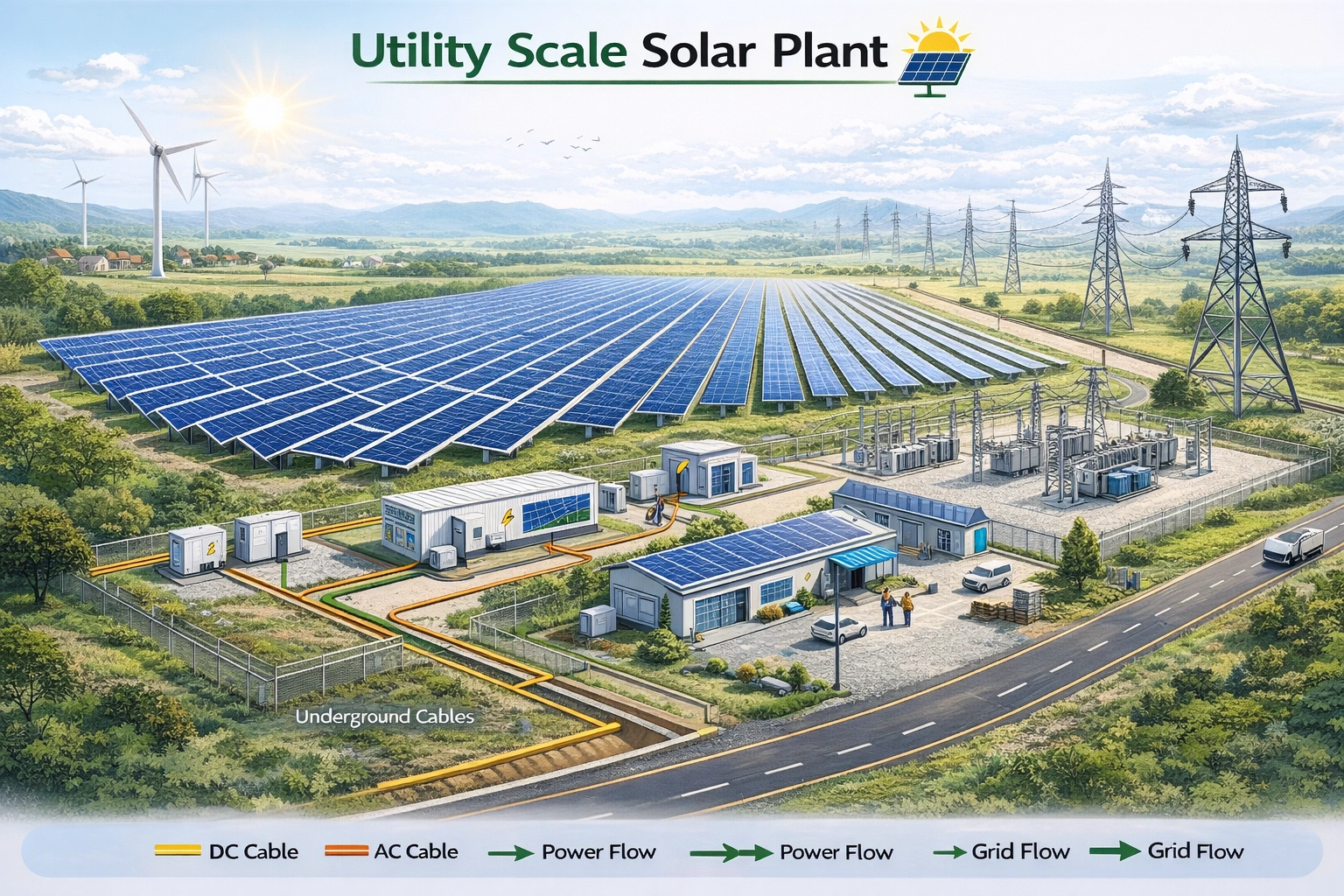
Large-scale solar plant installations generate electricity for commercial sale to the grid.
Characteristics
- Installed on open land
- High-capacity systems (MW scale)
- Often use tracking systems
Operation
- Solar modules generate DC
- The central inverter converts DC to AC
- Power is stepped up via a transformer
- Fed into the transmission grid
Importance
- Contributes to renewable energy and solar energy expansion
- Reduces fossil fuel dependency
- Strengthens renewable energy technology deployment
Comparison Table (Training Module Use)
System Type | Battery Required | Grid Connection | Solar Installation Cost | Best For |
On-grid | No | Yes | Moderate | Urban Homes |
Off-grid | Yes | No | High | Remote areas |
Hybrid | Yes | Yes | Higher | Areas with outages |
Utility-scale | No | Yes | Very high | Commercial |
Practical Application for Solar Installers
Choosing the correct system type helps:
- Optimize solar installation charges
- Control the total cost of solar installation
- Improve solar panel system cost efficiency
- Reduce long-term solar installation cost per kWh
- Ensure compliance under the government solar subsidy scheme
Correct system recommendations improve customer satisfaction and renewable solar adoption.
Conclusion
Understanding different types of solar photovoltaic systems is essential for designing efficient, safe, and economically viable solar energy solutions. Whether it is a simple on-grid rooftop installation, a battery-backed hybrid system, or a large-scale solar plant, each system type has specific operational principles and cost implications.
Correct system selection directly impacts solar panel system cost, solar energy installation cost, and the long-term cost of solar per kWh installed. By mastering these system types, installers contribute to smarter renewable solar deployment and strengthen the future of renewable energy technology adoption across residential and commercial sectors.
FAQs
Q1. Which type of solar PV system is best for home use?
Ans: On-grid systems are most economical where the grid supply is stable. Hybrid systems are ideal for areas with power cuts.
Q2. Which system has the lowest solar installation cost per kWh?
Ans: On-grid systems generally have the lowest cost of solar per kWh installed because they do not require batteries.
Q3. Are hybrid systems eligible under the government solar subsidy scheme?
Ans: Yes, depending on policy guidelines. Subsidised solar panels for the home are commonly offered for grid-connected systems.
Q4. Does system type affect solar panel system cost?
Ans: Yes. Off-grid and hybrid systems increase the total cost of solar installation due to battery integration.
Q5. Which system type is used in large solar plant projects?
Ans: Utility-scale grid-connected systems are commonly used for large renewable energy and solar energy generation.
Benefits of Site Survey in Solar PV Installation
Shadow analysis is a critical step in solar site assessment. It helps solar installers identify shading obstacles and optimize panel placement for maximum energy generation.
How to Prepare a Bill of Material (BOM) for Solar PV Systems: Step-by-Step Installer Guide
Learn how to prepare a detailed Bill of Material (BOM) for solar PV systems using design documents like SLDs and layouts. This step-by-step guide helps installers ensure accurate material planning, reduce errors, and improve project execution.

Improve Your Power Factor After Solar Installation: Complete Guide
Power factor after solar installation often fluctuates due to system design and load patterns. Learn the key causes, challenges, and solutions for better efficiency.
AVANCIS Pushes CIGS Thin-Film Solar Modules Beyond 20% Efficiency
AVANCIS achieves a breakthrough in solar technology, pushing CIGS thin-film modules beyond 20% efficiency for higher performance and energy output.

Why Is Investing In Grade A Panels Important?
Investing in Grade A solar panels guarantees superior performance, safety, and maximum return on your solar investment.
Solar Panel Orientation and Angles: Guide for Solar PV Installers
Earthing and lightning protection are critical safety components in solar PV installations. This guide explains their importance, types, components, and best practices for solar installers.

Sir! Solar Mein Itna Chalta Hai!” When to Reject a Site: The Truth About Shadow Analysis
Discover the importance of solar site assessment and shadow analysis to optimize rooftop solar performance, prevent shading losses, and maximize energy generation.
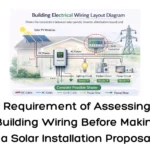
Electrical Wiring Requirements Before Installing a Solar Power System
Before designing a solar power system, assessing the building’s electrical wiring is essential. Proper inspection ensures the wiring can safely handle solar power integration, prevents electrical risks, and improves overall system efficiency.