Solar Systems and Components
MAJOR COMPONENTS:
The major systems, sub systems & components going in a solar power system are:
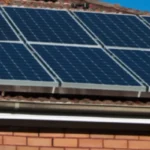
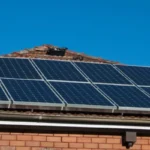
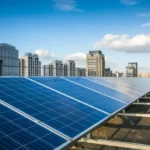
1. Solar Panels 250W / 300W used in solar power plant for generating solar energy for home/industrial/commercial roof top or ground mounted
2. Module Mounting Structure (customized to requirements)
3. Single/three Phase Solar string Inverter
4. Junction Boxes & ACDB
5. Cables & Accessories
6. Lighting Arresters & Earthing
Solar Panels:
We can use poly or multi crystalline / mono crystalline solar Panels for making a solar power plant for generating solar energy for home/industrial/commercial roof top or ground mounted. But poly or multi crystalline are more viable and makes better sense when cost benefit analysis is done.
The Panels quality needs to be verified before making a decision to buy. Panels with IEC 61215, IEC 61730 and IEC 61701 compliance are considered good. Each module may have 60/ 72 solar cells connected in series depending on what Watt peak panels are being chosen. Each Panel is tested at the supplier premises using Sun-simulator to verify module parameters. The panels are warranted for 25 years energy output with an average 0.8% degradation per year. Module Mounting Structure (customized to requirements).
RCC Roof:
The module mounting structure is custom designed for holding suitable number of panels as per roof space available. The frames and leg assemblies of the module mounting structures are of Mild Steel (MS), suitable sections of Angle, Channel. All hardware considered for fastening modules with this structure are of good quality. The support structure used in the power plants will be hot dip galvanized iron (G.I 80 micron) to avoid rusting over the life time of power plant.
The structure should be such that it is able to withstand wind load of 150 KMPH wind speed at this height in a free standing canopy structure. Structure can be mounted on roof either by bolting to the surface using anchor fasteners or supported on free standing RCC structure. If because of certain obstructions on roof like water tanks , mummty , antennas etc the height of the structure is to be raised to accommodate certain no of panels then such a structure is called elevated structure.
Tin Shed Roof:
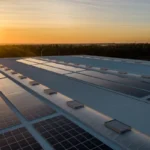
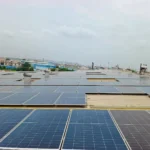
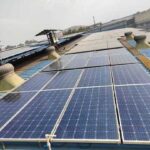
In factories/industries most of the time the roof is made of 0.48 mm thick ms sheets may be color coated or GI .In that case structure is designed in a fashion that the load of structure and solar panels is transmitted to the original structure of the industry/ building through the purlins and columns of the original structure.
ARRAY JUNCTION BOX:
Multiple strings formed by suitable number of solar modules in series are connected to string inverter through array junction boxes which are fitted with fuses for over load protection and surge protection devices of suitable ratings.
STRING INVERTER:
Solar Inverter are available in single phase or three phase output mode. It uses Maximum Power Point Tracking charge controller (which enhances solar output) with Grid interactive feature. Solar Photo voltaic panels transforms solar energy into electrical energy as DC power. This DC power becomes input for the solar inverter.
The inverter converts it into conventional AC power; this AC power is fed to the ACDB for use of power in home / industry. Multiple inverters output is clubbed with the help of ACDB and connected to grid supply. These inverters are outdoor type and can be mounted on roof hence no extra space required.
AC Distribution Board:
The AC Distribution Board refers to equipment which consists of MCB/Surge protection devices /Isolator of suitable rating for connecting solar system output to grid with adequate protection.
Cables & Accessories:
Sizes of cables between arrays to Inverter etc. are so selected to keep the voltage drop (power loss) of the entire power plant to the minimum. These cables are insulated with a special grade PVC compound formulated for outdoor use. The skin coloration offers high insulation resistance and long life.
Lighting Arresters & Earthing:
Earthing:
The array structure of the solar panels should be grounded properly using earthing kit. All metal casing / shielding of the plant shall be thoroughly grounded to ensure safety of the power plant. There should be two earthing in any solar plant , one for DC side and another for AC side. It is preferred to earth LA separately for bigger plants.
Lightning protection:
The Solar Power Plant shall be provided for lightning & over voltage protection.