
Solar energy systems are designed to produce electricity efficiently for decades. However, even a high-quality solar panel system can underperform if site assessment and shadow analysis are not conducted properly before installation. In solar PV installation, shadow analysis plays a crucial role in determining the correct placement, tilt, and orientation of panels to maximize energy generation.
During the planning phase of any renewable solar project, installers must evaluate shading caused by buildings, trees, poles, or other structures. Shading assessment is one of the most important technical procedures carried out before finalizing the solar panel system cost and installation layout.
This blog explains site assessment, shadow analysis techniques, and their importance in solar energy installation, helping installers ensure maximum solar electricity generation and optimal system performance.
What is Site Assessment in Solar PV Installation?
Site assessment is the process of evaluating the physical location where a solar plant will be installed.
It includes examining:
- Rooftop condition
- Available installation area
- Panel orientation and tilt
- Structural strength
- Potential shading obstacles
A proper site assessment ensures that the solar energy system is capable of producing maximum electricity while minimizing installation challenges.
What is Shadow Analysis?
Shadow analysis is the process of identifying and studying the impact of shadows on solar panels during different times of the day and throughout the year.
Shadows can fall on panels due to:
- Trees
- Adjacent buildings
- Water tanks
- Electric poles
- Chimneys or antennas
Even partial shading can reduce the output of an entire solar panel string.
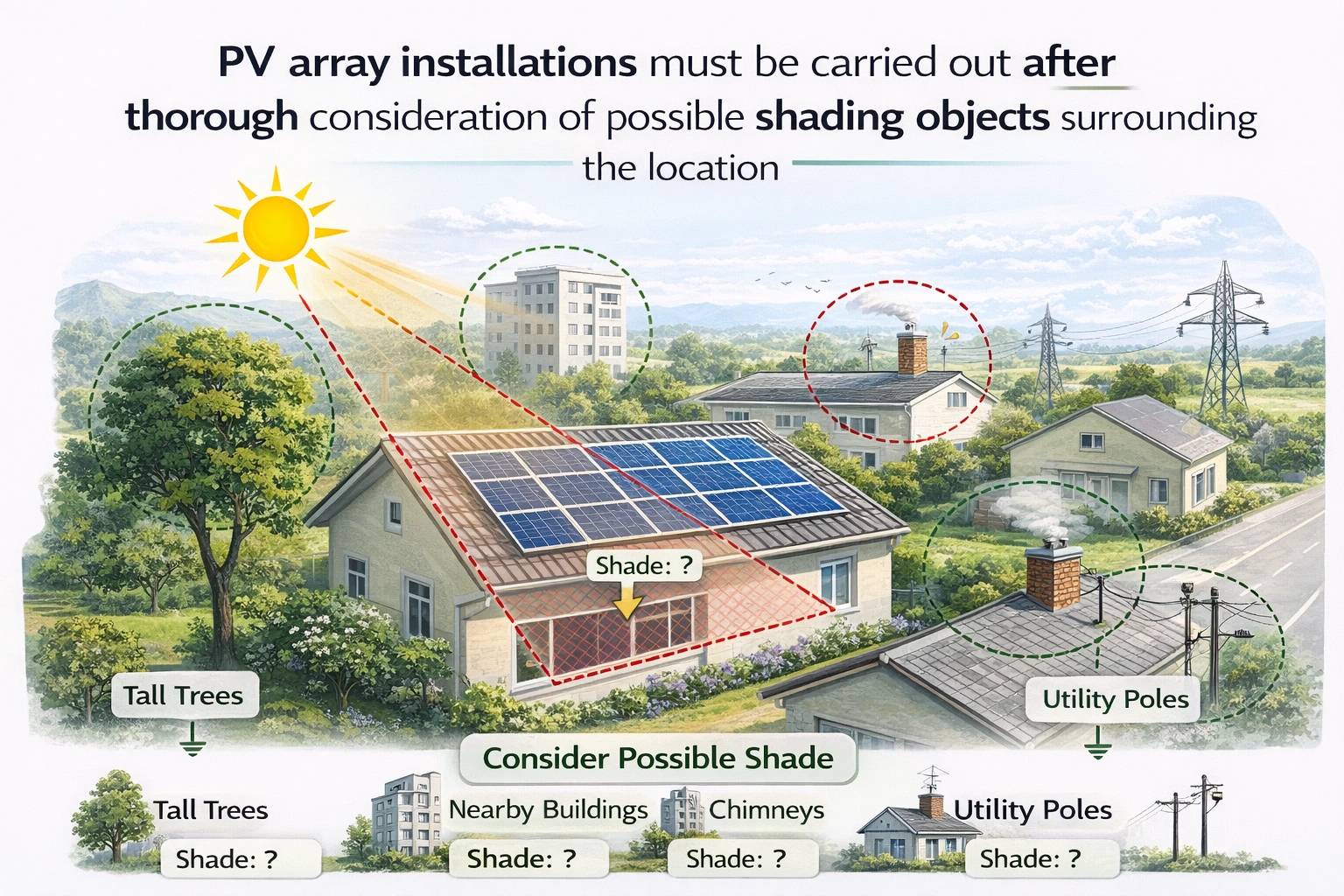
Therefore, shadow analysis helps installers determine the most efficient panel placement for renewable solar installations.
Sources of Shading in Solar Installations
Several obstacles may cause shading in solar PV systems.
1. Natural Obstacles
Examples include:
- Trees
- Hills
- Tall vegetation
These shadows vary with seasonal changes.
2. Structural Obstacles
These include:
- Neighboring buildings
- Water tanks
- Parapet walls
- Air conditioning units
Such obstacles are common in solar panel in rooftop installations.
3. Temporary Obstacles
Temporary shading may come from:
- Construction equipment
- Seasonal structures
- Temporary installations
Proper evaluation ensures these factors are considered before installing solar panels.
Why Shadow Analysis is Important
Shadow analysis is critical for ensuring maximum solar electricity generation and optimal system performance.
1. Maximizes Solar Power Generation
Solar panels produce electricity only when sunlight reaches their surface. Shading blocks sunlight and reduces energy output.
- Proper shadow analysis helps achieve:
- Higher solar electricity production
- Better system efficiency
- Maximum renewable solar performance
2. Improves System Design
When shading areas are identified:
- Panel layout can be adjusted
- Panel spacing can be optimized
- String configuration can be improved
This results in better solar panel system cost optimization.
3. Reduces Energy Loss
Even partial shading can cause significant power loss in solar PV systems.
In string-connected panels:
- One shaded panel may affect the entire string.
Shadow analysis helps reduce these losses and improves the cost of solar per kWh installed.
4. Enhances Financial Returns
Solar installations involve long-term investment. Proper shading evaluation ensures:
- Maximum electricity generation
- Faster return on investment
- Lower solar energy installation cost per unit generated
This also reduces unnecessary solar installation charges caused by system redesign.
5. Improves System Lifespan
Excessive shading can create hot spots in solar panels, which may damage cells over time.
Proper site planning increases:
- System reliability
- Panel lifespan
- Safety of renewable energy technology installations
Methods of Shadow Analysis
Solar installers use various techniques to perform shadow analysis.
1. Visual Inspection Method
This is the simplest method where installers observe the site and identify potential obstacles.
Steps include:
- Visiting the site at different times of the day
- Observing sun’s path
- Identifying shading structures
Although simple, this method may not provide highly accurate results.
2. Solar Path Diagram Method
Solar path diagrams show the movement of the sun throughout the year.
Using these diagrams helps installers determine:
- Seasonal shading patterns
- Best panel placement areas
- Optimal tilt and orientation
3. Shadow Measurement Tools
Professional solar installers use specialized tools such as:
- Solar pathfinder
- Sun eye tools
- Shading analysis devices
These tools help measure shading angles and predict annual energy loss.
4. Digital Simulation Software
Modern renewable energy technology uses software tools that simulate shading effects.
These tools can:
- Create 3D site, models
- Predict yearly solar production
- Identify shading losses
Digital analysis helps optimize system layout before installation.
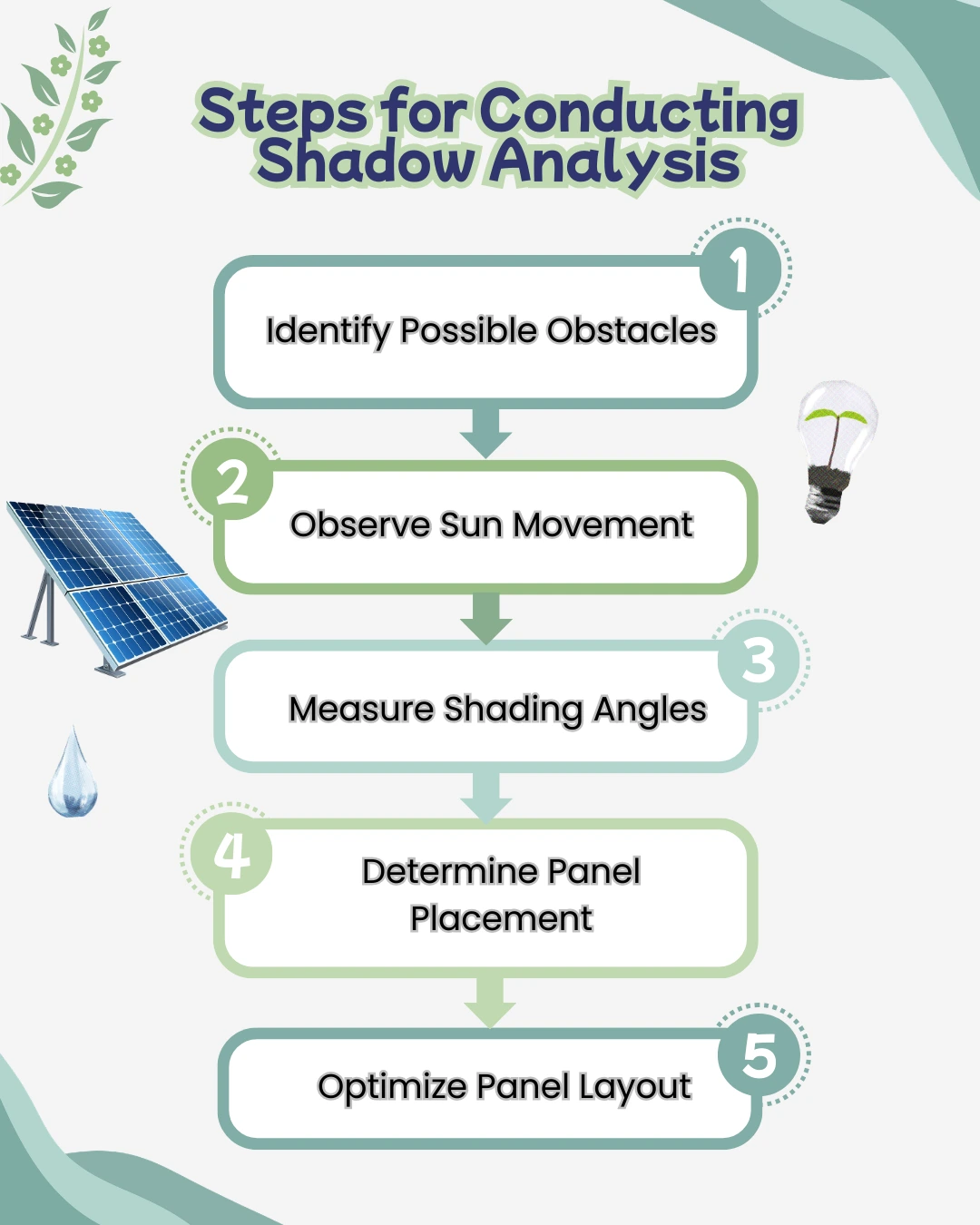
Steps for Conducting Shadow Analysis
A systematic shadow assessment includes the following steps:
Step 1 – Identify Possible Obstacles
Locate nearby buildings, trees, and rooftop structures.
Step 2 – Observe Sun Movement
Understand sunlight direction and duration.
Step 3 – Measure Shading Angles
Use tools or solar diagrams to measure shading impact.
Step 4 – Determine Panel Placement
Choose shadow-free zones for solar panel installation.
Step 5 – Optimize Panel Layout
Design system layout for maximum renewable solar output.
Impact of Shadow Analysis on Solar Panel System Cost
Proper shading evaluation helps:
- Avoid unnecessary panels
- Prevent redesign costs
- Optimize solar installation charges
- Improve overall project efficiency
This directly reduces the cost of solar per kWh installed.
In contrast, poor shadow analysis can lead to:
- Reduced system output
- Customer dissatisfaction
- Increased maintenance cost
Best Practices for Avoiding Shading Loss
Professional installers follow several best practices.
- Install panels in shadow-free zones
- Maintain proper panel spacing
- Trim nearby trees if necessary
- Use microinverters or optimizers in shaded areas
- Conduct a detailed site survey before installation
These practices ensure efficient solar energy for home use systems.
Key Benefits of Proper Shadow Analysis
- Higher solar electricity generation
- Better renewable solar system performance
- Reduced solar energy installation cost
- Improved return on investment
- Longer system lifespan
Conclusion
Shadow analysis is one of the most critical components of solar PV site assessment. Without proper evaluation of shading factors, even a high-quality solar panel system may fail to deliver the expected electricity output. By carefully studying obstacles, sun movement, and rooftop conditions, installers can design systems that maximize renewable solar energy generation.
Professional solar technicians must perform systematic shadow analysis before installing any solar plant. Accurate assessment improves solar electricity output, optimizes solar panel system cost, and reduces long-term solar energy installation cost.
With proper site assessment and shading evaluation, solar PV systems can deliver reliable renewable energy technology solutions and provide efficient solar energy for home use for many years.
FAQs
Q1. What is shadow analysis in solar installation?
Ans: Shadow analysis is the process of studying how shadows from nearby obstacles affect solar panel performance throughout the day and year.
Q2. Why is shadow analysis important in solar PV systems?
Ans: It ensures panels receive maximum sunlight, which increases solar electricity generation and improves system efficiency.
Q3. How does shading affect solar panel output?
Ans: Even partial shading can significantly reduce power output because shaded panels may affect the entire panel string.
Q4. What tools are used for shadow analysis?
Ans: Installers may use solar pathfinders, sun-eye tools, solar path diagrams, and digital simulation software.
Q5. Can shading increase solar installation charges?
Ans: Yes. Improper site planning may require system redesign or additional equipment, increasing solar energy installation cost.
Solar Rooftop Subsidy: Why It’s Time for a Change of Mindset
While solar rooftop subsidies help reduce upfront costs, true adoption requires a mindset shift. This guide discusses why businesses and homeowners should focus on long-term benefits, sustainability, and strategic planning beyond relying solely on incentives.
Solar Cable Termination: Tools, Steps & Best Practices
A complete guide to cable continuity testing in solar installations, including testing procedures, tools, and safety best practices.
Net Metering and its Advantages
Net Metering allows solar panel owners to feed excess electricity back to the grid and earn credits, reducing energy bills. Learn the key advantages of net metering for homes and businesses.
Best Solar Panels for Rooftop Projects: How to Choose the Right One
Selecting the right solar panel is crucial for rooftop project success. This guide explains how to evaluate panel types, efficiency, warranties, and performance to ensure maximum power output and long-term savings for your home or business.

How DISCOMs Implement Net Metering for Solar Power Plants
Discover the process of net metering implementation by DISCOMs for solar power plants. Understand the benefits, billing mechanism, and how it maximizes solar energy utilization.
Solar EPC Installation Tools & Consumables Guide for Civil & Mechanical Work
A complete Solar EPC guide covering essential tools and consumables required for civil and mechanical installation to ensure smooth and efficient project execution.
Battery Maintenance for Solar PV Systems Guide
A complete guide to battery maintenance for solar PV systems, including inspection, cleaning, testing, charging, and preventive maintenance to ensure long battery life and reliable performance.

SmartRoof Solar Associate Program – Easy Way to Earn with Solar Referrals
Join the SmartRoof Solar Associate Program. Refer solar leads, earn rewards, and support clean energy growth in your community.