
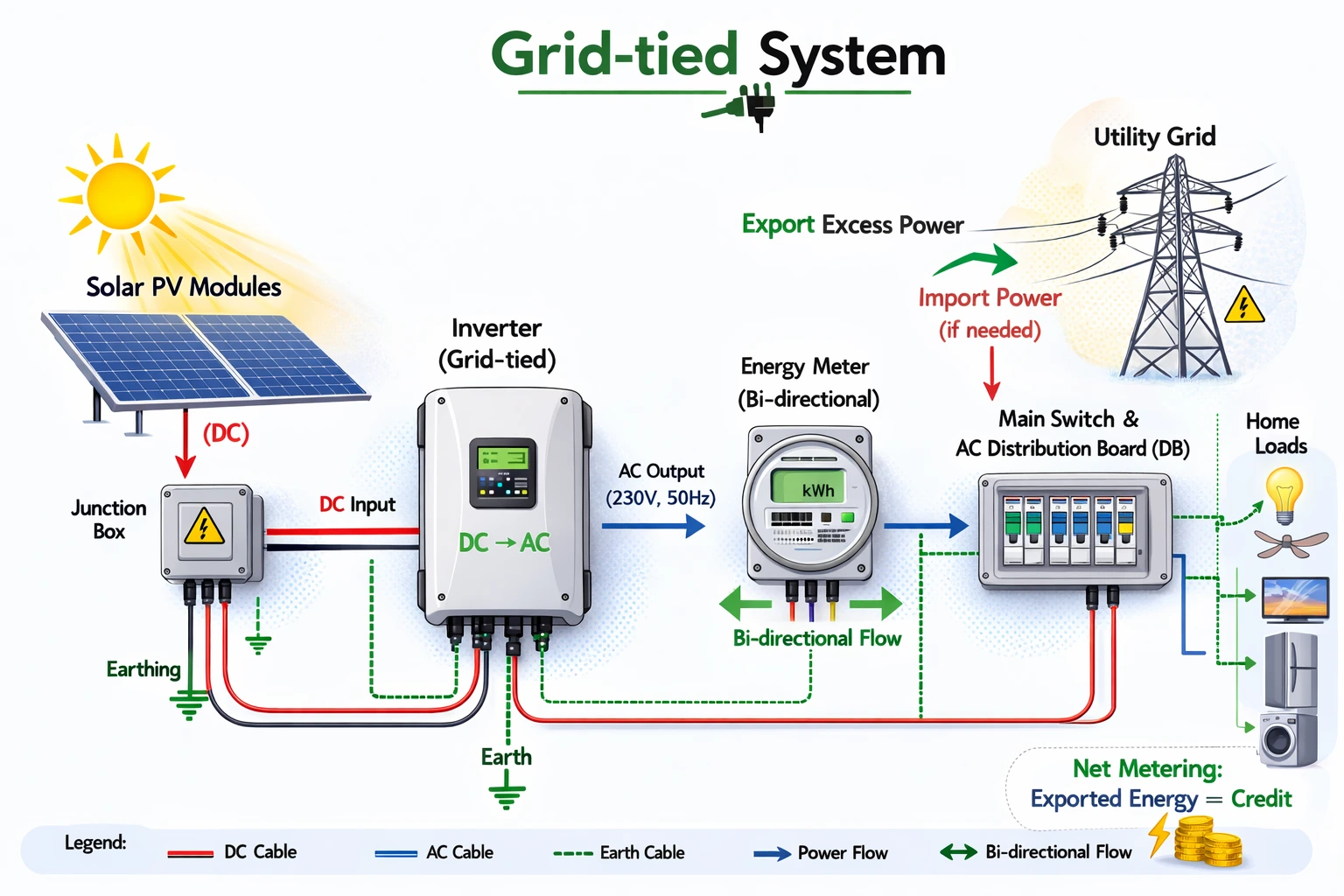
A solar photovoltaic (PV) system is more than just solar panels installed on a rooftop. It is a carefully designed integration of electrical and mechanical components that work together to convert solar energy into usable solar electricity.
Understanding each component, its importance, and its working principle is essential for every installer, especially when designing systems for solar energy for home use, solar plant installations, and subsidised solar panels for home projects.
1. Solar PV Modules (Solar Panels)
Importance
Solar PV modules are the primary component responsible for converting sunlight into DC electricity. They directly influence:
- Solar electricity generation
- Solar panel system cost
- Home roof solar panels cost
- Total cost of solar installation
The efficiency and quality of modules determine how much renewable solar energy is produced per unit area.
Operation
Solar panels work on the photovoltaic effect:
- Sunlight hits the solar cells.
- Photons excite electrons inside semiconductor material (usually silicon).
- Movement of electrons generates direct current (DC).
Key Technical Aspects
- Rated power (Watt)
- Solar module price per watt
- Efficiency percentage
- Temperature coefficient
2. Mounting Structure
Importance
Mounting structures hold solar panels at the correct tilt and azimuth angle. Proper structure ensures:
- Stability during wind load
- Correct angle of inclination
- Long-term durability
- Reduced solar energy installation cost due to minimal maintenance
Operation
The structure:
- Secures panels to rooftop or ground
- Maintains optimal tilt for maximum solar electricity
- Distributes mechanical load
Materials commonly used:
- Hot-dip galvanized iron
- Aluminum
3. Solar Inverter
Importance
The inverter converts DC electricity from solar panels into AC electricity used in homes and commercial buildings. Without an inverter, solar electricity cannot power appliances.
It directly affects:
- Solar installation cost per kWh
- Solar panel system cost
- System efficiency
Operation
- Receives DC input from panels
- Uses electronic switching circuits
- Converts DC to AC
- Synchronizes with grid (in on-grid systems)
Types
- On-grid inverter
- Off-grid inverter
- Hybrid inverter
4. Solar Battery (Optional in On-Grid Systems)
Importance
Used mainly in off-grid or hybrid systems to store excess solar energy.
Batteries ensure:
- Power backup
- Energy availability during night
- Reliable solar energy for home use
However, batteries increase:
- Solar installation charges
- Total cost of solar installation
Operation
- Stores DC electricity chemically
- Supplies power when solar generation stops
Common types:
- Lead-acid
- Lithium-ion
5. DC & AC Cables
Importance
Cables transmit electricity between system components.
Improper cable selection can cause:
- Voltage drop
- Power loss
- Increased cost of solar per kWh installed
Operation
- DC cables connect panels to inverter
- AC cables connect inverter to distribution board
Proper sizing is critical for renewable energy technology efficiency.
6. Junction Box / Combiner Box
Importance
Combiner box collects output from multiple panels and provides protection.
It contains:
- Fuses
- Surge protection devices
- Circuit breakers
Ensures safety and reduces system failure risks.
Operation
- Combines multiple DC strings
- Routes consolidated power to inverter
- Protects against overcurrent
7. Net Meter (For On-Grid Systems)
Importance
Net meter measures:
- Energy exported to grid
- Energy imported from grid
Essential under government solar subsidy scheme and net-metering policies.
Operation
- Bi-directional energy measurement
- Calculates billing difference
Improves economic feasibility of subsidised solar panels for home.
8. Earthing & Lightning Protection
Importance
Ensures system safety.
Protects against:
- Electrical faults
- Lightning surges
- Equipment damage
Critical for compliance and reducing long-term solar energy installation cost risks.
Operation
- Provides a low-resistance path to ground
- Dissipates fault current safely
Practical Application for Solar Installers
Understanding components helps installers:
- Optimize solar installation charges
- Control average cost of solar panels on a house
- Improve smart solar panel price competitiveness
- Reduce long-term cost of solar per kWh installed
- Ensure better performance of renewable energy and solar energy systems
Proper component selection enhances solar plant efficiency and long-term reliability.
Conclusion
A solar PV system is an integrated network of electrical and structural components working together to convert solar energy into reliable solar electricity. From PV modules to inverters, mounting structures to protection devices, each component plays a crucial role in determining system efficiency, safety, and long-term economic viability.
A professional installer must not only understand the operation of each component but also recognize how it impacts solar panel system cost, solar installation charges, and overall cost of solar per kWh installed.
Mastery of these components ensures optimized renewable energy technology deployment, enhances smart solar panel price positioning, and strengthens the adoption of renewable solar systems for residential and commercial applications alike.
FAQs
Q1. What are the main components of a solar PV system?
Ans: Solar panels, inverter, mounting structure, batteries (optional), cables, combiner box, net meter, and earthing system.
Q2. Which component affects solar panel system cost the most?
Ans: Solar modules and inverter typically contribute the largest portion of total cost of solar installation.
Q3. Does adding a battery increase solar installation cost per kWh?
Ans: Yes. Batteries increase initial solar energy installation cost but provide backup benefits.
Q4. How do components affect solar energy for home use?
Ans: High-quality components improve performance, reduce losses, and lower home roof solar panels cost per unit output.
Q5. Are these components mandatory under government solar subsidy scheme?
Ans: Yes, safety and performance standards require proper installation of all essential components for subsidised solar panels for home projects.
What to Expect from a Solar PV System
A complete guide to preparing solar PV system handover documentation, covering technical records, commissioning reports, equipment warranties, operating instructions, and maintenance documents for customers.
What Is Renewable Energy? What Is the Best Source of Renewable Energy and Why? – Complete Guide
Renewable energy comes from natural sources like sunlight, wind, water, and biomass that are constantly replenished. As India accelerates its transition toward clean energy, understanding different renewable energy sources and identifying the most efficient and cost-effective option is crucial. This complete guide explains renewable energy types, their advantages, and compares them to determine the best source based on sustainability, scalability, and long-term benefits.
Higher Electricity Bills in Haryana as Fuel Surcharge Rises
Haryana consumers are facing higher electricity bills after the Haryana Electricity Regulatory Commission (HERC) approved a fuel surcharge hike for DHBVN and UHBVN areas. The increase reflects rising fuel and power purchase costs, directly impacting domestic, commercial, and industrial users across the state.
Solar Panel Specifications Explained: How to Read Datasheets & Choose the Right PV Module
Choosing the right solar panel requires a clear understanding of technical specifications. This guide explains how to read solar panel datasheets, interpret key parameters, and select the best PV module for your project.
Questionnaire for Conducting Site Survey Before Solar Installation
A proper site survey is critical before solar installation. This questionnaire helps evaluate roof condition, load requirements, shading, and electrical infrastructure to ensure accurate system design and optimal performance.
100 kW Solar Plant Cost in Rajasthan: Latest Cost, Maintenance & Payback Time
Installing a 100 kW solar plant in Rajasthan costs around ₹40–60 lakh in, with annual savings up to ₹10–12 lakh. Discover maintenance needs, ROI, and payback period of 4–6 years.
C&I Solar Installation Company: Complete Guide for Commercial & Industrial Solar Projects in India
Ground mounted solar systems are ideal for commercial and industrial projects with available land. This guide explains cost, land requirement, installation process, and ROI in India.
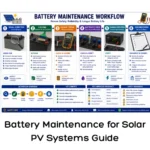
Battery Maintenance for Solar PV Systems Guide
A complete guide to battery maintenance for solar PV systems, including inspection, cleaning, testing, charging, and preventive maintenance to ensure long battery life and reliable performance.