
The installation of a solar photovoltaic (PV) system requires careful planning and evaluation before any equipment is installed. One of the most crucial steps in this process is the site survey. A proper site survey ensures that the solar plant is designed according to the specific conditions of the installation location, leading to higher efficiency and better system performance.
Before installing a solar panel system, professionals must evaluate factors such as roof condition, shading obstacles, orientation, load requirements, and grid connectivity. Conducting a detailed site survey is a fundamental step in solar PV installation to ensure maximum energy production and system safety.
This blog explains the key benefits of conducting a site survey before installing a solar plant, highlighting how it improves system performance, reduces installation risks, and optimizes solar panel system cost.
What is a Site Survey in Solar Installation?
A site survey is the process of physically inspecting and evaluating the location where a solar PV system will be installed.
The survey typically includes examining:
- Roof area and structural strength
- Panel orientation and tilt
- Presence of shading obstacles
- Electrical connections and grid availability
- Customer energy requirements
A comprehensive site survey helps installers design the most efficient solar energy system for home use or commercial applications.
Importance of Site Survey Before Solar Installation
Solar installations are long-term investments that typically last for 20-25 years. Conducting a site survey ensures that the system is designed to deliver maximum performance over its lifetime.
Without proper site assessment, problems such as shading, structural weaknesses, or incorrect system sizing may occur, leading to reduced solar electricity generation.
Major Benefits of Conducting a Site Survey
Below are the key benefits of performing a professional solar site survey.
1. Accurate Solar System Design
One of the biggest advantages of a site survey is that it allows installers to design a system tailored to the specific location.
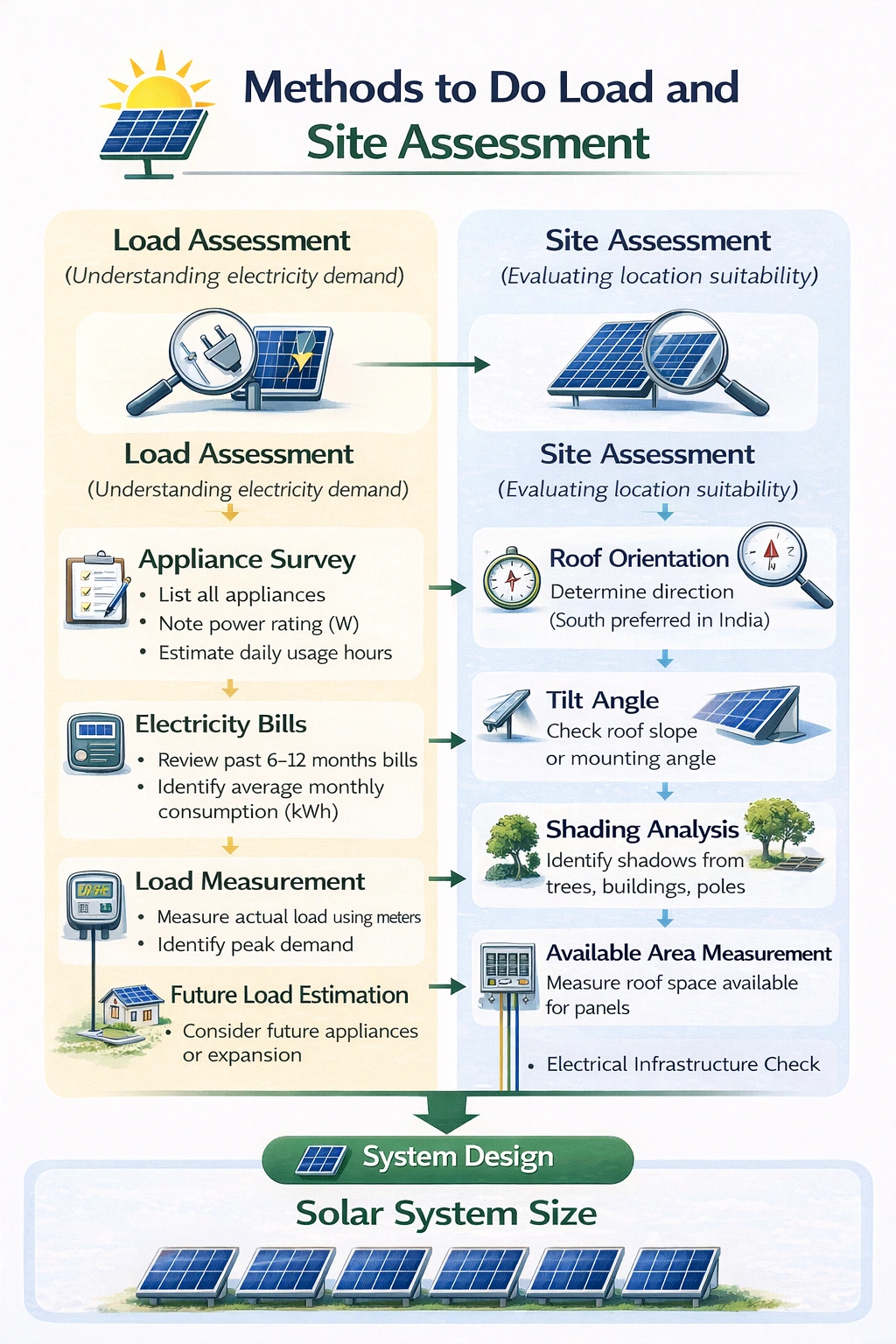
During the survey, installers gather data on:
- Available roof space
- Orientation toward sunlight
- Tilt angle of the roof
- Shading conditions
This information helps in determining the optimal layout of panels and selecting the appropriate system capacity, improving renewable solar efficiency.
2. Maximizes Solar Electricity Generation
Solar panels require direct sunlight to produce electricity efficiently.
A site survey helps identify:
- Areas receiving maximum sunlight
- Zones affected by shading
- Optimal panel placement
Proper planning ensures maximum solar electricity generation and reduces energy losses caused by shading.
3. Optimizes Solar Panel System Cost
Site surveys help avoid unnecessary expenses during installation.
By assessing the location beforehand, installers can:
- Select appropriate mounting structures
- Determine the correct system size
- Reduce material wastage
This helps optimize the solar panel system cost and improves the overall project budget.
4. Reduces Installation Challenges
During installation, unexpected issues such as weak roof structures or limited space can delay the project.
A site survey helps identify such problems early, allowing installers to plan solutions before installation begins. This minimizes delays and prevents increases in solar installation charges.
5. Improves System Safety
Safety is a critical factor in solar PV installations.
A detailed survey helps evaluate:
- Structural strength of the roof
- Electrical safety requirements
- Earthing and lightning protection needs
Proper safety planning reduces risks associated with renewable energy technology installations.
6. Helps Identify Shading Issues
Shading is one of the most common reasons for reduced solar panel efficiency.
During the survey, installers perform shadow analysis to identify obstacles such as:
- Trees
- Nearby buildings
- Water tanks
- Antennas
By avoiding shaded areas, installers can improve system efficiency and reduce the cost of solar per kWh installed.
7. Ensures Proper Equipment Selection
Every solar project requires different equipment depending on site conditions.
Based on survey findings, installers can select:
- Suitable inverter capacity
- Proper mounting structures
- Correct cable lengths
- Appropriate safety equipment
This ensures the solar plant operates efficiently and reliably.
8. Supports Financial Planning and ROI Estimation
A site survey helps estimate:
- Total solar energy installation cost
- Expected electricity generation
- Payback period
This information allows customers to understand the financial benefits of investing in renewable solar systems.
9. Ensures Compliance with Local Regulations
Solar installations must comply with local regulations and grid connection requirements.
Site surveys help confirm:
- Grid connectivity availability
- Net metering eligibility
- Installation space compliance
This is particularly important when applying for a government solar subsidy scheme or installing subsidised solar panels for home projects.
10. Improves Long-Term System Reliability
Proper planning during the site survey stage ensures that the solar plant operates smoothly for many years.
Benefits include:
- Reduced maintenance issues
- Improved system lifespan
- Better renewable energy technology performance
A well-planned installation ensures consistent solar electricity production over time.
Steps Involved in a Solar Site Survey
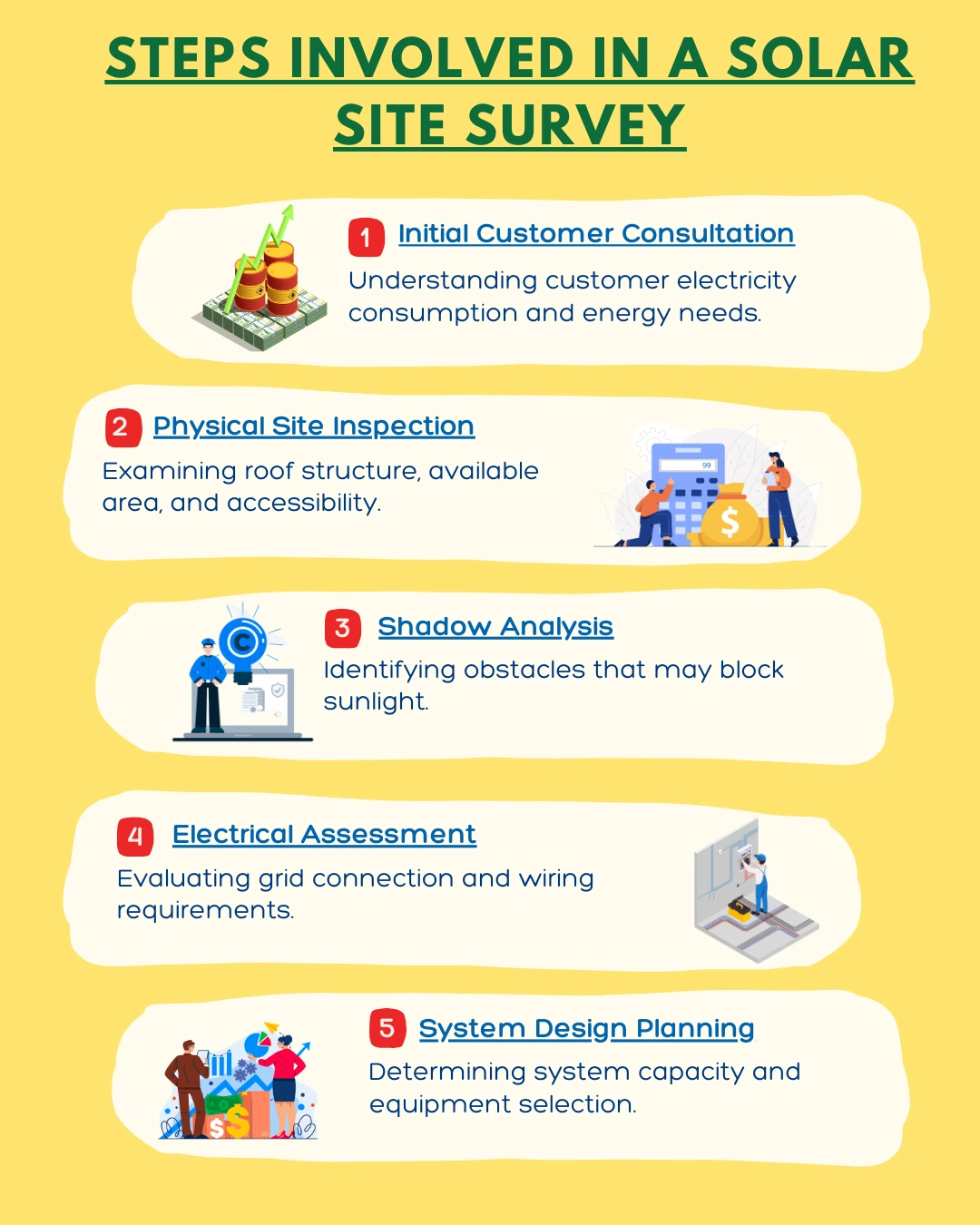
A typical solar site survey includes the following steps:
Step 1 – Initial Customer Consultation
Understanding customer electricity consumption and energy needs.
Step 2 – Physical Site Inspection
Examining roof structure, available area, and accessibility.
Step 3 – Shadow Analysis
Identifying obstacles that may block sunlight.
Step 4 – Electrical Assessment
Evaluating grid connection and wiring requirements.
Step 5 – System Design Planning
Determining system capacity and equipment selection.
Impact of Site Survey on Solar Energy Installation Cost
A detailed site survey helps control overall project expenses.
Benefits include:
- Accurate budgeting
- Reduced redesign costs
- Optimized solar installation charges
- Improved cost efficiency
This ensures better financial returns and lowers the cost of solar per kWh installed.
Best Practices for Conducting a Solar Site Survey
Professional solar installers follow several best practices:
- Conduct a survey during daylight hours
- Use measuring tools for accurate roof dimensions
- Perform shadow analysis at different times of day
- Inspect the roof condition and load capacity
- Document survey results with photographs and measurements
These practices ensure efficient planning for solar panel in rooftop installations.
Conclusion
A solar site survey is a crucial step in the successful installation of any solar PV system. By carefully examining the installation location, installers can design systems that maximize renewable solar energy production while minimizing installation challenges and costs. Proper site assessment ensures optimal panel placement, accurate system sizing, and improved financial returns.
A professional site survey is the foundation of efficient solar plant design and installation. It helps optimize solar panel system cost, reduce solar energy installation cost, and ensure reliable solar electricity generation.
With the growing adoption of renewable energy technology, conducting thorough site surveys will continue to play a vital role in delivering efficient solar energy for home use and commercial solar solutions.
FAQs
Q1. What is the purpose of a solar site survey?
Ans: A solar site survey evaluates the installation location to determine the best system design and ensure efficient solar electricity generation.
Q2. How does a site survey affect solar panel system cost?
Ans: It helps installers design the system accurately, avoiding unnecessary equipment and reducing installation expenses.
Q3. What factors are checked during a solar site survey?
Ans: Key factors include roof condition, available space, shading obstacles, electrical connections, and energy consumption.
Q4. Can a solar system be installed without a site survey?
Ans: While technically possible, skipping a site survey can lead to poor system performance, higher solar installation charges, and safety risks.
Q5. How long does a solar site survey take?
Ans: Most residential site surveys take between 30 minutes and a few hours, depending on project size and complexity.

Connection in Series and Parallel: Meaning, Differences, Formula & Applications
Understanding the difference between single-phase and three-phase voltage is essential for solar PV installers. While single-phase supply is common in residential systems, three-phase power is widely used in commercial and industrial solar projects. This complete guide explains electrical phase differences, applications in solar installations, and how choosing the right phase connection impacts system efficiency, safety, and performance.
Is Your Solar PV Rooftop System Safe & Protected?
Worried about the safety of your solar rooftop system? Explore key tips, maintenance practices, and protection strategies to keep your Solar PV system secure and efficient
Haryana’s GEOA 2025: A Boost for Captive Solar Plants and Wind Energy Developers
Haryana’s GEOA 2025 paves the way for growth in captive wind and solar energy projects with investor-friendly reforms.
Solar for Cold Storage Units: Cost, Benefits, Installation & ROI in India
A complete guide on solar systems for the FMCG industry in India covering installation cost, benefits, ROI, system sizing, and the installation process.

500 kW Rooftop Solar for Industries in India: Complete Guide 2026
A complete guide to 500 kW solar for industries covering installation cost, energy generation, ROI, savings, and why it is a smart business investment.
Top Industrial Solar EPC: How to Choose the Right Solar EPC Company for Industries in India
Choosing the right industrial solar EPC is critical for plant performance and ROI. This guide explains how Indian industries can select the best solar EPC partner.

Net Metering and Its Advantages Explained: How Solar Users Save More on Energy Bills
Learn what Net Metering and its advantages mean for you—cut electricity costs, earn energy credits, and boost solar efficiency easily.

Sustainable Solar Panel Disposal: Recycling for a Greener Future
Sustainable solar panel disposal ensures old or damaged panels are recycled responsibly, reducing waste and environmental harm. By adopting eco-friendly recycling and reuse practices, we can recover valuable materials, lower carbon impact, and make solar energy truly sustainable from installation to end-of-life.