
Selecting the right solar panel is one of the most important decisions in designing a solar photovoltaic (PV) system. Every solar module comes with a datasheet that contains technical specifications, performance parameters, and operational limits. For installers and EPC professionals, understanding these specifications is essential to ensure optimal system performance and cost efficiency.
A solar panel datasheet provides critical information that directly affects solar electricity generation, system reliability, and solar panel system cost. The ability to read and interpret PV module datasheets is a fundamental skill for designing efficient renewable solar systems.
This blog provides a complete guide to understanding solar panel specifications, how to read datasheets, and how to choose the right PV module for your solar plant.
What is a Solar Panel Datasheet?
A solar panel datasheet is a technical document provided by the manufacturer that lists all electrical, mechanical, and environmental specifications of the module.
It includes:
- Power ratings
- Voltage and current values
- Efficiency
- Temperature performance
- Physical dimensions
Understanding these details helps in designing efficient solar panel in rooftop installations.
Key Solar Panel Specifications Explained
1. Maximum Power (Pmax)
Pmax is the maximum power output of the solar panel under standard test conditions (STC).
Example:
- 400 W panel
- 500 W panel
Higher Pmax means higher electricity generation and better system efficiency.
2. Open Circuit Voltage (Voc)
Voc is the voltage when no load is connected to the panel.
Importance:
- Helps in designing string configurations
- Ensures inverter compatibility
3. Short Circuit Current (Isc)
Isc is the current when the panel terminals are shorted.
Importance:
- Used for cable sizing
- Helps select protection devices
4. Maximum Power Voltage (Vmp)
Vmp is the voltage at which the panel produces maximum power.
It is important for:
- Matching inverter input requirements
- Optimizing system performance
5. Maximum Power Current (Imp)
Imp is the current at maximum power output.
It helps in:
- Designing electrical connections
- Ensuring efficient power transfer
6. Module Efficiency
Efficiency indicates how effectively the panel converts sunlight into electricity.
Higher efficiency means:
- More power generation in less space
- Better performance for limited rooftop areas
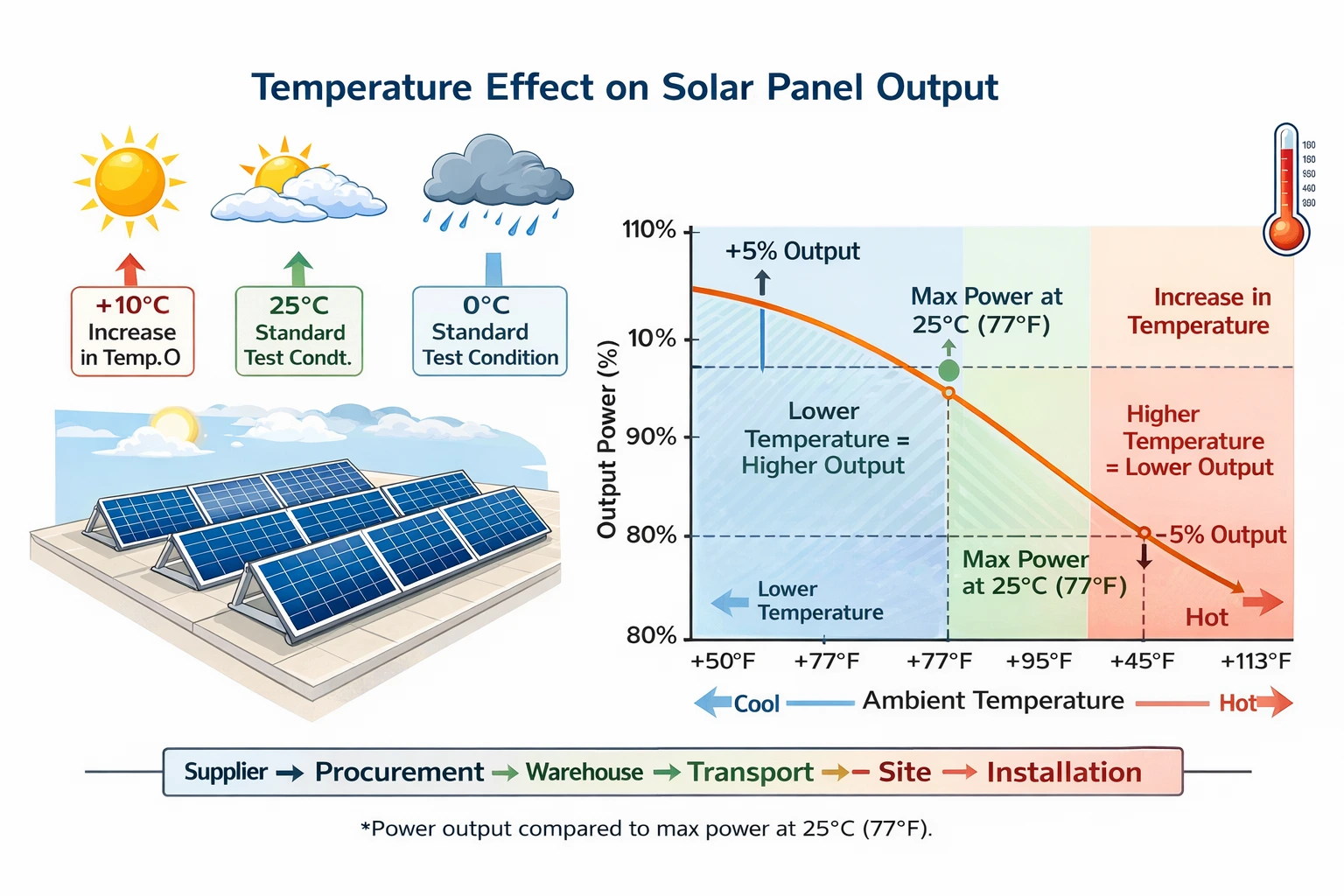
7. Temperature Coefficient
This parameter shows how panel performance changes with temperature.
Types:
- Power temperature coefficient
- Voltage temperature coefficient
Lower temperature coefficient means better performance in hot climates like India.
8. Nominal Operating Cell Temperature (NOCT)
NOCT indicates the temperature at which the panel operates under real conditions.
It helps estimate actual performance compared to standard test conditions.
9. Maximum System Voltage
This is the maximum voltage the panel can handle.
Important for:
- Safety
- System design
10. Mechanical Specifications
These include:
- Panel dimensions
- Weight
- Frame material
- Glass type
These factors affect installation and mounting structure design.
11. Warranty Details
Manufacturers provide:
- Product warranty (usually 10–12 years)
- Performance warranty (up to 25 years)
Warranty ensures long-term reliability of renewable solar systems.
How to Read a Solar Panel Datasheet
Step 1 – Check Power Rating
Start with Pmax to understand panel capacity.
Step 2 – Review Voltage and Current Values
Analyze Voc, Vmp, Isc, and Imp to design system connections.
Step 3 – Evaluate Efficiency
Choose panels with higher efficiency for better performance.
Step 4 – Analyze Temperature Coefficient
Select panels with low temperature losses for hot climates.
Step 5 – Check Mechanical Details
Ensure panel size and weight are suitable for the installation site.
Step 6 – Review Warranty and Certifications
Check certifications like IEC and compliance with standards supported by the Ministry of New and Renewable Energy.
How to Choose the Right Solar PV Module
1. Based on Application
- Residential systems
- Commercial systems
- Industrial solar plants
Each application has different power and efficiency requirements.
2. Based on Available Space
Limited rooftop space requires high-efficiency panels.
3. Based on Budget
Higher efficiency panels may cost more but provide better output.
This affects overall solar panel system cost.
4. Based on Climate Conditions
For hot climates:
- Choose panels with low temperature coefficient
For dusty areas:
- Prefer panels with good durability and coating
5. Based on System Type
- Grid-connected systems
- Off-grid systems
- Hybrid systems
Module selection should match system design.
Impact of Specifications on Solar Panel System Cost
Understanding specifications helps:
- Select the right panel capacity
- Avoid oversizing or undersizing
- Optimize solar installation charges
- Improve cost of solar per kWh installed
Proper selection ensures better financial returns.
Common Mistakes to Avoid
- Ignoring temperature coefficient
- Selecting panels only based on price
- Not checking inverter compatibility
- Overlooking warranty terms
- Ignoring space constraints
Avoiding these mistakes improves system performance.
Conclusion
Understanding solar panel specifications is essential for selecting the right PV module and designing efficient solar PV systems. By carefully analyzing datasheets, installers can ensure compatibility, optimize performance, and reduce solar energy installation cost. Key parameters such as power rating, voltage, current, efficiency, and temperature characteristics must be evaluated before making a decision.
Technical knowledge of PV modules is fundamental for successful solar installations. Additionally, adherence to guidelines from the Ministry of New and Renewable Energy ensures quality and safety in renewable solar projects.
By selecting the right solar panels, professionals can optimize solar panel system cost, improve solar electricity generation, and support sustainable solar energy for home use and large-scale renewable solar applications.
FAQs
Q1. What is the most important specification in a solar panel datasheet?
Ans: Maximum power (Pmax) is the most important as it indicates the panel’s output capacity.
Q2. Why is temperature coefficient important?
Ans: It shows how panel performance changes with temperature, which is critical in hot climates.
Q3. How does efficiency affect solar panel performance?
Ans: Higher efficiency panels generate more electricity in less space.
Q4. Can I choose solar panels based only on price?
Ans: No, performance, efficiency, and durability must also be considered.
Q5. What certifications should solar panels have?
Ans: Panels should have certifications like IEC and comply with standards set by regulatory authorities.

How to Calculate PV Power Output? Step-by-Step Guide
Calculating PV power output helps you estimate how much electricity a solar system can generate. This step-by-step guide explains the PV power output formula, examples, and key factors affecting solar energy production.
Generation Based Incentive Proposed for Rooftop Solar in Haryana
Haryana plans to offer Generation Based Incentive (GBI) for rooftop solar installations, promoting clean energy adoption and reducing electricity costs for consumers.
Solar PV Conduit & Cable Routing Plan Guide
A complete guide to preparing solar PV conduit and cable routing plans, including layout design, routing methods, and installation best practices.

How Solar Energy Is Converted into Electricity Using Solar Panels – Complete Guide
Solar panels convert sunlight into usable electricity through the photovoltaic effect. From photon absorption to inverter conversion and grid connection, each component plays a critical role in solar power generation. This complete guide explains the step-by-step process of how solar energy becomes electricity for homes, businesses, and industries, helping you understand the technology behind India’s growing renewable energy movement.

India and IMT-GT JBC Sign MoU to Boost Energy Efficiency in Southeast Asia
The first meeting of the G20 Energy Transitions Working Group was held in Bengaluru, India, and was a success, with participants sharing a consensus on the priority areas of energy security and diversified supply chains.
How to Fetch the BOM of a Solar PV System from Design Documents: Step-by-Step Guide for Installers & EPCs
Learn how to prepare a detailed Bill of Material (BOM) for solar PV systems using design documents like SLDs and layouts. This step-by-step guide helps installers ensure accurate material planning, reduce errors, and improve project execution.
Why Go Solar: A Complete Guide to Solar Power for Homes and Industries
Switching to solar energy offers significant savings and environmental benefits. This guide explains why going solar is a smart choice, covering financial incentives, reduced electricity bills, and positive impacts on the planet.
How Roof Area Determines Solar Capacity
Discover how available roof area affects solar plant capacity, with insights into usable space, panel dimensions, shading, access pathways, and factors that influence rooftop solar installation potential.