
In solar photovoltaic (PV) installations, the foundation or footing system plays a critical role in ensuring the structural stability and longevity of the solar plant. Whether it is a rooftop system or a ground-mounted installation, selecting the correct footing type is essential to withstand environmental loads such as wind, seismic activity, and structural weight.
For installers and EPC professionals, understanding footing requirements helps prevent structural failures, reduces maintenance issues, and optimizes solar panel system cost. Proper structural assessment and foundation design are key to safe and efficient renewable solar installations.
This blog provides a complete guide to identifying the type of footing required for solar PV systems, including factors, types, and selection methods.
What is Footing in Solar PV Systems?
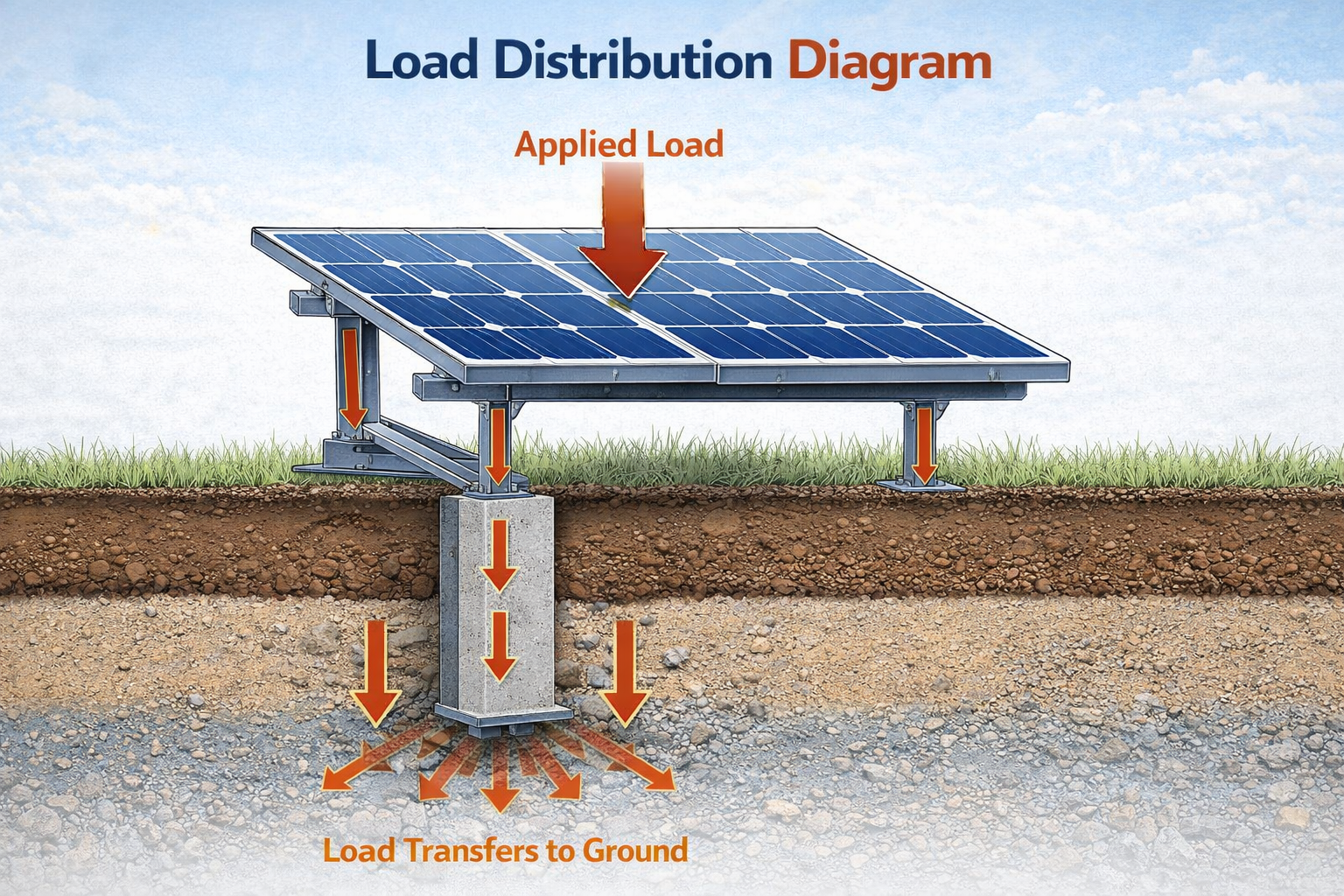
Footing refers to the foundation structure that supports the mounting system and solar panels, ensuring stability and load distribution.
It is used in:
- Ground-mounted solar plants
- Rooftop systems (in specific cases)
Proper footing ensures safe operation and efficient solar electricity generation.
Importance of Proper Footing Selection
Selecting the right footing type ensures:
- Structural stability
- Resistance to wind loads
- Long-term durability
- Reduced maintenance
- Optimized solar energy installation cost
Improper footing can lead to system failure and increased solar installation charges.
Factors Affecting Footing Selection
1. Soil Type
Soil conditions determine the type of foundation required.
Types of soil:
- Sandy soil
- Clay soil
- Rocky soil
Weak soil requires deeper or reinforced footings.
2. Wind Load
- High wind areas require stronger and deeper foundations.
- Wind load calculations are essential for large solar plants.
3. System Type
- Rooftop systems
- Ground-mounted systems
Ground-mounted systems require more robust footings.
4. Panel Tilt and Structure Height
Higher tilt angles and taller structures increase the load on the footing.
5. Site Topography
Uneven terrain may require customized footing solutions.
6. Water Table Level
High water table areas require special foundation design to prevent damage.
7. Local Regulations
Footing design must comply with standards set by the Ministry of New and Renewable Energy.
Types of Footings Used in Solar PV Installations
1. RCC (Reinforced Cement Concrete) Footing
Description
- Concrete foundations are used to anchor mounting structures.
Advantages
- Strong and durable
- Suitable for most soil types
Applications
- Ground-mounted solar plants
2. Pile Foundation
Description
- Deep foundations are driven into the ground.
Advantages
- Suitable for weak or loose soil
- Provides high stability
Applications
- Large-scale solar projects
3. Ballasted Footing
Description
- Uses weights (concrete blocks) instead of ground penetration.
Advantages
- No drilling required
- Suitable for rooftops
Applications
- Solar panel in rooftop installations
4. Ground Screw Foundation
Description
- Metal screws were drilled into the ground.
Advantages
- Quick installation
- Minimal soil disturbance
Applications
- Medium-scale solar plants
5. Driven Pile Foundation
Description
- Steel piles are driven into the ground using machinery.
Advantages
- High strength
- Suitable for large projects
Steps to Identify the Right Footing Type
Step 1 – Conduct Site Assessment
Analyze:
- Soil condition
- Terrain
- Environmental factors
Step 2 – Perform Soil Testing
- Determine soil bearing capacity.
- This helps select the appropriate foundation type.
Step 3 – Analyze Load Requirements
Calculate:
- Dead load (structure weight)
- Wind load
- Additional forces
Step 4 – Evaluate System Design
Consider:
- Panel layout
- Tilt angle
- Structure height
Step 5 – Select a Suitable Footing Type
Match site conditions with footing type.
Step 6 – Verify Compliance
Ensure design meets standards and regulations.
Step 7 – Finalize Design and Execution
Prepare structural drawings and proceed with installation.
Impact of Footing on Solar Panel System Cost
Footing selection affects:
- Material cost
- Installation time
- Maintenance expenses
- Cost of solar per kWh installed
Efficient footing design reduces overall solar energy installation cost.
Conclusion
Identifying the correct type of footing is essential for the safe and efficient installation of solar PV systems. By considering factors such as soil type, wind load, system design, and site conditions, installers can select the most suitable foundation for their projects. Proper footing ensures long-term durability, reduces maintenance issues, and enhances overall system performance.
Structural assessment and foundation design are critical aspects of solar installations. Additionally, compliance with guidelines from the Ministry of New and Renewable Energy ensures safety and reliability in renewable solar projects.
With the right footing selection, solar professionals can optimize solar panel system cost, improve solar electricity generation, and support sustainable solar energy for home use and large-scale renewable solar solutions.
FAQs
Q1. What is the purpose of footing in solar PV systems?
Ans: Footing provides structural support and stability to solar panels and mounting systems.
Q2. Which footing is best for rooftop solar systems?
Ans: Ballasted footing is commonly used for rooftop installations.
Q3. Why is soil testing important for footing selection?
Ans: It determines soil strength and helps select the appropriate foundation type.
Q4. How does footing affect solar panel system cost?
Ans: Proper footing reduces maintenance and improves efficiency, lowering overall costs.
Q5. Can solar installations be done without a footing?
Ans: No, all installations require some form of structural support or foundation.
Net Metering and its Advantages
Net Metering allows solar panel owners to feed excess electricity back to the grid and earn credits, reducing energy bills. Learn the key advantages of net metering for homes and businesses.

Market Demand of Solar PV Installer in India – Growth, Opportunities & Future Scope
India’s solar energy sector is expanding rapidly, creating strong demand for skilled solar PV installers across rooftop, commercial, and utility-scale projects. With increasing investments in renewable energy and rising industrial solar adoption, trained installers are becoming critical to project execution and performance. This blog explores market growth trends, career opportunities, salary potential, and the future scope of solar PV installation jobs in India’s booming renewable energy industry.

1 MW Solar Plant for Industry: Cost, Generation & Payback
A detailed guide on 1 MW solar plant for industry covering installation cost, area requirement, power generation, ROI, and long-term savings in India.

How DISCOMs Implement Net Metering for Solar Power Plants
Discover the process of net metering implementation by DISCOMs for solar power plants. Understand the benefits, billing mechanism, and how it maximizes solar energy utilization.
How Installers Cut Costs on Solar PV Module Mounting Structures
Solar PV mounting structures can significantly impact project cost. Explore how expert installers optimize design, materials, and labor to achieve safe, durable, and cost-effective solar installations
Developers fear unfair state-specific levies will make solar more expensive
Developers in India are concerned that state-specific levies on solar projects could increase costs, slow adoption, and impact the growth of renewable energy across residential, commercial, and industrial sectors.
Affordable Solar Systems and Plants for Small and Medium Enterprises
Learn how SMEs can harness solar energy through tailored solar systems and plants to reduce electricity bills, improve sustainability, and boost efficiency.

Everything You Need to Know About Net Metering
Discover everything about net metering – how it works, benefits, installation process, and how it helps you save on electricity bills.